
What if the digital balance on your banking app represents a vulnerability rather than a certainty? In an environment where inflation relentlessly erodes purchasing power and market volatility feels like a permanent fixture, relying solely on paper-based assets is a risk many high-net-worth individuals are no longer willing to take. You likely feel the weight of institutional risk and the diminishing privacy offered by traditional financial centres, which is why understanding effective wealth preservation strategies Australia becomes essential for your long-term security. It's clear that true financial resilience requires a shift back to the tangible.
This guide provides a comprehensive framework for shielding your capital from systemic shocks using time-tested methods. We'll show you how to transition towards a diversified portfolio anchored by physical assets and secure, non-bank storage solutions that prioritise your confidentiality and control. We will examine the strategic advantages of LBMA-accredited gold and silver, the benefits of private bullion lockers for SMSF compliance, and how to organise your holdings for maximum security. By the end of this guide, you'll have a clear roadmap for securing your legacy through 2026 and beyond with assets you can actually hold.
Key Takeaways
- Shield your capital from inflation by diversifying into physical assets that maintain intrinsic value when digital markets fluctuate.
- Understand why LBMA-accredited gold and silver are essential components of modern wealth preservation strategies Australia for 2026.
- Discover the security advantages of private bullion lockers over traditional bank vaults, focusing on privacy and independence from the financial system.
- Master the compliance requirements for SMSF physical asset storage to ensure your holdings meet strict audit and insurance standards.
- Follow a methodical guide to acquiring investment-grade bullion and selecting the optimal vault size to organise and protect your legacy.
Understanding Wealth Preservation Strategies in the Australian Economic Context
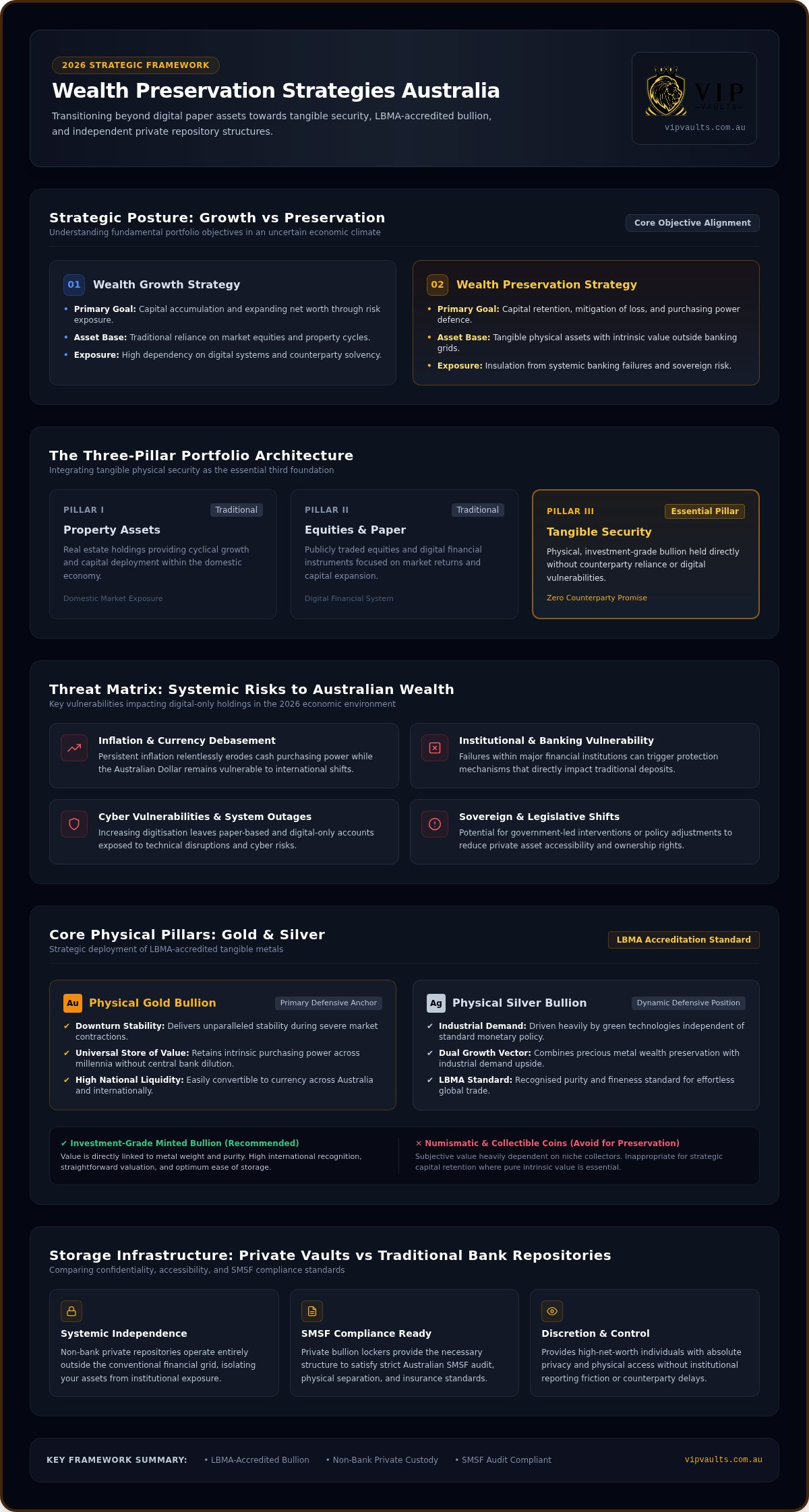
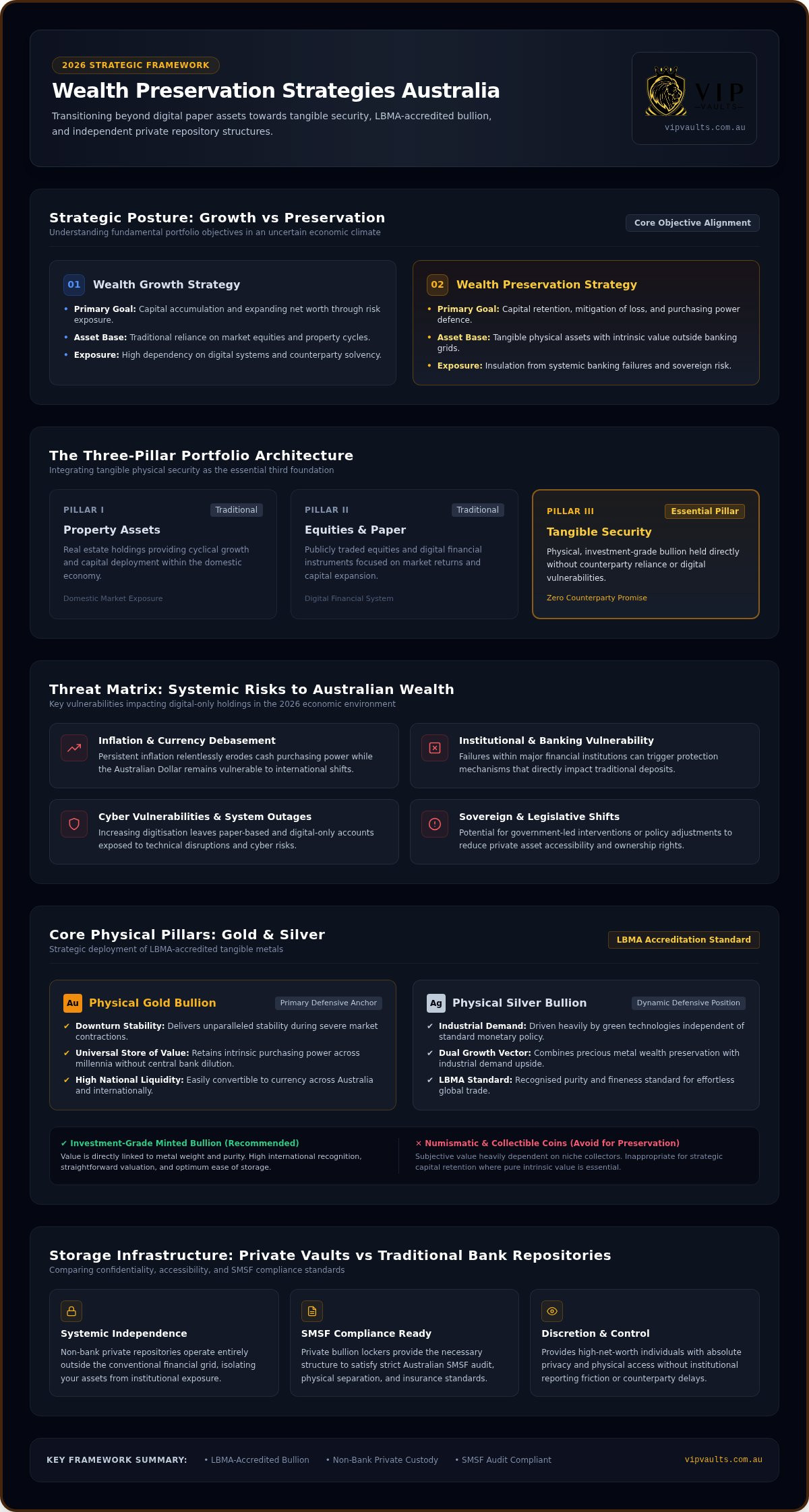
Wealth preservation is the proactive protection of your purchasing power and capital. While many investors focus on accumulation, the 2026 economic climate demands a defensive posture. Traditional wealth management principles often prioritise growth through market exposure, but preservation focuses on ensuring your assets survive systemic shocks. As we look at the current landscape, Australian investors face a combination of persistent inflation and heightened global volatility. These factors can quickly erode a lifetime of savings if they're left entirely within the digital financial system.
The distinction between wealth growth and preservation is fundamental. Growth strategies seek to increase your net worth through risk-taking. In contrast, wealth preservation strategies Australia focus on capital retention and the mitigation of loss. To achieve this, sophisticated investors are moving beyond the two traditional pillars of property and equities. They're now integrating "tangible security" as a necessary third pillar. This involves holding assets with intrinsic, physical value that don't rely on a counterparty's promise to pay.
The Shift from Digital to Tangible Assets
In 2026, digital-only portfolios face unique risks. Cyber vulnerabilities and the increasing digitisation of the banking sector have made paper-based assets more susceptible to institutional failures or technical disruptions. Holding physical capital provides a psychological sense of control that a screen balance cannot replicate. It's a return to foundational finance. We're seeing a significant trend where Australian investors are rebalancing their portfolios. They're moving a portion of their wealth into "hard" assets like investment-grade bullion to ensure they have liquidity that exists outside the conventional grid.
Identifying Risks to Australian Wealth
The Australian Dollar remains sensitive to global shifts, and inflationary pressures continue to threaten the real-world value of cash holdings. Beyond currency debasement, there's the concern of systemic risk within traditional banking sectors. If a major institution falters, the mechanisms designed to protect the system can directly impact your deposits. Sovereign risk is the potential for government-led actions or legislative shifts to negatively impact the value, accessibility, or ownership of your private assets. Recognising these threats is the first step in building a resilient defence that prioritises your independence from the centre of the financial system.
The Role of Precious Metals: Gold and Silver as Core Pillars
Gold and silver have served as universal stores of value for millennia. Unlike fiat currency, these metals cannot be printed into oblivion by central banks. In the context of wealth preservation strategies Australia, they provide a necessary buffer against the devaluation of the Australian Dollar. Their high liquidity means you can convert them to cash quickly across the country, making them a practical choice for those prioritising accessibility alongside security. By holding these metals, you're effectively removing a portion of your capital from the traditional financial grid.
Purity is paramount when acquiring assets for long-term retention. Sourcing LBMA-accredited bullion ensures that your bars and coins meet international standards for fineness and weight. This certification is the gold standard for global trade, ensuring that your wealth is recognised and tradable anywhere in the world. While gold offers unparalleled stability during market downturns, silver provides a different strategic advantage. Its heavy industrial use in green technologies often drives growth independent of monetary policy, allowing for a more dynamic defensive position within your portfolio.
Investment-Grade Bullion vs. Numismatics
Serious preservation strategies prioritise minted bars and coins over numismatic or collectible items. While rare coins may have historical appeal, their value is often subjective and dependent on a niche market. For wealth protection, you need assets with a value tied directly to their metal content. Investors often weigh up the benefits of gold coins vs gold bars australia, as both offer high international recognition and ease of storage. Choosing internationally recognised hallmarks ensures your holdings remain liquid and verifiable for future generations.
Diversifying with Platinum and Other Metals
Platinum is increasingly viewed as an emerging pillar in a diversified bullion portfolio. Its rarity and critical role in high-end manufacturing make it a robust addition for those looking to expand beyond gold and silver. Determining the right percentage of metals for your net worth depends on your specific risk profile, but many specialists suggest allocating 10 to 20 percent of a portfolio to tangible assets. This allocation must align with SMSF regulations and compliance if the metals are held within a retirement fund. Maintaining a balanced approach ensures you aren't over-exposed to any single metal while keeping your capital shielded from digital volatility. You can explore a range of investment-grade gold bullion options to start building this physical foundation today.
Private Repositories vs. Banking Institutions: A Security Comparison
Private repositories offer a level of privacy that traditional banking institutions simply cannot match. When you store assets within a bank, you're operating within a highly regulated environment where your holdings may be subject to institutional reporting requirements and operational restrictions. For those implementing comprehensive wealth preservation strategies Australia, the goal is often to decouple their physical wealth from the digital financial grid. Private repositories provide this independence; they operate outside the traditional banking system, ensuring your assets aren't vulnerable to bank "bail-in" laws or systemic institutional failures.
Sovereign risk and "bail-in" legislation represent significant threats to institutional storage. In a crisis, these laws could allow banks to use depositor funds or limit access to physical lockers to maintain their own solvency. Modern private repositories mitigate this risk through superior technical security. Features such as multi-factor biometric authentication, seismic vibration sensors, and 24/7 off-site monitoring create a secure sanctuary. This independent repository advantage ensures your wealth remains decoupled from the banking system's liabilities, providing a reliable buffer against institutional instability.
Why Investors are Moving Away from Bank Storage
Major Australian banks have been steadily phasing out their safety deposit box services. This shift has left many high-net-worth individuals without a reliable place to store physical assets within the traditional system. Banks must also comply with extensive regulatory reporting that can compromise the confidentiality of your holdings. Moving to a private, non-bank environment offers a level of discretion that is simply unavailable at a commercial bank. This is a critical consideration when investing in gold for wealth preservation, as privacy is often a primary objective for those holding tangible capital.
Key Features of a High-Security Private Vault
A professional repository is defined by its physical robustness and uncompromising security standards. These facilities utilise reinforced concrete, time-locked vault doors, and round-the-clock monitoring to ensure the integrity of your assets. Unlike home safes, which can be vulnerable to forced entry or fire, these vaults provide a purpose-built environment for long-term protection. Independent audits and comprehensive insurance coverage provide further peace of mind, ensuring that your wealth is protected against all contingencies. When you explore private vaults australia, you're choosing a partner that prioritises the physical security of your bullion and high-value items above all else.
Strategic Asset Protection for SMSFs and High-Net-Worth Individuals
SMSF trustees and high-net-worth individuals face a complex regulatory environment when holding physical assets. It isn't enough to simply buy bullion; you must also manage the logistical and legal requirements of ownership. Implementing wealth preservation strategies Australia effectively means ensuring your storage solution stands up to the scrutiny of an annual audit. For those managing significant capital, the choice of repository is just as important as the asset itself.
Many investors consider home safes for their convenience, but this often leads to compliance failures. Storing fund assets in a personal residence can breach the "sole purpose test" and frequently invalidates insurance policies. Professional repositories offer a robust alternative, providing the necessary separation between personal and fund assets. This physical decoupling is a core requirement for maintaining the integrity of a self-managed fund. It ensures that your retirement savings are protected by institutional-grade security that no home safe can replicate.
SMSF Compliance and Bullion Storage
Auditors need a verifiable "line of sight" to confirm the existence and ownership of physical holdings. High-security vaults provide this through formal storage agreements and independent audit certificates. This documentation is essential for SMSF gold storage, allowing trustees to meet their obligations with minimal friction. Using a dedicated bullion locker ensures that every gram of metal is accounted for and insured at replacement value. These facilities provide clear, itemised statements that your accountant can use for tax preparation. This eliminates the guesswork and administrative burden often associated with physical asset management.
Estate Planning and Tangible Assets
Managing the transition of tangible wealth to the next generation is a critical component of any long-term strategy. Private vaults allow for specific access rights to be established, which can facilitate a smoother transfer during estate settlement. This approach maintains confidentiality and avoids the public nature of some probate proceedings. It ensures that your legacy remains a private matter, protected from external interference. By integrating vault access into your broader estate plan, you provide your heirs with a secure, discreet path to their inheritance. This foresight protects your family's privacy and secures their financial future. You can enquire about private vault rental to protect your SMSF assets and streamline your compliance reporting today.
Implementing Your Plan: Building a Resilient Private Repository Strategy
Transitioning from financial theory to physical security requires a methodical approach. Implementation is the stage where wealth preservation strategies Australia move from a conceptual plan to a tangible reality. You must begin by auditing your current exposure to digital systems and identifying the portion of your capital that requires decoupling. This isn't a process to be rushed; it's about building a foundation that will remain unshakeable for decades. A resilient strategy balances immediate liquidity needs with the long-term goal of capital retention.
Acquiring investment-grade bullion should follow a logical sequence. First, determine your allocation based on your total net worth and risk profile. Second, select a mix of gold and silver to balance stability with industrial growth potential. Finally, secure a professional storage solution before the assets are even purchased. When selecting a vault size, consider your future acquisition goals. It's often more efficient to secure a larger bullion locker early than to organise multiple smaller units as your holdings expand. Regular portfolio reviews are essential to ensure your physical assets continue to reflect the shifting economic climate.
Sourcing Internationally Recognised Bullion
Purity and provenance are the two most critical factors when purchasing precious metals. You should only source LBMA-accredited bars to ensure that your wealth is recognised by every major bullion dealer and central bank globally. This accreditation guarantees that the metal has been refined to the highest standards, which is vital for future liquidity. The process involves monitoring transparent, live pricing linked to global markets to ensure you're acquiring assets at fair value. Utilising internationally recognised refiners ensures that Australian investors can liquidate their holdings instantly in any major global financial hub.
Securing Your Legacy with VIP Vaults & Bullion Exchange
VIP Vaults & Bullion Exchange provides a national-standard solution for those seeking a discreet guardian for their wealth. By operating independently of the traditional banking system, the facility offers a secure sanctuary that prioritises your privacy and control. You can benefit from exclusive member privileges and bespoke storage solutions tailored to the specific dimensions of your portfolio. Whether you're storing investment-grade bars or high-value jewellery, the focus remains on physical robustness and absolute confidentiality. Taking the first step involves a secure account setup and a consultation to align your storage needs with your broader estate planning goals. This methodical approach ensures your assets are protected by sophisticated security protocols and a commitment to long-term trust.
Securing Your Financial Future Beyond 2026
Protecting your hard-earned capital requires more than just digital diversification. By integrating physical gold and silver into your portfolio, you create a robust hedge against currency debasement and market instability. The transition to private, non-bank repositories ensures that your wealth remains independent of institutional risks and sovereign interference. These wealth preservation strategies Australia are specifically designed to offer peace of mind through tangible security and absolute privacy. It's clear that physical assets provide a level of control that digital balances simply cannot match in a volatile economic climate.
Whether you're managing a complex SMSF or looking to protect a family legacy, the right storage solution is essential. You can secure your legacy with VIP Vaults & Bullion Exchange through LBMA-accredited bullion products and independent, high-security storage solutions. Our specialists provide expert guidance for SMSF and HNW investors who prioritise confidentiality and physical robustness. It's time to decouple your wealth from the traditional banking grid and anchor your future in assets you can hold. Taking control of your assets today ensures they remain protected for generations to come.
Frequently Asked Questions
What are the best wealth preservation strategies for Australians in 2026?
The most effective wealth preservation strategies Australia involve decoupling a portion of your capital from the digital banking system. This includes acquiring physical, LBMA-accredited precious metals and utilising private, non-bank repositories. By holding assets with intrinsic value, you protect your purchasing power from inflationary pressures and systemic volatility. A resilient plan combines these tangible holdings with a clear estate strategy to ensure your legacy remains secure and accessible to future generations.
Is gold bullion a good investment for wealth preservation?
Gold bullion remains a premier asset for wealth preservation because it maintains intrinsic value over long periods. Unlike fiat currency, its supply cannot be manipulated by central banks, making it a robust hedge against inflation and currency debasement. In a 2026 context, holding physical gold provides a liquid, internationally recognised store of value that operates independently of the traditional financial grid. It offers a defensive buffer that paper-based assets simply cannot replicate during market downturns.
Are private vaults safer than Australian bank safety deposit boxes?
Private vaults provide a specialised alternative to traditional bank lockers by offering enhanced privacy and independence from the financial system. Many Australian banks are currently phasing out their safety deposit box services, whereas private facilities invest heavily in modern security like biometric authentication and seismic sensors. Most importantly, private storage is not subject to bank "bail-in" laws, ensuring your physical assets remain protected even if the broader banking sector faces a systemic crisis.
Can I store SMSF gold bullion in a private vault?
Yes, you can store SMSF gold bullion in a private vault, and it is often the most compliant method for doing so. Professional facilities provide the independent audit certificates and storage agreements required by Australian taxation laws. Storing fund assets in a private repository ensures a clear separation between personal and retirement holdings, which is essential for passing the "sole purpose test" during your annual SMSF audit and ensuring your insurance remains valid.
How does sovereign risk affect my wealth in Australia?
Sovereign risk refers to the potential for government policy or legislative changes to impact the value and accessibility of your private wealth. In Australia, this includes the risk of bank "bail-in" legislation or shifts in tax regulations that could affect digital and institutional assets. Holding tangible capital in a private, non-bank repository mitigates this risk by keeping your wealth outside the direct control of traditional financial institutions and government-linked systems, providing a necessary layer of protection.
What is the difference between wealth creation and wealth preservation?
Wealth creation focuses on the accumulation of capital through growth-oriented investments and risk-taking. In contrast, wealth preservation is the proactive protection of existing capital and purchasing power. While creation seeks to increase your net worth, preservation ensures that what you have already built is not eroded by inflation, market crashes, or institutional failures. Both are necessary, but preservation becomes the primary priority as you approach retirement or manage a significant family legacy through volatile periods.
How much of my portfolio should be in physical assets?
Financial specialists often suggest allocating between 10 and 20 percent of a total portfolio to physical assets like gold and silver bullion. This percentage can vary depending on your specific risk tolerance and the current economic climate. The goal is to have enough tangible capital to provide a meaningful buffer against systemic shocks without sacrificing the liquidity of your other holdings. This balanced approach ensures your broader portfolio remains resilient during periods of extreme market volatility.
What should I look for in an Australian private vault facility?
You should prioritise facilities that offer absolute independence from the banking system and utilise advanced technical security, such as multi-factor biometric access. Look for a provider that sources LBMA-accredited bullion and offers transparent, live pricing linked to global markets. A high-quality facility will also provide specialist support for SMSF holders, including the necessary documentation for annual audits and comprehensive insurance coverage to protect the full replacement value of your precious metals and jewellery.