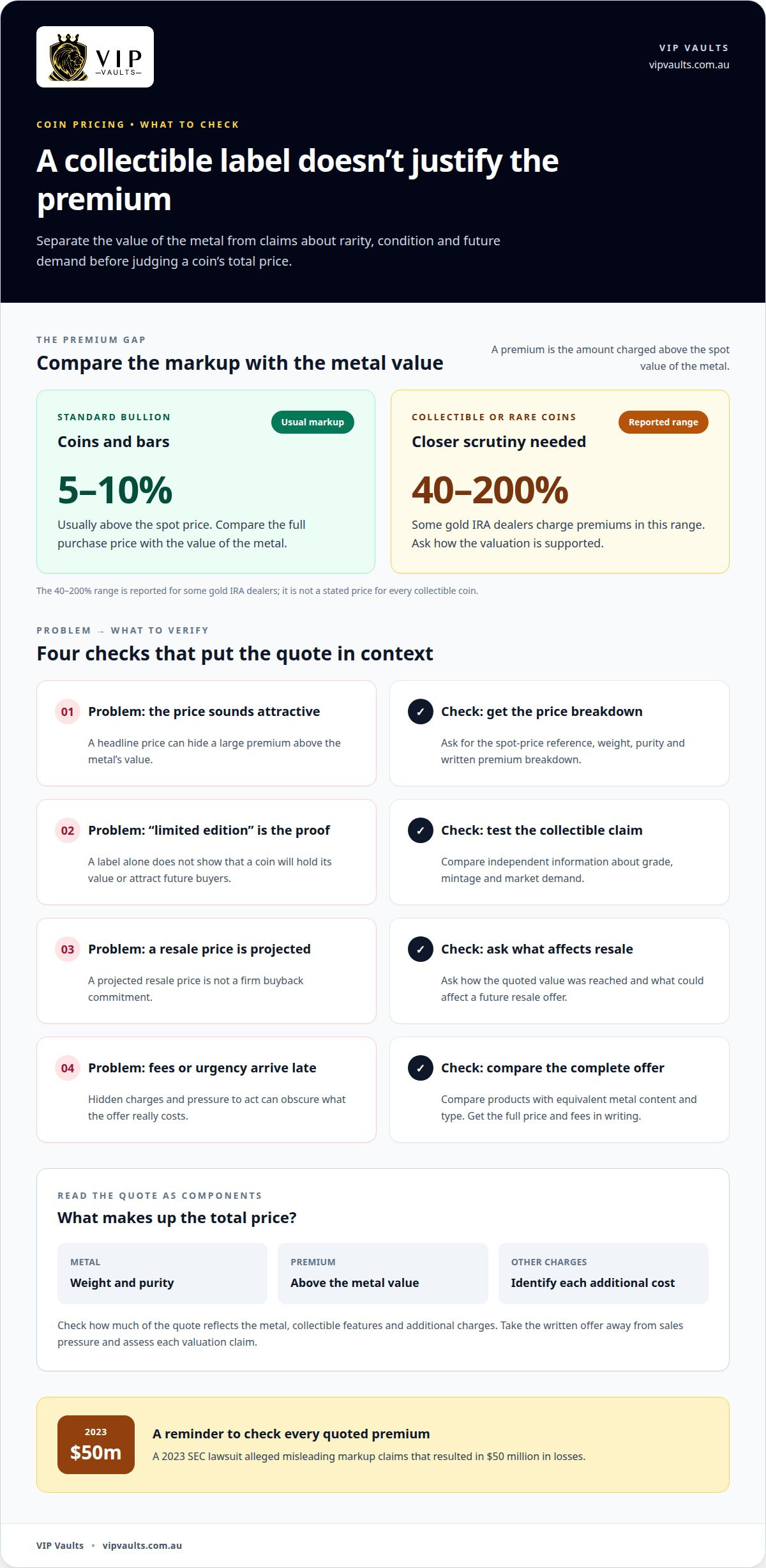
An attractive coin price can hide an expensive premium. Standard bullion coins and bars usually carry a markup of 5-10% above the spot price, so avoiding precious metal investment scams starts with comparing the full purchase price with the value of the metal, not relying on sales claims. Collectible and rare coins deserve closer scrutiny because a steep premium may reflect a sales margin rather than collectible value.
Before committing funds, check a dealer’s history and business records, especially if a salesperson is making urgent promises or promoting a complex investment. This guide explains how to review company records, assess dealer histories and spot warning signs in sales claims. It also covers comparing premiums and fees, and why calling a coin “collectible” does not prove its price is fair.
Key Takeaways
- Review a dealer’s business history, registration details and review patterns before deciding whether to proceed.
- Check credentials and disciplinary histories when a dealer claims financial-advice expertise, and be cautious of unsolicited or high-pressure pitches.
- Ask how a collectible coin’s price is calculated, then compare its metal value, premium and all fees in writing.
- Consider secure storage as part of your plan for holding physical bullion, not as an afterthought.
1. Checking company history, registration and reviews
Start with the legal business name, not just the trading name in an advertisement. Search the relevant Australian business register and compare its entry with the name on the quote, invoice and payment instructions. Resolve any mismatch before proceeding. A short trading history warrants closer scrutiny, but a longer history alone does not prove an offer is sound.
Read reviews across independent platforms and look for repeated, specific complaints about delayed delivery, changed terms, difficult refunds or unexpected charges. Check complaint records where available, and note whether the business responds with clear, consistent information. Ask for references from customers who bought the same type of bullion or investment. Treat glowing testimonials on the dealer’s own site as one input, not independent verification.
In Australia, the rules depend on what the seller offers. Selling physical metal directly differs from operating an investment scheme or providing financial advice. Identify the business’s legal structure and the activities it promises, then check whether relevant registration applies. A business register entry does not establish that every offer is authorised.
Compare all written costs before paying: metal price, premium, delivery, insurance, storage, administration and resale charges. For storage, clarify how the fee is calculated, what it covers and how ownership is recorded. Get every fee and any conditions that could change it in writing.
For bullion, request an invoice stating the metal, weight and purity, along with supporting assay or authenticity documentation. Compare these details with the product description and consider an independent assessment if doubts remain. If you suspect a scam, keep receipts, emails and call records, stop further payments, and contact your card issuer or financial institution about a dispute or reversal. Report the conduct to the relevant Australian consumer protection or financial regulator.
2. Dealer credentials and disciplinary histories
A dealer’s credentials matter particularly when they recommend an investment strategy or claim expertise in financial advice. Ask for the adviser’s full name, role, qualifications and licence details. Compare those details with the relevant Australian register and the business’s legal name. A credential belonging to another person or entity does not establish who is responsible for your transaction.
Verify each claim at its source. If a salesperson cites professional membership, use the issuing organisation’s official register to confirm it is current. If they claim to be a financial adviser, independently verify their stated authorisation. A business card, certificate image or polished website is not proof: it may be copied or relate to another service.
Look for disciplinary information about both the individual and the business. Search the exact names shown on contracts and correspondence, and note any warnings, restrictions or findings about past conduct. Read the outcome, not just the allegation. A resolved complaint differs from a formal finding, while repeated concerns about misleading claims warrant closer attention.
Match the person’s stated role to the transaction. A bullion salesperson may explain a product, but recommendations about your broader portfolio or retirement savings involve a different claim of expertise. Ask who provides advice, who sells the metal and who holds the funds or assets. Record the answers and compare them with the written agreement before transferring money.
For a practical check, make a short record of the adviser’s name, credentials, register entry and any disciplinary history. Stop if the salesperson avoids direct answers or pressures you to act before you can verify them. Once you own physical bullion, consider how secure storage fits your plan, including a bullion locker.
3. Inflated premiums on collectible and rare coins
A coin’s total price combines its metal value and any premium above that value. Collectible coins can carry substantial premiums, so separate the bullion component from claims about rarity, condition or future demand. A “limited edition” label alone does not show that a coin will retain its value or attract buyers later.
Some gold IRA dealers charge premiums of 40% to 200% for collectible or rare coins. Treat that range as a reason to examine the valuation carefully. Ask for the spot-price reference, the coin’s weight and purity, and a written breakdown of the premium. Compare the seller’s explanation with independent information about the coin’s grade, mintage and market demand.
Check whether the salesperson is comparing the coin with ordinary bullion or another collectible, as these products can have different pricing factors. Ask how the dealer arrived at the quoted value and what could affect a future resale offer. A projected resale price is not a firm buyback commitment.
Before paying, compare the total price of products with equivalent metal content and type. Note how much of the quote reflects the metal, collectible features and additional charges. This helps you judge whether the premium has a clear basis, rather than relying on sales language alone.
False claims, overpriced coins and excessive or hidden fees have cost precious-metal investors millions of dollars. When avoiding precious metal investment scams, take the written offer away and assess each valuation claim without sales pressure. Ask whether rarity, condition or demand supports the premium. Careful review is essential, particularly when a salesperson links urgency with promised profit.
A 2023 SEC lawsuit alleged misleading markup claims that resulted in $50 million in losses, underscoring the importance of checking each quoted premium.
4. What are common precious metal investment scams in Australia?
Warning signs include high-pressure sales, promises of easy profit, overpriced coins and fees disclosed late. A pitch may play on market fears or insist you act immediately. Pause, request the full offer in writing and compare its claims with the product’s metal value and resale terms before committing funds.
Inflated markups can make bullion costly to resell. Some precious metals companies apply markups as high as 130% on bullion. Salespeople may also use spreads of 40% to 200% or more, creating a wide gap between the buying and selling prices. Ask how each figure is calculated and what price the dealer would pay to buy the metal back.
Hidden charges are another risk. A quote may look attractive until commissions, administration fees or storage costs emerge later. Request a complete written breakdown and check how each charge affects the total purchase price or resale proceeds. Compare like with like: the same metal, weight, product type and delivery or storage arrangements.
False claims about rarity or future returns can disguise an inflated price. A salesperson may call a coin scarce to justify a premium without explaining the basis. Ask what evidence supports the valuation, how the coin’s condition affects it, and whether a projected resale figure is a firm offer or merely an estimate.
Thousands of investors have been pressured into losses through false claims, overpriced coins or excessive and hidden fees. Keep records of the offer and resist pressure to transfer funds before reviewing them. If you already hold physical bullion, you can also plan its secure handling through secure bullion storage options.
Costs can be especially significant when a sales pitch involves retirement savings. Treat any proposed rollover as a separate decision from buying metal: get every fee in writing, identify who receives it and calculate how much remains for the investment after charges.
Do not rely on verbal assurances that fees are standard or worthwhile. Compare the complete costs with alternatives and take time to review the documents before authorising a transfer.
VIP Vaults & Bullion Exchange Perth: Private Vault Rental
VIP Vaults & Bullion Exchange Perth offers Private Vault Rental for clients seeking dedicated storage for valuables, including precious metals. If you already own bullion, separating storage from the sales decision can help keep your purchase and safekeeping arrangements distinct.
A Bullion Locker offers another way to store bullion, while Gold Bullion and Silver Bullion are available for those considering physical metal. Choose the next step that suits your needs: storage for bullion you already own, or exploring a bullion purchase. These offerings remain separate from advice about whether a particular coin or investment suits your financial circumstances.
Contact VIP Vaults & Bullion Exchange Perth for further information about Private Vault Rental or national bullion options.
Make your next step a deliberate one
A careful purchase process continues after the transaction. Keep your invoice, product details and communications together, and record where your bullion is held. This gives you a clear reference if you later review ownership, arrange a sale or update your records. Good documentation is a practical part of avoiding precious metal investment scams because it keeps decisions and claims traceable.
Choose storage based on what you need to safeguard, rather than treating it as an afterthought. VIP Vaults & Bullion Exchange Perth offers Private Vault Rental and Bullion Locker options, as well as Gold Bullion. These are next steps for people considering secure storage or physical bullion, and do not replace independent financial advice about an investment decision.
For information about these options, contact VIP Vaults & Bullion Exchange Perth. Take your time, keep your records organised and make each decision with care.
Frequently Asked Questions
What warning signs suggest a precious metal investment offer is a scam?
Be cautious if a salesperson promises guaranteed returns, demands an immediate transfer or discourages independent advice. A pitch that shifts from bullion to costly “exclusive” coins without a clear valuation also deserves scrutiny. For instance, pause if an unexpected offer comes with a demand for secrecy. Save the message and verify the caller independently before responding or sending money.
How can I safely buy and store gold or silver in Australia?
Buy only when you understand what you will receive and how ownership is recorded. Keep the invoice, product description and payment record together, then create an inventory with each item’s identifying details. For storage, compare who controls access, how retrieval works and what protection the agreement describes. The arrangement should clearly explain custody and access procedures, not rely on verbal assurances.
How can I check a company, salesperson, or investment offer with ASIC and other Australian authorities?
Search ASIC’s public registers and warning information using the exact business and salesperson names, then compare any results with the offer and agreement. A register search is a useful check, not proof that a coin is authentic or fairly priced. Report suspected scams to Scamwatch, and contact your state or territory consumer protection agency about consumer complaints. Keep copies of messages and documents.