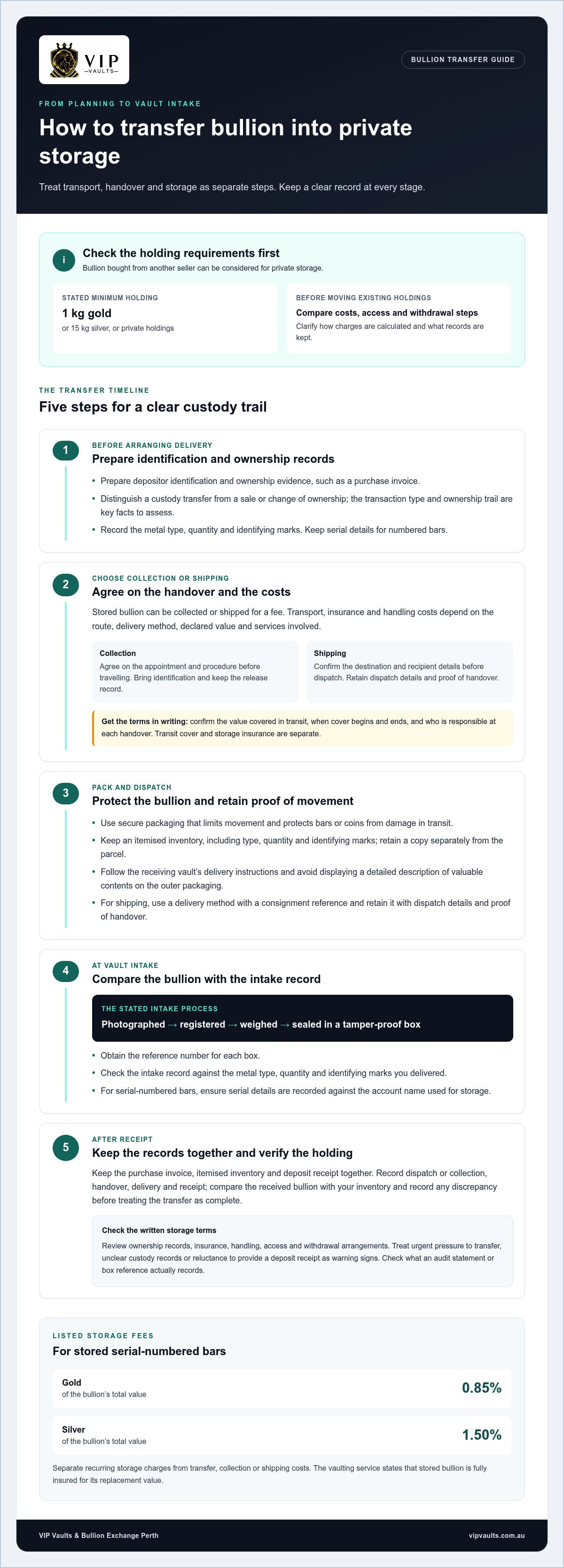

Transferring bullion to a private vault begins with arranging its delivery, either by collection or shipping for a fee. Private storage has a minimum holding of 1kg of gold or 15kg of silver, or private holdings. Once the bullion reaches the vault, its intake and storage arrangements determine how it is recorded and held.
It’s sensible to understand the process before moving valuable metal, especially if you bought it elsewhere or need to arrange transport. This guide covers delivery, collection or shipping, the records to keep, and how a private vault can store bullion from another provider.
You’ll also learn what to clarify about storage records, handling and fees before the transfer, so you can plan the process with greater confidence and understand where a private vault may fit your needs.
Key Takeaways
- Map out the transfer from arranging delivery through to the vault’s intake and recording process.
- Compare collection and shipping as practical ways to move bullion, and account for handling arrangements.
- Learn how bullion bought elsewhere can be considered for private storage and what holding details matter.
- Prepare for the deposit process by understanding the identification and documentation questions to address.
Bullion transfer and vaulting
Before transferring bullion to a private vault, organise delivery, ownership records and the deposit details. Treat transport, handover and storage as separate steps, and keep documentation for each.
Deposit documents and identification
Prepare identification for the depositor and ownership records, such as a purchase invoice. For Australian tax and reporting purposes, distinguish a custody transfer from a sale or change of ownership: the transaction type and ownership trail are key facts to assess. Before dispatch, record the metal type, quantity and any identifying marks, then compare them with the vault’s intake record.
Transfer transport, insurance and handling costs
Transport, insurance and handling costs depend on the route, delivery method, declared value and services involved. Separate any collection or shipping charges from ongoing storage costs when reviewing the arrangement. Get the transport and insurance terms in writing, including the value covered in transit and who is responsible at each handover. This creates a clear record of costs and custody.
Ownership records and chain of custody
Keep the purchase invoice, your itemised inventory and the deposit receipt together. At intake, bullion is photographed, registered and weighed, then sealed in a tamper-proof box; obtain the reference number for each box. Check that the record describes the metal and quantity you delivered. For serial-numbered bars, retain the serial details and ensure they are recorded against the account name used for storage. These records help connect your ownership evidence with the vault’s custody trail.
Vault selection risks and scams
Review written terms for ownership records, insurance, handling, and collection or shipping. Treat pressure to transfer funds or bullion urgently, unclear custody records, or reluctance to provide a deposit receipt as warning signs. Before arranging delivery, compare the terms with the service you intend to use and keep copies of correspondence. Check what any audit statement or box reference actually records, rather than assuming it accounts for every holding.
Collecting or shipping stored bullion
Stored bullion can be collected or shipped for a fee. Before choosing either option, agree on the handover, packaging and transit insurance arrangements.
Packaging bullion for transport
Use secure packaging that limits movement and protects bars or coins from damage in transit. Keep an inventory of each item’s type, quantity and identifying marks, and retain a copy separately from the parcel. Follow the receiving vault’s delivery instructions. Avoid displaying a detailed description of valuable contents on the outer packaging.
Transport insurance and tracking
Arrange insurance for the journey and confirm the value covered and when cover begins and ends. Storage insurance and transit cover are separate. Use a delivery method with a consignment reference, and retain that reference, dispatch details and proof of handover. These records help track the parcel and clarify when responsibility passes between parties.
For collection, agree on the appointment and procedure before travelling. Bring identification and keep the release record with your storage paperwork. For shipping, confirm the destination and recipient details before dispatch, then compare delivery confirmation with the vault’s receipt. If a parcel is delayed or arrives in concerning condition, retain the packaging and contact the carrier promptly using the consignment reference.
Keep a dated record of dispatch or collection, handover, delivery and receipt. Compare the received bullion with your inventory, including quantities and visible identifiers. Record any discrepancy before treating the transfer as complete. A clear paper trail links the stored holding to the parcel and helps with later collection or record reviews.
For a planned transfer, review the private vault storage arrangements alongside your transport plan, so delivery and intake steps fit together.
The vaulting service states that all stored bullion is fully insured for its replacement value. Privately stored serial-numbered bars are stored under a specific account name.
The listed gold storage fee for stored serial number bars is 0.85% of the bullion’s total value. The listed silver storage fee for stored serial number bars is 1.50% of the bullion’s total value.
Private storage for bullion bought elsewhere
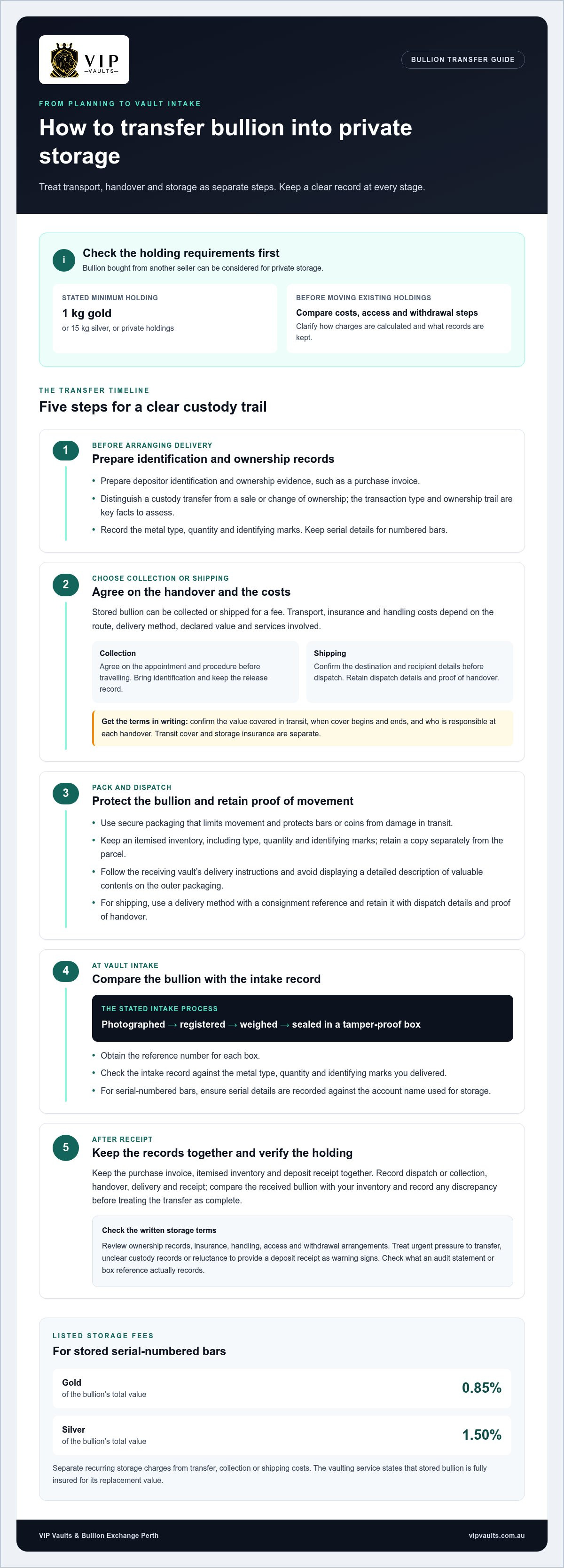
Bullion bought from another seller can be considered for private storage. The stated minimum holding is 1kg of gold or 15kg of silver, or private holdings.
Compare storage costs, access arrangements and withdrawal steps before moving existing holdings. Useful points to check include how charges are calculated, what records are kept for deposited metal and how access is authorised.
Private vault storage fees
To compare storage costs, check the calculation basis, valuation method and billing cycle in each agreement. A charge based on a percentage of the bullion’s value can change as the metal’s value changes. Separate recurring storage charges from transfer, collection or shipping costs. If you hold both gold and silver, ask how each is valued and billed.
For private holdings, compare how the vault records the items and calculates their value. The stated minimum is 1kg of gold or 15kg of silver, or private holdings. These details help you assess whether your existing bullion fits the storage arrangement and how its costs are determined.
Vault access rules
Access terms explain who can request a visit or withdrawal, how identity is checked and whether an appointment is required. Compare the process in writing rather than assuming storage means unrestricted entry. Note the access hours and any requirements for an authorised representative. These details affect how you can retrieve your bullion.
Withdrawal terms should explain how to request release, how the request is verified, and whether collection or shipping is available and at what cost. Check what records accompany the released metal and how the handover is documented. Keep the request, release confirmation and your inventory together as a record of the transaction.
Before depositing bullion bought elsewhere, compare the full terms against your priorities: cost, practical access and a clear withdrawal process. Keep the agreed arrangement with your purchase documents so your ownership evidence and storage records stay organised.
What documents and identification are required to deposit bullion in an Australian private vault?
Prepare identification for the depositor, proof of ownership and an itemised description of the bullion. Organise these records before delivery, and follow the vault’s deposit process.
Prepare personal identification
Have current identification ready for the account holder and anyone authorised to act on their behalf. Make sure the names match across identification, the storage account and ownership records. If another person will deliver the bullion, provide written authority identifying them and describing the deposit they can make. Keep copies of documents provided, noting the date and purpose of the deposit.
Bring ownership and purchase records
Use a purchase invoice, receipt or other ownership record to connect the bullion to you. For inherited or gifted holdings, keep available transfer or estate records with your inventory. Describe each item by metal, form and quantity, such as gold bars, silver coins or a mixed holding. Include serial numbers for marked bars where available, and compare them with the intake record.
Organise a deposit file
Keep the documents together in a deposit file, either securely stored digitally or on paper. Include your itemised inventory, proof of ownership, identification details, delivery or collection record, and the vault’s receipt after intake. A clear sequence helps distinguish your records from the vault’s storage documentation. For example, label the inventory with the deposit date and keep the matching receipt beside it.
Before dispatch, compare the account name, inventory and supporting documents for inconsistencies. A spelling difference or missing bar identifier can complicate record matching, so correct errors before handover. After the deposit, keep the receipt and any box reference with your ownership records. Use the same account name in later correspondence and withdrawal requests for a consistent record.
Organise your deposit paperwork before moving metal, then arrange private vault storage for your bullion.
VIP Vaults & Bullion Exchange Perth: Private Vault Rental
VIP Vaults & Bullion Exchange Perth offers private vault rentals and dedicated bullion lockers for storing bullion. Its bullion lockers use dual-key security, with the client holding the only keys. These options can suit people organising storage after documenting ownership and planning delivery.
Private storage may suit you if you want physical bullion held away from home, with the deposit and account arrangements documented. The right option depends on your holdings and storage needs. VIP Vaults & Bullion Exchange Perth also sells gold and silver bullion for those considering a purchase alongside storage.
To discuss private vault storage for your bullion, visit vipvaults.com.au.
Make your storage decision with confidence
Before transferring bullion to a private vault, consider how storage fits your longer-term plans. Think about whether you expect to retain the metal, add to your holdings or access it later. Your plans can help you identify the storage features that matter and the information you want recorded from the outset.
Set out your priorities in writing, including the type of bullion you hold and how you expect to manage it. This gives you a clear basis for choosing storage and keeps the decision focused on your needs. VIP Vaults offers private vault rental and bullion lockers for secure storage of precious metals. Review the options and book an appointment to discuss your storage needs.
For a conversation about your planned deposit and storage needs, contact VIP Vaults & Bullion Exchange Perth. A well-planned move can help you approach private storage with clarity and purpose.
Frequently Asked Questions
How do I transfer bullion to a private vault in Australia?
Start by arranging a storage account, then organise delivery and the vault’s deposit process. For private storage, the stated minimum holding is 1kg of gold or 15kg of silver, or private holdings. Prepare ownership records and an inventory, and keep delivery details so you can match your bullion to its receipt. Confirm the intended account name and handover arrangements before dispatch.
Can bullion be transferred directly from a dealer, bank, or another vault to a private vault?
Yes. Bullion bought elsewhere can be placed in private storage, including holdings moved from another custodian. The current holder must release the metal for delivery to the receiving vault, with delivery and ownership details aligned. For example, ask the dealer or existing vault to address the shipment to the receiving account holder, and keep its release record with the new deposit receipt.
What are Australian tax and reporting rules for moving bullion into private storage?
Distinguish a custody transfer from a sale or change of ownership. For Australian tax and reporting purposes, the transaction type and ownership trail are key facts to assess.