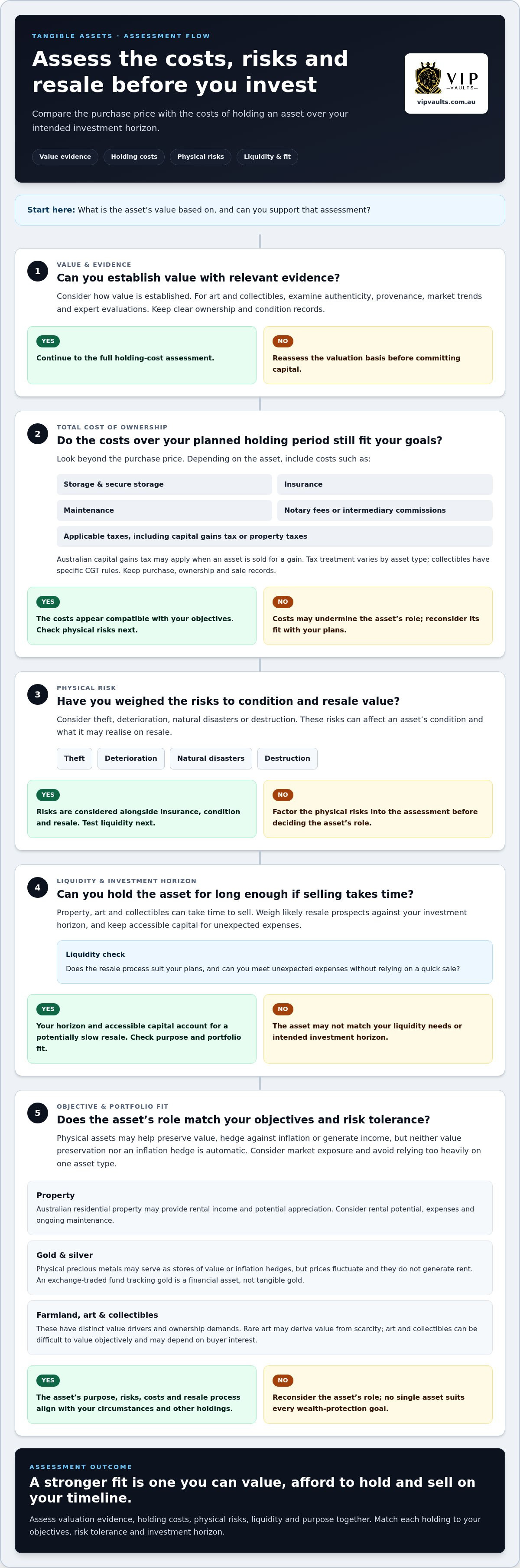
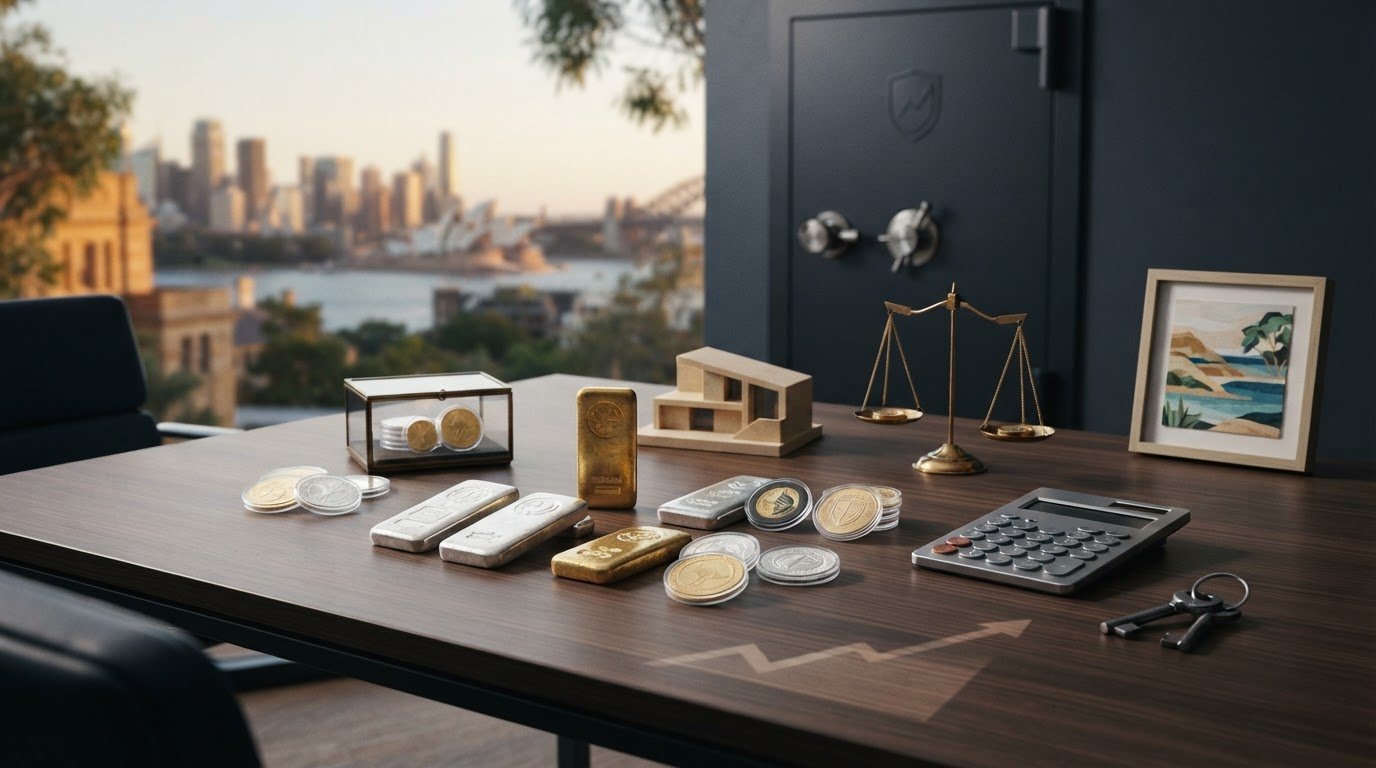
Assess tangible assets for wealth protection by comparing the purchase price with the costs of holding the asset over your intended investment horizon. Examine how its value is established, including authenticity and provenance where relevant, then weigh storage, maintenance, insurance, theft and deterioration risks against liquidity and resale prospects. The right assessment depends on the asset, your objectives and how long you can hold it.
Physical assets may store value, help hedge against inflation or generate income, but each role brings different risks and practical demands. A long-term outlook matters: property, art and other tangible assets can take time to sell, and their values can shift with market conditions. This article explains how to assess value and risk, consider ownership structures, and decide whether liquidity and resale fit your plans. It also explores how physical precious metals may fit within a broader wealth-protection approach, helping you make an informed decision without treating any one asset as a complete strategy.
Key Takeaways
- Assess value by weighing purchase price and holding costs against authenticity, provenance and realistic resale prospects.
- Physical assets may help preserve value or hedge inflation, but neither outcome is automatic; consider market exposure and the risks of damage or theft.
- Ownership structures affect asset protection. The Bankruptcy Act 1966 contains clawback provisions for certain transfers, according to the Federal Register of Legislation.
- Property, art and collectibles can take time to sell, so balance liquidity needs against your investment horizon and keep accessible capital for unexpected expenses.
- Match each asset to your objectives and risk tolerance, and avoid relying too heavily on a single asset type.
How do you assess a tangible asset before investing?
Assess an asset by weighing its value, holding costs, risks and likely resale against your objectives. For tangible assets for wealth protection, consider whether a holding supports your goals without creating costs or liabilities that undermine them.
Inflation Protection and Value Preservation
Inflation protection means an asset may help preserve purchasing power as prices rise. It matters to long-term investors, but tangible assets do not automatically keep pace with inflation or retain their value. Physical precious metals may be held as long-term investments or inflation hedges; scarcity can contribute to the value of rare art. Before treating an asset as a store of value, consider its market, holding costs and your intended investment horizon.
Compare the purchase price with costs over your planned holding period, including storage, insurance and maintenance where relevant. Assess physical risks such as theft, deterioration, natural disasters or destruction, which can affect condition and resale value. These costs and risks help determine whether the asset can support your portfolio through different economic conditions.
Comparing Property, Precious Metals and Other Assets
Australian residential property may provide rental income and potential appreciation. Gold and silver are physical assets that may serve as stores of value or inflation hedges, but they do not generate rent. Farmland, art and collectibles have distinct value drivers and ownership demands. Property can require ongoing maintenance, while rare items may depend on scarcity and buyer interest.
No single asset suits every wealth-protection goal. Compare potential income, costs, physical risks and resale processes. For art and collectibles, examine authenticity and provenance; for property, consider rental potential and expenses. Gold or silver bullion may suit a long-term plan, but prices fluctuate. Let your circumstances and investment purpose guide the comparison.
Australian Tax and Holding Costs
Australian capital gains tax may apply when a tangible asset is sold for a gain, and tax treatment varies by asset type. Collectibles have specific CGT rules, so identify the asset correctly and retain purchase, ownership and sale records. Tax affects the amount you retain after a sale, so include it when assessing an asset’s overall value.
Buying and holding an asset can also involve insurance, maintenance, secure storage, notary fees or intermediary commissions, depending on the asset. Property and collectibles may bring ongoing costs, while applicable taxes can include capital gains or property taxes. Include these expenses in your holding-period assessment rather than judging an investment by its purchase price alone.
Choosing Assets for Portfolio Diversification
Property, farmland, gold, silver, art and collectibles are tangible assets that may contribute to wealth preservation. A diversified Australian portfolio can spread exposure across asset types, but physical holdings do not always move independently of shares and bonds. Avoid relying too heavily on one category or assuming tangible ownership removes market risk.
Match each holding to your objectives, risk tolerance and investment horizon. Property may support an income objective through rent, while physical precious metals may serve a different long-term purpose. An exchange-traded fund tracking gold is a financial asset, not tangible gold. Assess how each investment fits alongside your other holdings and liabilities, and whether its costs and resale process suit your plans.
For tangible assets for wealth protection, examine valuation evidence and the factors that could influence resale. Art and collectibles can be difficult to value objectively, so provenance, market trends and expert evaluations matter. Keep clear ownership and condition records. These practical steps help you assess an asset’s role before committing capital.
Protecting assets through strategic ownership
An ownership strategy concerns who holds an asset, how it is managed and how decisions are recorded. For valuable property, bullion or business interests, the structure can affect control, exposure to liabilities, tax planning and estate arrangements. Consider these factors before transferring ownership, not only after a dispute or financial setback.
Start by mapping assets against their associated risks. A business with trading liabilities, for example, presents different risks from a family home or a collection of precious metals. Keeping higher-risk activities separate from valuable family assets can help limit exposure. Companies and trusts may form part of that strategy, but their roles, costs and obligations need to align with the asset and its purpose.
Ownership records matter as much as the structure itself. Keep clear documentation of titles, agreements, contributions and decisions. For assets held through a trust or company, record the relevant trustee or director roles and responsibilities. Reliable decision-makers and consistent records can help reduce confusion during a change in circumstances, a business transition or estate planning.
Australian legislation also sets limits on some transfers. The Bankruptcy Act 1966 is cited as Australian legislation containing clawback provisions for certain transfers, according to the Federal Register of Legislation. The Corporations Act 2001 is also cited as Australian legislation containing clawback provisions for certain transfers, according to the Federal Register of Legislation. These provisions make timing, value and purpose important considerations in ownership planning.
Transfers made to hinder or delay creditors may be challenged, and certain transfers below market value may be subject to clawback. Transferring a home or other asset to a relative does not, by itself, remove the associated legal and financial risks. Keep transactions transparent, document their commercial purpose and account for fair value. A last-minute transfer can create complications rather than strengthen protection.
Review arrangements as family circumstances, business activities and obligations change. Separate personal and business finances, review lending arrangements, and limit personal guarantees where possible. Coordinate ownership decisions with tax and legal obligations. Trust structures can support succession planning, but their operation depends on clear roles and careful administration.
For an estate plan, map who owns each asset, who controls any entity, and how decisions pass to successors. Business owners should consider how appointors, corporate trustees and ownership pathways affect continuity. If physical silver is part of your plan, consider how ownership and secure custody fit together; explore silver bullion as one tangible holding.
Definition and characteristics of tangible assets
A tangible asset is a physical item with economic value that can be seen or handled. In Australia, examples include a house, farmland, gold, silver, artwork, vehicles, raw materials and furniture. Unlike account balances or contractual claims, these holdings exist in physical form. That distinction shapes how owners store, insure, value and eventually sell each item.
Property and land are tangible assets, whether residential, commercial or undeveloped. A house may provide a place to live, while an investment property may produce rental income. Farmland and forest plots are land-based assets, but their value can depend on use and condition. Buildings also require maintenance, and ownership can involve practical decisions about repairs, access and ongoing costs.
Precious metals can be held physically as bars, coins or jewellery. Gold and silver have market prices, but an individual item’s resale value can also depend on its form, condition and buyer demand. Jewellery combines metal with design and workmanship, so its value may not match the value of its metal content alone. Physical possession also brings storage and security considerations.
Some tangible assets derive value from scarcity or distinctive qualities. Rare art and collectibles, for example, can be difficult to value because comparable sales, authenticity and provenance influence assessments. A documented history can help establish an item’s origin and ownership. Unlike standardised items, individual artworks can differ substantially, so valuation may depend on specialist knowledge and current market interest.
Not every investment linked to a physical asset is tangible. An exchange-traded fund that tracks gold remains a financial asset: the investor owns fund units, not physical gold. Shares, bonds and other fund units are financial assets, while patents, trademarks and software are intangible assets. Separating these categories helps investors understand what they own and which risks are directly attached to it.
Tangible assets may preserve value, generate income or provide exposure beyond financial markets, but their roles vary. A rental property may produce rent; a collectible may rely on future demand; a vehicle may lose value through wear. Performance can also depend on market conditions, maintenance and storage. Diversification means considering how each holding complements the portfolio, rather than assuming physical ownership guarantees stability.
Before making ownership decisions, identify the asset, its intended purpose and the evidence supporting its value. Then consider how it will be managed, protected and sold. Relevant regulatory, tax and ownership considerations depend on the asset and transaction. A clear inventory, purchase records and provenance documents can help you track a house, bullion holding or artwork as circumstances change.
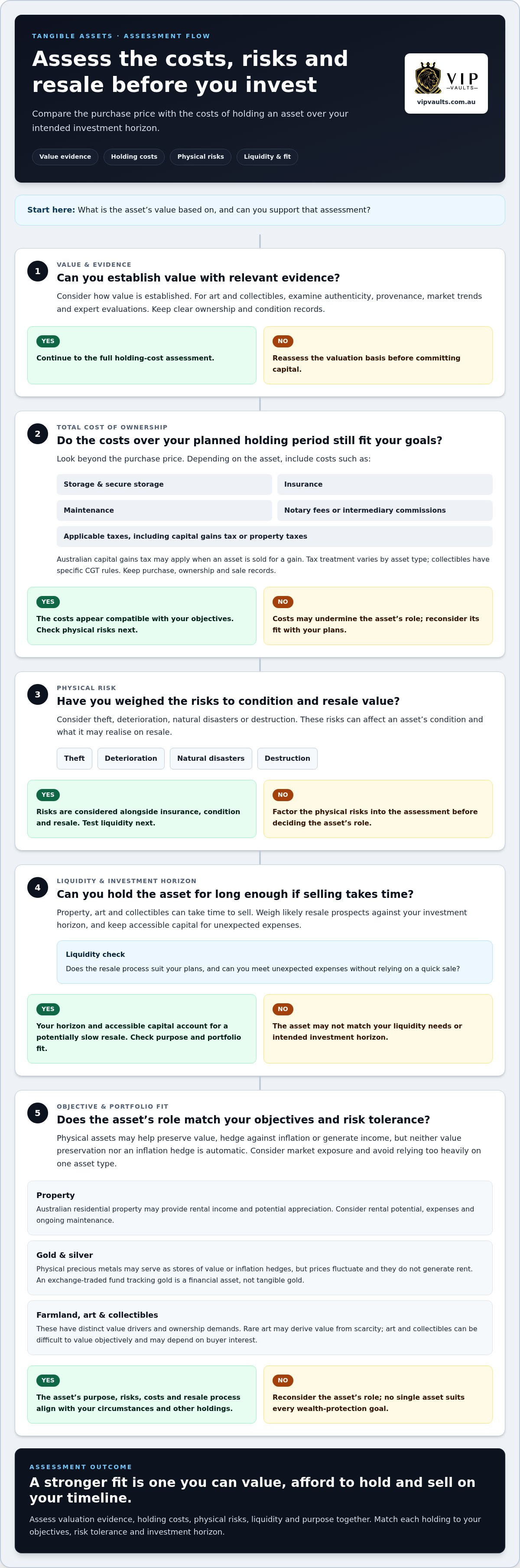
Illiquidity and market volatility
Historical returns and volatility for Australian property, gold and farmland vary with the measurement period and calculation method. Property comparisons may include rent, while farmland returns may include lease income; gold’s return depends on its market price and sale timing. Holding costs also affect the result, so headline price movements alone do not show an investor’s realised return.
Liquidity describes how readily an asset can be converted into cash without accepting an unfavourable sale price. A listed share can generally be sold through a market, while selling a house or artwork involves finding a buyer and completing a transaction. That difference matters if an unexpected expense arises before you planned to sell. A long-term asset may be valuable yet unavailable as ready cash.
Market volatility creates a separate challenge. Australian property values and collectible prices can change with economic conditions, buyer demand and market sentiment. Gold and silver prices also move, so physical ownership does not fix an asset’s sale value. Tangible assets can reduce a portfolio’s dependence on financial markets, but they do not always move independently of shares and bonds.
Plan for the gap between needing cash and completing a sale. Keeping accessible capital available can help cover an unexpected expense or pursue an opportunity without selling a long-term holding at an unfavourable time. For example, a property owner facing an urgent cash need may have to consider selling before their preferred investment horizon ends. Timing can affect the outcome.
Consider the asset’s buyer pool and sale process. A standardised asset may have more potential buyers than a rare collectible that requires specialist interest. Property and artwork can take time to sell, and opaque or unlisted investments may reveal risks during market stress, when liquidity matters most. Include likely transaction steps and ongoing costs in your cash-flow planning.
Trusts and discretionary ownership arrangements affect who controls or benefits from an asset, but they do not make the underlying holding liquid. A trust holding farmland still depends on a buyer, sale process and market conditions to convert the land into cash. Keep ownership structure separate from liquidity planning: identify which assets can meet near-term needs and which require time to sell.
Review liquidity alongside volatility whenever your circumstances change. If income falls or a major expense arises, your capacity to wait for favourable market conditions may also change. Avoid relying on one asset type for both immediate access and long-term preservation. A balanced plan accounts for cash needs, market swings and the practical time required to sell property, farmland or collectibles.
Historical returns vary by measurement period and calculation method. Property returns may include rent, farmland returns may include lease income, and gold returns depend on its market price and sale timing; holding costs also affect realised returns. Property values and gold prices can move with market conditions, but no specific historical return or volatility figures are provided.
Investment horizon and resale considerations
An investment horizon is the period you expect to hold an asset before needing its value. Match it to your objectives, risk tolerance and likely cash needs. Property intended for long-term rental income serves a different purpose from bullion held for wealth preservation. Define the purpose before buying, then consider whether your expected holding period allows time for value changes and a considered sale.
Resale planning starts before purchase. Identify likely buyers and the usual sale process for the asset. Selling a residential property involves preparing it and completing a transaction; selling a rare artwork depends on finding an interested buyer and supporting its provenance. For each asset, consider how condition, documentation and buyer demand could affect the sale price and timing.
Build an exit plan around the asset’s characteristics. Keep title documents for property, purchase records for bullion, and provenance records for art or collectibles. These records help establish ownership and give a future buyer useful context. If an asset requires specialist assessment, factor that step into your expected sale process rather than treating resale as an immediate conversion to cash.
Holding costs influence when a sale makes sense. Property can involve maintenance and insurance, while physical assets need suitable storage and protection. Compare ongoing expenses with the asset’s intended role and expected holding period. For example, if costs continue while you wait for a suitable buyer, they reduce the value retained from a later sale.
Review your plan when circumstances shift. Changes in income, family responsibilities or business plans can alter your cash needs and risk tolerance. Reassess whether an asset still serves its purpose and whether its sale process fits your revised timeline. Do not assume market conditions will align with a planned sale date: timing depends on buyer demand and prevailing prices.
Inheritance planning adds another dimension. An asset intended to pass to family needs clear ownership records and practical arrangements for control or sale. Farmland, a house or a collection of coins may each require different management decisions. Include the asset in estate planning discussions, and make its intended role clear to those responsible for future decisions.
Review tangible holdings alongside the rest of your portfolio, rather than judging each in isolation. Record each investment’s original purpose, anticipated holding period, ongoing costs and preferred exit route. This comparison can reveal when an asset ties up too much capital or requires more management than expected. Revisit the record as your objectives and circumstances change.
If physical bullion forms part of a longer-term plan, arrange secure bullion storage as part of your holding strategy.
VIP Vaults & Bullion Exchange Perth: Private Vault Rental
VIP Vaults & Bullion Exchange Perth offers private vault rentals and bullion lockers for people holding physical assets. If your investment plan includes bullion, consider how secure storage fits your ownership and resale arrangements. The business also sells gold and silver bullion, providing an option for those considering physical precious metals.
Choose storage as part of your broader asset plan, alongside ownership records, insurance considerations and your intended investment horizon. A private vault or bullion locker may suit holders seeking dedicated storage for physical assets rather than keeping them at home. These services address storage needs; they do not remove market risk or make an asset immediately liquid.
To discuss your storage needs, contact VIP Vaults & Bullion Exchange Perth or visit vipvaults.com.au.
Make your next wealth-protection decision deliberately
The value of tangible assets for wealth protection depends not only on what you own, but on how each holding fits your wider financial plan. Before taking action, decide what role a physical asset should serve, how long you expect to hold it, and what practical arrangements ownership requires. That clarity can help keep future decisions aligned with your priorities as your circumstances change.
If physical bullion forms part of your plans, VIP Vaults & Bullion Exchange Perth offers private vault rental, bullion lockers and gold bullion. These offerings may be relevant when considering where bullion fits in your investment approach and how to manage its physical ownership. Choose a next step suited to your plans, while keeping liquidity, resale and other demands on your capital in view.
For information about these options, contact VIP Vaults & Bullion Exchange Perth. A considered plan puts you in a stronger position to make decisions with confidence.
Frequently Asked Questions
What are tangible goods?
Tangible goods are physical items with economic value that can be possessed or handled. Examples include a house, farmland, a gold coin, a vehicle or a piece of furniture. For investors, the distinction is practical: a physical item needs care, storage or maintenance, unlike an account balance. A gold coin, for instance, has a physical form, while a digital record of a fund holding gold represents a financial interest.
What are the differences between a tangible asset, an intangible asset, and a financial asset?
A tangible asset is physical, such as property, a silver bar or artwork. An intangible asset has value without physical form, such as a patent, trademark or software. A financial asset represents a financial claim or investment, including shares, bonds and fund units. An exchange-traded fund tracking gold is still a financial asset: owning units does not mean you own or possess the underlying metal.
What is the best way to protect your wealth?
There is no single wealth-protection method for every Australian investor. Start by matching your asset mix to your goals, time horizon, cash needs and ability to tolerate losses. Diversifying across asset types can reduce concentration risk, while accessible funds can help meet expenses without forcing a sale. Consider insurance, ownership records and estate arrangements as part of the wider plan, and seek advice relevant to each asset class.
What risks and limitations should you be aware of?
Physical ownership brings practical responsibilities alongside investment risk. A house may need repairs; a collectible may require specialist valuation; bullion needs secure custody. Some assets take time to sell, and their market values can move with economic conditions. Account for insurance, storage and maintenance in your decisions. Consider whether your holdings are concentrated in one asset type, since diversification cannot remove every market or ownership risk.
How can Australian investors buy and securely store physical gold and silver?
Investors can purchase physical gold or silver bullion and arrange storage suited to their ownership plans. VIP Vaults & Bullion Exchange Perth sells gold and silver bullion and offers private vault rental and bullion lockers. Keep purchase and ownership records with your investment documents. When choosing between home storage and a dedicated facility, consider security, access arrangements and how you will manage the holdings over time.
What risks affect tangible assets, including theft, damage, illiquidity, and price volatility?
Risks depend on the asset and how it is held. A flood or fire can damage property or stored items; theft can remove a physical holding altogether. Illiquidity means a sale may take time, while price volatility can change what a buyer will pay. Keep an inventory and ownership records, consider suitable insurance and storage, and avoid relying on an immediate sale to cover planned expenses.
How does inflation affect the value of property, precious metals, farmland, and other tangible assets?
Inflation can coincide with rising prices for property, metals or farmland, but it does not make every asset rise at the same pace. Property values can also reflect demand and rental prospects; farmland depends on its productive use and market interest. Gold and silver prices fluctuate with market conditions. For art and collectibles, scarcity and buyer demand influence value. Assess each holding over your intended period, including its ongoing costs.