
A gold bar isn’t automatically the better choice: bars and coins can differ in size, premiums, liquidity and potential tax considerations. The most useful questions to ask before buying gold cover the product’s weight and purity, the total price and premium, delivery or storage arrangements, and how the dealer’s buyback terms work.
Buying physical gold is a significant decision, so it’s reasonable to want clear answers before committing. A reputable dealer should explain the products and terms plainly, including how the price relates to the spot price and what happens if you later want to sell.
This guide shows what to ask about a dealer’s credibility, professional credentials, product authenticity and secure storage. It also explains how to weigh bars against coins, so you can assess which format better suits your priorities before making a purchase.
Key Takeaways
- Ask a dealer to explain pricing, buyback terms, delivery and storage before you commit to physical gold.
- Look for clear evidence of a dealer’s reputation and a transparent approach to handling complaints.
- Consider your investment goals, timeframe and risk tolerance before deciding whether gold suits your portfolio.
- Compare bars and coins by weight, purity, premiums and resale considerations to find the format that fits your priorities.
What questions should a reputable dealer answer before you buy physical gold?
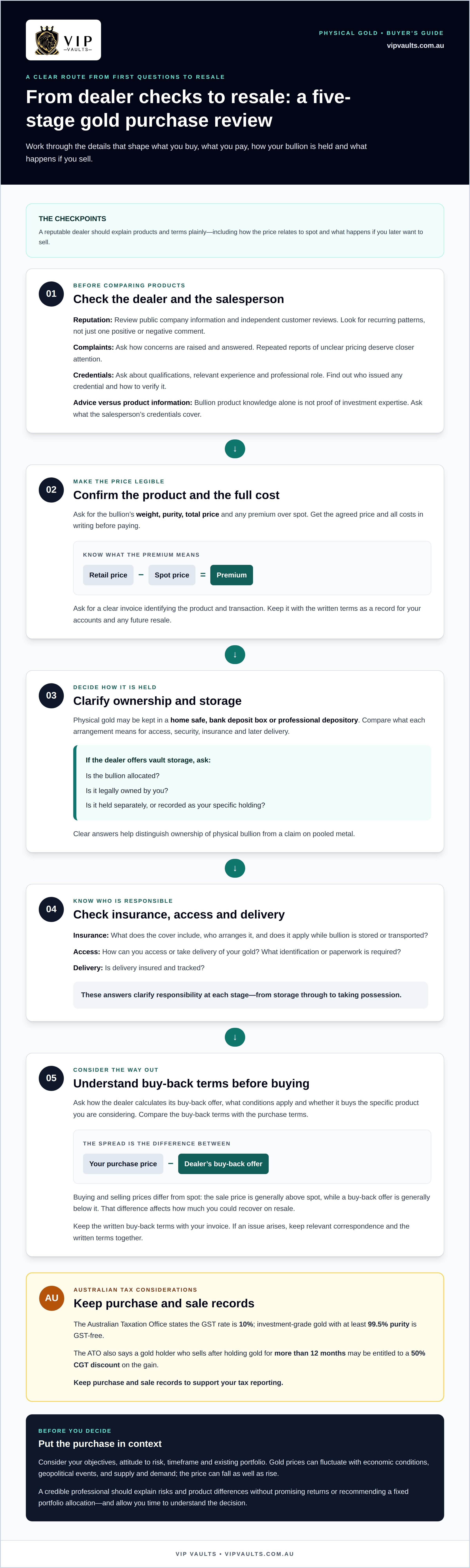
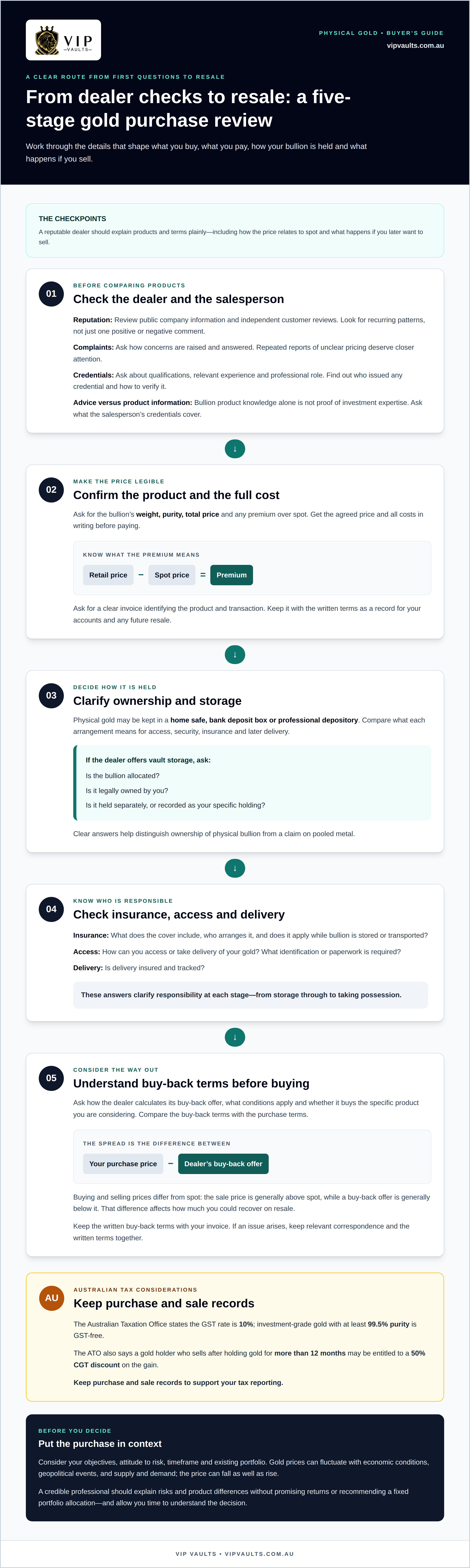
Ask the dealer to explain the bullion’s weight, purity, total price and premium over spot. Get the agreed price and any costs in writing before paying. A clear invoice should identify the product and transaction, giving you a useful record for your accounts and a future resale.
Storage is part of the purchase decision, not an afterthought. Physical gold can be kept in a home safe, a bank deposit box or a professional depository. Ask what each arrangement means for access, security, insurance and later delivery. If the dealer offers vault storage, ask whether the bullion is allocated, legally owned by you and held separately or recorded as your specific holding.
Get clear answers about insurance. Ask what the cover includes, who arranges it and whether it applies while bullion is stored or transported. Also establish how you can access or take delivery of your gold, what identification or paperwork is needed, and whether any delivery is insured and tracked. These details clarify responsibility at each stage.
Before buying, ask how resale works. The dealer should explain its buyback process, the conditions that apply and how its offer is calculated. Compare buyback terms with the purchase terms, since buying and selling prices differ from the spot price. Keep the written terms with your invoice.
In Australia, the Australian Taxation Office states the GST rate is 10%; investment-grade gold with at least 99.5% purity is GST-free. The Australian Taxation Office also says a gold holder who sells after holding gold for more than 12 months may be entitled to a 50% CGT discount on the gain. Keep purchase and sale records to support your tax reporting.
These questions help distinguish ownership of physical bullion from a claim on pooled metal. Clear answers about storage, insurance, delivery and resale let you assess whether the arrangement suits your purposes before committing.
How can a professional help you choose a reputable dealer?
A professional can help assess a dealer’s reputation using public company information and independent customer reviews. Look for consistent patterns across reviews rather than relying on one positive or negative comment. For example, repeated concerns about unclear pricing deserve closer attention. Educational material can also show whether the dealer explains bullion terms clearly and supports informed decisions.
Among the questions to ask before buying gold, include how the dealer handles complaints. Look for a clear process for raising concerns and receiving a response. If a product or pricing issue arises, keep the invoice, written terms and relevant correspondence together. These records can help you explain the issue and follow the dealer’s stated process.
A professional should explain premiums, spreads and fees before purchase. The premium is the retail price minus the spot price; the spread is the difference between your purchase price and the dealer’s buy-back offer. Get the agreed retail price and all costs in writing before signing or paying. Use these questions to ask before buying gold to understand the full transaction, not just its advertised price.
Liquidity matters because it affects how readily you may be able to resell bullion. Ask how buyback prices are calculated, what conditions apply and whether the dealer buys the specific product you’re considering. The sale price is generally above spot, while a buyback offer is generally below it. That difference affects how much you could recover on resale.
Professional guidance can help relate these details to your wealth goals without presenting gold as a guaranteed outcome. Compare purchase and buy-back terms for gold and silver, and consider whether each product’s purity and resale arrangements suit your plans. Clear explanations should leave you able to assess the transaction before deciding.
What professional credentials should a precious metals salesperson have?
Ask the salesperson to explain their qualifications, relevant experience and professional role. Someone selling bullion may discuss product features, while someone giving personalised investment advice has a different responsibility. Ask what their credentials cover, who issued them and how to verify them with that organisation. Don’t mistake a confident presentation or knowledge of precious metals for proof of investment expertise.
Before investing, consider your objectives, attitude to risk, timeframe and existing portfolio. Gold prices can fluctuate with economic conditions, geopolitical events, and supply and demand. Gold may serve as a store of value or a diversification tool, but its price can fall as well as rise. A professional should help you consider these factors without promising returns or recommending a fixed portfolio allocation.
Ask the salesperson to explain the differences between physical bullion and alternatives such as gold accounts or exchange-traded products. With an account, ask whether the provider holds enough underlying metal and what legal claim you have. Unallocated gold represents a share in a pool of physical gold, while paper gold may not be backed by physical metal. For an exchange-traded product, understand the issuer’s structure and legal-title policies before deciding.
Good investor education makes risks and product differences understandable. Ask how the investment works, what could affect its value, and how you might sell or access the asset. For example, compare taking physical delivery with holding metal through an account. A credible professional should distinguish product information from personal investment advice, answer questions directly and allow you time to understand the decision before committing.
How a professional can help you compare gold bars and coins
A professional can compare bars and coins by weight, purity, premium and resale considerations. Gold bullion products are typically 99.99% pure, but the product’s form and size affect its retail premium. Ask for the total price and the premium over spot for each option, rather than comparing headline prices alone.
Bars suit buyers who prioritise straightforward bullion exposure. Basic cast bars usually carry the lowest premiums among bullion products. Size matters: a 1-gram bar can have a higher premium per gram than a 100-gram bar. A professional can show how those differences affect the amount of gold you receive for your purchase.
Coins offer a different format, and premiums can vary by product. Ask how a coin’s price compares with a bar of equivalent weight and purity. A reputable dealer should explain the premium clearly, rather than implying a coin’s design or familiarity automatically makes it better value.
Resale is another part of the comparison. Bars and coins can differ in liquidity, so ask how the dealer assesses buyback prices for each product and what conditions apply. Consider whether you prefer one larger item or smaller pieces that could be sold separately. The right choice depends on your intended use, trading preferences and resale plans.
Use a consistent comparison: match weight, confirm purity, compare the premium, then review buyback terms. Ask for any differences between the products to be explained in plain language. This makes the trade-offs visible without assuming that bars or coins are universally superior.
For a physical gold purchase, explore gold bullion options and compare the product details that matter to your decision.
VIP Vaults & Bullion Exchange Perth: Gold Bullion
VIP Vaults & Bullion Exchange Perth sells gold bullion for those considering physical gold after comparing product features and purchase terms. It also offers private vault rental and bullion lockers for secure storage of bullion.
Consider these options if your next step is to buy gold bullion or arrange storage for physical precious metals. Silver bullion is also available if you’re weighing gold against silver. Choose products and storage to suit your ownership and security preferences.
For a considered next step, contact VIP Vaults & Bullion Exchange Perth to discuss gold bullion or storage options.
Choose a next step that fits your plans
Before acting, decide what role physical gold should play in your broader financial plans and what would make the purchase feel considered rather than rushed. The questions to ask before buying gold can help you set a decision framework, but your priorities should guide the final choice. Take time to weigh ownership, storage and the kind of bullion that suits your intentions. A clear personal plan gives you a reference point if market conditions or your circumstances change.
When you’re ready to explore a purchase, VIP Vaults & Bullion Exchange Perth offers Gold Bullion, with Private Vault Rental and Bullion Locker options for storage. Choose the next step that matches your priorities, without feeling pressured to act before you’re ready. Contact VIP Vaults & Bullion Exchange Perth to discuss your next step. You can move forward at your own pace, with your decision grounded in what matters to you.
Frequently Asked Questions
How can a professional help you choose between gold coins and gold bars?
A useful comparison considers specific products against your priorities, rather than declaring one format universally better. Ask for each item’s weight, purity and premium side by side. If you plan to make purchases in different amounts over time, for example, discuss how each product’s size fits that approach. Use the same criteria for every option before choosing.
How should a reputable precious metals dealer present an attractive offer?
A sound quote should identify the exact bullion product and explain how its price is calculated, rather than relying on a headline figure alone. Ask for the product’s weight, purity and premium, plus a clear statement of the total payable. Compare like-for-like products using prices obtained at the same time, since spot prices can move with market conditions.
What fees and commissions should a dealer disclose before you buy?
Ask for an itemised account of every amount payable before committing. It should clarify whether commission is included in the quoted retail price or charged separately, and identify any transaction, delivery or storage costs. Ask how the dealer’s buyback calculation differs from the purchase quote. Written figures help distinguish your initial outlay from possible resale proceeds.
What is the spot price?
The spot price is the reference market price for the precious metal before a dealer’s retail premium is added. Physical metal is commonly quoted in dollars per troy ounce; one troy ounce of gold is 31.1 grams. A bullion product’s retail price can therefore differ from spot because it includes a premium. Check that you’re comparing the same metal and weight.