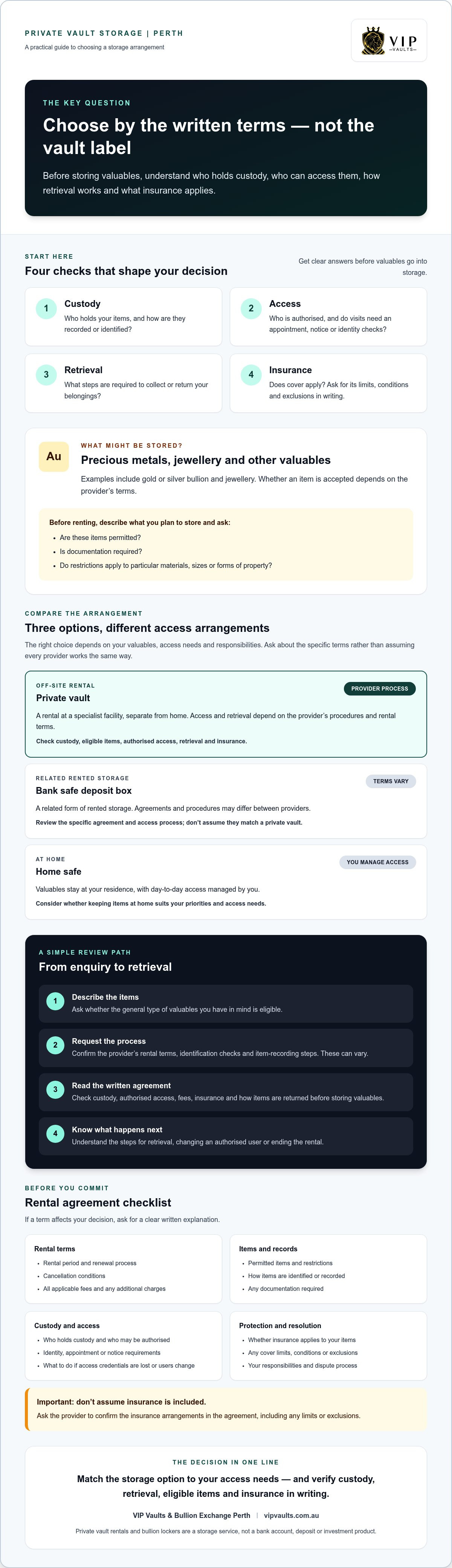

What matters more when protecting valuables: the name on the vault, or the terms that determine who holds them and how you retrieve them? Choosing private vault storage means weighing practical details such as custody, access and insurance against the needs of the items you plan to store.
A dedicated vault can be an alternative to keeping precious metals or jewellery at home. But rental inclusions and custody arrangements vary, so check the details rather than relying on labels. This guide explains what to ask about access, retrieval, rental terms and insurance, and how to compare a private vault with a bank safe deposit box or home safe. VIP Vaults & Bullion Exchange Perth offers private vault rentals and bullion lockers as a specialist storage option independent of traditional financial institutions. Use the questions ahead to assess whether a particular arrangement suits your valuables and your access needs.
Key Takeaways
- Judge a private vault by its written terms and procedures, not by the label alone.
- Before renting, confirm who holds custody of your items, who may access them and how retrieval works.
- Check that your intended items are eligible and ask what insurance applies, including any limits or exclusions.
- Compare a private vault, bank safe deposit box and home safe against your own access needs and responsibilities.
- Ask for a clear explanation of rental terms and any additional charges before deciding whether a private vault or bullion locker suits your valuables.
What Is Private Vault Storage, and What Can It Be Used For?
Private vault storage is a rental arrangement that gives an individual or business space at a specialist facility to store selected valuables away from home. Unlike a home safe, the storage space is off-site, and access depends on the provider’s procedures and rental terms. These arrangements vary, so the words “private vault” alone don’t explain how items are held, protected or returned.
A private vault rental is a storage service, not a bank account, deposit or investment product. A safe deposit box is a related form of rented storage, but providers may have different agreements and procedures. VIP Vaults offers private vault rentals and bullion lockers. Ask the provider to explain its specific arrangements before deciding whether they meet your needs.
What valuables might people consider storing in a private vault?
People may consider storing precious metals such as gold or silver bullion, jewellery and other valuables. Whether a particular item is accepted depends on the provider’s terms. Some owners prefer to keep selected assets separate from everyday household belongings, while others value having items accessible at home. The right arrangement depends on your priorities.
Before renting, describe the type of items you intend to store and confirm what is permitted. Ask whether the provider needs documentation, or whether restrictions apply to particular materials, sizes or forms of property. Getting clear answers first can help you choose a suitable storage option and avoid surprises when you are ready to store your items.
How does private vault rental differ from a home safe?
A home safe keeps valuables at your residence, with day-to-day access managed by you. Private vault rental places them at a separate facility, where access and retrieval follow the provider’s process. This shifts the balance between personal access and off-site storage, but it doesn’t automatically make one option better. Consider how often you may need your items and what access process you’re comfortable with.
Clarify who controls access to the storage space, whether anyone else can be authorised and what steps you must follow to retrieve your belongings. Ask how the provider records stored items, if applicable, and what to do if you lose access credentials or need to update authorised users. Look for clear answers in the written terms.
Private vault storage Perth may be one option to compare with a home safe, depending on your circumstances. Treat it as a rental service, not a way to earn a return or hold funds. Before committing, confirm the provider’s custody arrangements, access rules, item eligibility and any applicable insurance details in writing.
How Private Vault Storage Works: Rental, Custody and Access
Private vault rental usually starts with an enquiry about available storage options. Describe the general type of items you’re considering and ask whether they’re eligible. If the arrangement may suit, the provider can explain its rental terms and access procedures for you to review. Identification checks, item-recording processes and other steps vary, so confirm the provider’s process rather than assuming there is one standard approach.
Before placing valuables in storage, make sure the written agreement explains custody, who is authorised to access the vault and how items are returned. A clear process helps you understand what to expect if you need to retrieve an item, change an authorised user or end the rental.
What should a private vault rental agreement explain?
Check the rental period, renewal process, cancellation conditions and all applicable fees. Ask how the provider identifies or records stored items, and what steps it follows when returning them. Review your responsibilities, relevant exclusions and the process for raising a dispute. If a term affects your decision, request it in writing rather than relying on a verbal explanation.
Ask whether insurance applies to your items and request written information about any cover, limits, conditions or exclusions. Don’t assume insurance is included unless the provider confirms it in the agreement.
How should renters check access and retrieval arrangements?
Ask whether visits require an appointment, advance notice or identity checks. Confirm who may access the vault and what authorisation documents are needed if someone else may collect your belongings. Find out how retrieval works and whether any service limitations could affect access. Don’t assume every provider offers the same hours or process.
Resolve these questions before storing valuables:
- What are the rental period, renewal, cancellation and fee terms?
- Which items are permitted, and how are they recorded or identified?
- Who has custody, and who can be authorised to access the vault?
- What identification, appointment or notice requirements apply?
- How does retrieval work, and what insurance details, exclusions or dispute procedures apply?
VIP Vaults offers private vault rentals and bullion lockers. If you’re comparing storage options, review the private vault rental information and ask about current terms, access arrangements and eligible items before deciding.
Private Vaults, Bank Safe Deposit Boxes and Home Safes Compared
These options differ in where valuables are kept, who manages access and which written terms apply. None is automatically the right choice for every owner. Compare the actual arrangements, including custody, retrieval and renter responsibilities, rather than relying on terms such as “private” or “secure”.
| Consideration | Private vault | Bank safe deposit box | Home safe |
|---|---|---|---|
| Custody | Items are stored under the provider’s rental and custody arrangements. Confirm who can handle or access them. | Arrangements depend on the institution and its box agreement. Confirm responsibilities and any applicable protections directly. | You keep the safe and its contents at home and manage access. |
| Access | Follow the provider’s stated access and retrieval procedures. | Access processes and availability depend on the institution’s current service and terms. | Access is managed by you, subject to the safe’s location and your own arrangements. |
| Provider relationship | A rental relationship with a specialist storage provider, separate from general banking services. | A service offered by a bank or other financial institution, where available. | No storage provider, but you remain responsible for the safe and its use. |
| Terms and responsibilities | Check rental, permitted items, fees, insurance details and retrieval terms. | Check current availability, box terms, fees and protections with the institution. | Consider installation, upkeep, access control and any insurance implications. |
When might private vault rental suit a valuables owner?
Private vault rental may suit someone who wants selected valuables stored away from home and is comfortable with the provider’s access process and written terms. A specialist provider can offer a different relationship from general banking services, but that distinction alone doesn’t establish better access, custody or protection. For wider context, read this guide to private vaults in Australia, then compare providers’ documented arrangements.
How do home safes and bank boxes differ from private vaults?
A home safe keeps access close at hand, while rented storage means following an external provider’s retrieval process. Bank box services may differ in availability, terms and protections, so confirm current details with the institution rather than assuming a standard offer. If you’re considering storage for larger quantities, see this high-capacity safe deposit box guide for additional context.
For any option, ask what happens when you need access, who is responsible for the contents and what insurance applies. The best fit depends on your items, access preferences and confidence in the agreement.
How to Evaluate a Private Vault Provider Before Renting
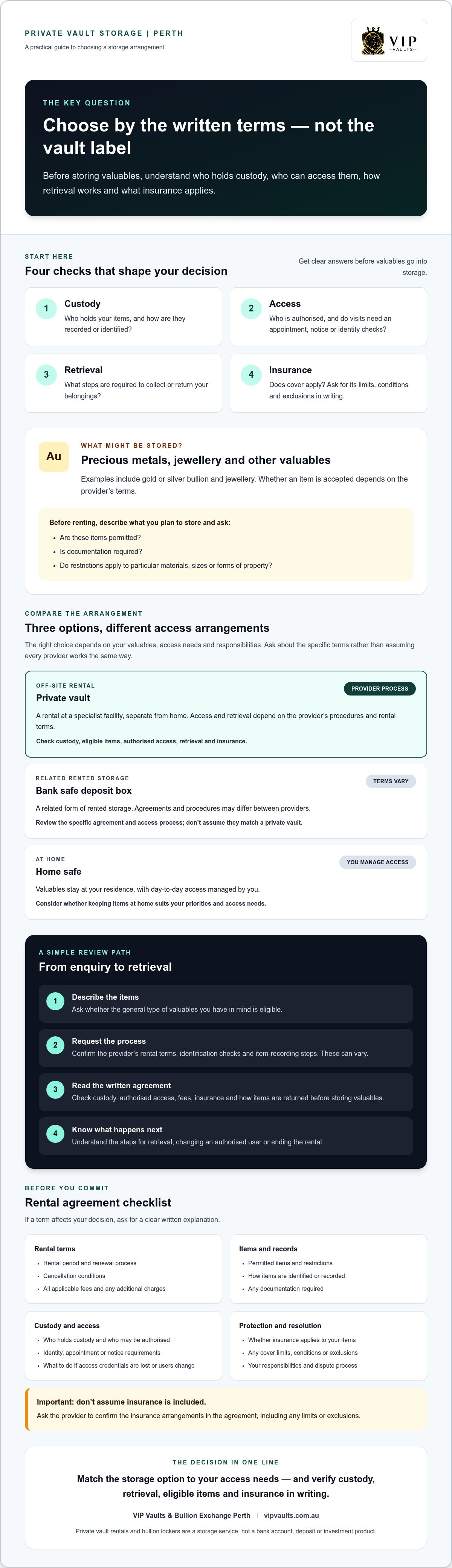
Start with verifiable terms, not general assurances. Ask the provider to explain its custody arrangements, safeguards, access process and your responsibilities in plain language. Then check that the answers match the written agreement.
Before renting, confirm the permitted items, custody and access arrangements, rental and cancellation terms, all fees, applicable insurance details, and how to contact the provider about retrieval or a concern.
Which security and custody questions should you ask?
Ask the provider to describe the safeguards relevant to your storage arrangement and explain which responsibilities sit with you. Don’t assume a particular system or level of protection from marketing language. Find out how stored property is identified, handled and released, and what steps apply if an authorised person needs to collect it.
Request written details of exclusions, liability and any insurance arrangements. Confirm whether cover applies to your specific items, what limits or conditions may apply, and whether you need to make separate arrangements. Don’t treat insurance as included unless the provider confirms it in the agreement.
What practical terms should you compare?
Review the rental duration, renewal and cancellation conditions, payment timing and disclosed fees. Ask whether additional charges may apply and what could trigger them. Check the access process, available contact channels and how to add or remove an authorised user. Make sure you understand how retrieval requests are handled and what service limitations may affect them.
Use this checklist to compare providers:
- Items: Are your valuables accepted, and are any records or documents required?
- Custody: Who may handle or release the stored property, and under what process?
- Access: Are appointments, advance notice or identity checks required?
- Costs: Are rental, renewal, cancellation and possible extra charges clearly explained?
- Insurance: What cover applies, if any, and what limits or exclusions should you understand?
- Contact: How do you request retrieval, update authorised users or raise a concern?
If bullion is held within a self-managed superannuation fund (SMSF), speak with a qualified professional about the obligations that may apply to your circumstances. Don’t rely on a storage provider’s general information as a substitute for that advice.
Considering private vault storage Perth? Use these questions to assess whether a provider’s written arrangements fit your needs. Ask VIP Vaults about private vault rental terms, access arrangements and eligible stored items before deciding.
Explore Private Vault Storage with VIP Vaults
VIP Vaults offers private vault rentals and bullion lockers for people considering off-site storage for precious metals and jewellery. The business is privately owned and independent of government and financial institutions, and describes its service as a discreet alternative to traditional banking services. These details help explain the provider’s position, but they don’t replace checking the specific rental terms, access arrangements and eligible items that apply to your situation.
Before deciding, discuss what you intend to store, how often you may need access and how the provider’s custody and retrieval processes work. Ask for clear written information about rental terms, fees, any additional charges and applicable insurance arrangements. Compare the answers with your own requirements before committing.
What should you prepare before making an enquiry?
You don’t need to disclose unnecessary sensitive details at the outset. A general description and approximate storage requirements can help frame an initial discussion. For example, note whether you’re considering jewellery, precious metals or another type of valuable, and whether you have a preferred storage format or access pattern.
Prepare questions about permitted items, custody, access, fees and insurance. If you own bullion, its form and dimensions may affect how you think about storage needs. This gold coins and bars comparison may help you consider those differences. Confirm directly with the provider whether your specific items are accepted and what arrangements apply.
How can you decide whether a private vault suits you?
Compare the provider’s written terms against your priorities. Consider whether the access process fits your routine, whether you understand who may access or retrieve the items, whether your valuables are eligible and whether all fees and insurance details are clear. If an answer is unclear, ask for clarification in writing before making a commitment.
Consider independent advice if your circumstances warrant it, particularly where the assets form part of a broader financial or legal arrangement. An enquiry is a way to understand the service and ask questions, not an obligation to rent. Review the information at your own pace and decide whether the arrangement aligns with your needs.
For a direct discussion about the service, contact VIP Vaults about private storage. Share only the details needed to clarify your requirements, raise any remaining questions and review the written terms before deciding.
Make Your Storage Decision with Confidence
Choose a storage arrangement by starting with your needs: what you plan to store, how you expect to access it and which custody terms you’re comfortable with. Compare providers’ written rental conditions, permitted items, retrieval process, fees and any applicable insurance details. Clear answers make it easier to assess whether private vault storage suits your valuables.
VIP Vaults offers private vault rentals and bullion lockers. The business is privately owned and independent of government and financial institutions. Before deciding, discuss your intended items and access requirements, then review the relevant terms in writing. Take time to consider the information and seek independent advice if your circumstances call for it.
For a direct discussion about your storage requirements, contact VIP Vaults about private storage. Ask your questions, compare the answers with your priorities and decide whether the arrangement suits your needs.
Frequently Asked Questions
What is private vault storage?
Private vault storage is a rental service for keeping selected valuables at a specialist storage facility rather than at home. The renter pays to use a designated storage option under the provider’s terms. Access, custody, permitted items and retrieval procedures depend on the specific agreement, so check these details before storing anything. It’s a storage arrangement, not a bank account, deposit or investment product.
Is private vault storage safer than keeping valuables at home?
Not necessarily. The level of protection depends on the home safe or storage provider, its arrangements and the responsibilities set out in the agreement. A home safe may offer convenient personal access, while off-site storage involves following the provider’s access process. Compare the relevant safeguards, custody, insurance and retrieval terms for each option. The right choice depends on your valuables, circumstances and preferences.
Can I store gold bullion and jewellery in a private vault?
Potentially, but confirm acceptance with the provider before renting. VIP Vaults offers bullion lockers and private vault rentals for storing precious metals and jewellery. Ask whether your particular bullion or jewellery is eligible, whether any documentation is required and how items are handled or identified under the provider’s procedures. Don’t assume every facility accepts the same items or applies identical terms.
How does renting a private vault work?
Typically, you enquire about suitable storage, explain the general type of items you plan to store and review the provider’s rental terms. Before signing, clarify the rental period, fees, permitted items, custody arrangements and how you or an authorised person can access and retrieve the property. Processes differ between providers, so ask for specific procedures and written terms rather than assuming a standard approach.
What should I check before choosing a private vault provider?
Check that the provider’s written terms explain eligible items, custody, permitted users, access and retrieval procedures, rental duration, renewal and cancellation. Request a clear explanation of all fees and any possible extra charges. Ask what insurance arrangements apply, including relevant limits or exclusions, and how to contact the provider with a request or concern. Clear written answers make it easier to assess whether the service fits your needs.
Does private vault storage include insurance?
Insurance isn’t guaranteed to be included. Arrangements vary, so ask the provider whether cover applies to your stored items, what value or circumstances it covers, and which exclusions or limits may apply. Request the details in writing and consider whether they meet your needs. If cover isn’t included or is insufficient, ask what options are available and seek independent insurance advice if appropriate.
Can I access my valuables at any time?
Don’t assume you can access a private vault at any time. Providers set their own access arrangements, which may involve specific hours, appointments, identity checks or advance notice. Confirm the process for both you and any authorised users, and ask how urgent retrieval requests are handled. Review these conditions in the rental terms so you understand any service limitations before placing valuables in storage.