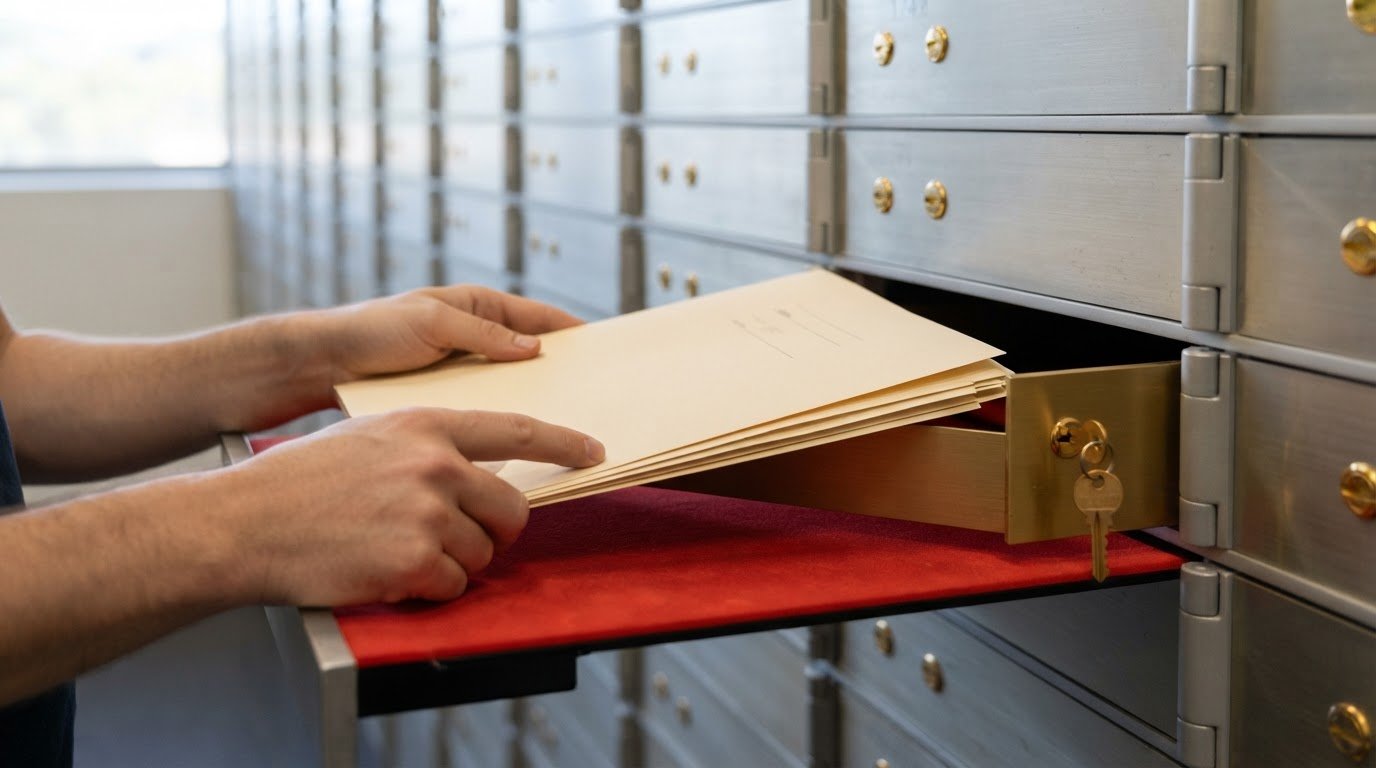
A locked drawer may keep documents out of sight, but it offers limited protection from theft, fire or flooding. Storing important documents in a private vault moves originals into a secure, dedicated facility, helping protect them while keeping access more private than storing them at home. Consider insurance separately: understand what complimentary cover includes and whether additional cover is appropriate.
It’s reasonable to want important papers close at hand, especially when they relate to property, business or family matters. But originals you rarely need may face risks at home, and digital copies alone may not meet every need.
This guide explains how private vault storage through VIP Vaults & Bullion Exchange Perth can help protect documents and privacy, what to consider when choosing which papers to store, and how insurance fits into the decision. You’ll also learn how private vault rental can provide a practical next step when you want added protection for important originals.
Key Takeaways
- Learn which security controls and standards can help protect documents in a private vault.
- Understand how to assess complimentary cover and when additional insurance may be worth considering.
- Choose which originals to store securely and which copies to keep accessible for everyday needs.
- See how access controls and secure handling can support document confidentiality.
How is the security of stored documents ensured?
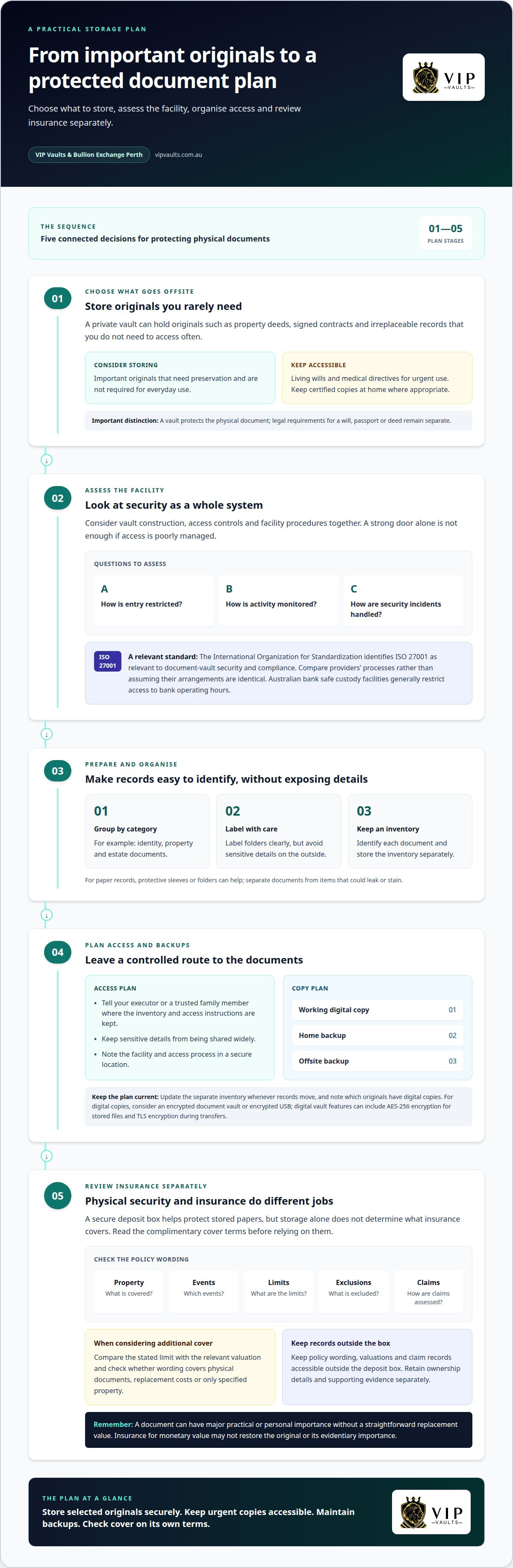
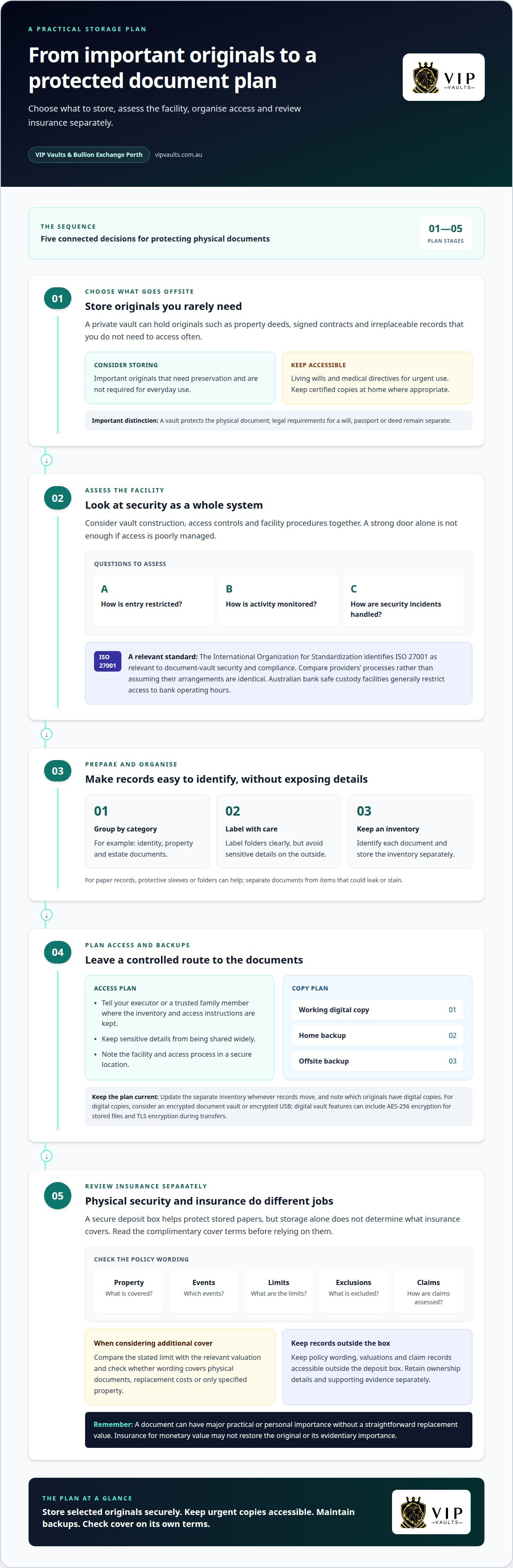
Security depends on the facility, its access controls and how you handle documents. Choose storage that suits each original’s importance and how quickly you may need it.
Vault and facility security
Assess the vault construction, access controls and facility procedures together. A strong door alone cannot protect documents if access is poorly managed. Ask how the facility restricts entry, monitors activity and responds to security incidents. International Organization for Standardization identifies ISO 27001 as a standard relevant to document-vault security and compliance.
Australian bank safe custody facilities generally restrict access to bank operating hours. Private vault providers have their own access arrangements and security measures, so compare the processes rather than assuming they are identical. For storing important documents in a private vault, consider whether the arrangement suits your access needs as well as your security priorities.
Physical and digital storage options
A home safe offers convenient access, and some models are fireproof. However, a safe that is poorly concealed or not bolted down may be targeted by thieves. A private vault provides offsite storage for originals you rarely need, such as property deeds or irreplaceable records. Keep certified copies at home where appropriate.
There is no single storage method that makes a will, passport or deed legally valid; a vault protects the physical document, while its legal requirements remain separate. Store originals that need preservation, but keep living wills and medical directives accessible for urgent use. For digital copies, consider an encrypted document vault or an encrypted USB kept securely. Digital vault features can include AES-256 encryption for stored files and TLS encryption during transfers.
Organise paper records by category, such as identity, property and estate documents. Label folders clearly, but avoid revealing sensitive details on the outside. Keep a separate inventory that identifies each document.
Emergency access and document backups
Plan access before an emergency. Tell your executor or a trusted family member where the inventory and access instructions are kept, without sharing sensitive details widely. Keep urgent medical directives accessible rather than relying on a stored original. For other records, note the facility and access process in a secure location.
Keep a working digital copy, a home backup and an offsite backup. Store the inventory separately, update it whenever records move, and note which originals have digital copies. This gives family members a clear starting point while maintaining a controlled route to the physical documents.
Complimentary and additional insurance
Insurance is separate from physical security. A secure deposit box helps protect stored papers, but storage alone does not determine what insurance covers. Complimentary cover has defined terms, including covered property, events, limits, exclusions and the claims process. Read those terms before relying on the cover, and keep a copy with your storage records.
Documents can have significant practical or personal importance without a straightforward replacement value. A passport, signed contract or property deed may be costly or difficult to replace, but insurance terms determine whether loss or damage is covered and how a claim is assessed. Keep an inventory, record relevant ownership details and retain supporting evidence separately. These steps can help you describe a loss accurately.
Additional insurance may suit documents or associated valuables whose value or importance exceeds the complimentary limit. Identify what needs cover, then compare the stated limit with the relevant valuation and the policy’s exclusions. Check whether the wording covers physical documents, replacement costs or only specified property. Insurance for an item’s monetary value may not restore the original or its evidentiary importance.
Jewellery cover limits can vary, so check the policy wording for item and total limits and whether items need to be listed individually. These figures concern jewellery, not document insurance, but show why category and item limits matter when papers are stored alongside valuables. Keep jewellery valuations and insurance records separate from document inventories.
- Record each document’s category, ownership and replacement considerations.
- Keep policy wording, valuations and claim records accessible outside the deposit box.
- Review cover whenever stored items or their assessed value change.
For physical storage as part of a wider protection plan, explore private vault storage alongside your insurance arrangements.
Protection from theft, fire and floods
Original documents face risks at home, including theft, smoke, heat, water and accidental damage. A private vault moves selected papers away from household hazards, while a clear storage plan keeps essential copies accessible. Store property deeds, signed contracts and other sensitive originals securely rather than leaving them in an obvious desk drawer.
A home safe offers convenient access, and some models are fireproof. Its protection depends on placement and installation: an exposed safe that isn’t bolted down may be targeted by thieves. Keep certified copies of important legal documents at home while placing originals in a secure deposit box. Separating them means one incident is less likely to affect every copy.
Fire protection requires more than a label. Consider how heat, smoke and water used during firefighting could affect paper records. Keep documents in protective sleeves or folders, and separate them from items that could leak or stain. Climate-controlled storage can maintain consistent temperature and humidity, helping reduce deterioration over time.
Flooding creates a different threat. Water can soak paper, blur ink and damage photographs or certificates, even when documents are inside a drawer. Keep home copies above floor level and away from plumbing, laundry areas and exterior doors. For offsite storage, consider the facility’s protection against water exposure as well as its access controls. A strong vault door alone does not address every environmental risk.
Choose records according to how often you need them. Keep frequently used identification and urgent medical instructions accessible; store important, rarely used originals securely. A simple plan can include:
- Original legal records in a secure deposit box.
- Certified copies in a separate, accessible home location.
- Encrypted digital backups stored apart from the paper files.
Review the arrangement after moving house, changing ownership or updating a contract. Update the inventory whenever a document moves, and securely dispose of obsolete copies. This keeps your protection plan practical as household records change.
Document privacy and confidentiality
Confidentiality depends on controlling who can see records, both physically and digitally. A private vault separates sensitive papers from everyday household access, while clear permissions help control who can retrieve them. Consider privacy alongside physical protection: secure storage is useful only when access arrangements match the sensitivity of the documents.
For physical records, limit access to people who genuinely need it. Keep an inventory that identifies document categories without revealing private details on folder labels. Store access instructions separately from the documents. An executor may need to know where a will is held, for example, but that does not require leaving its contents visible to others.
Digital document vaults need separate safeguards. Access controls can include single sign-on, multi-factor authentication, IP restrictions and granular permissions. These controls help limit access by individual, role or location. Use time-limited access for shared files so old links do not remain a risk after a solicitor or family member has finished reviewing a record.
Encryption protects information at different stages. TLS encryption can protect transfers to and from a digital vault, while AES-256 encryption can protect stored files. GDPR and Cyber Essentials are also identified as relevant compliance frameworks for document storage. Their relevance depends on the digital service and its obligations, so treat framework references as part of a broader review, not proof that every privacy risk is addressed.
Keep a secure digital backup of essential legal documents on an encrypted USB in a locker, separate from the originals. Avoid sending unencrypted scans through ordinary email or leaving copies on shared devices. When granting access, use the narrowest practical permission, set an end point and remove access when the task is complete.
For physical records requiring controlled, offsite access, consider private vault rental as part of your confidentiality plan.
VIP Vaults & Bullion Exchange Perth: Private Vault Rental
VIP Vaults & Bullion Exchange Perth offers Private Vault Rental for secure offsite storage of important documents and other valuables. It can suit originals you rarely need but want to keep apart from everyday household risks. Decide which records belong in secure storage, which copies must remain readily accessible, and how authorised family members or executors would locate the documents if needed.
Private Vault Rental can complement a separate digital backup and insurance arrangements, keeping physical originals apart from working copies and policy records. For people storing documents alongside precious metals, VIP Vaults also offers Bullion Lockers, Gold Bullion and Silver Bullion.
Contact VIP Vaults & Bullion Exchange Perth to discuss Private Vault Rental for your document-storage needs.
Make a considered plan for your documents
Decide which originals need long-term protection, which documents must stay close at hand, and who should know how to access them. Storing important documents in a private vault can form part of a considered plan to protect records that matter to your family, property or business. Keep your inventory and backup arrangements aligned with that plan as circumstances change.
For secure offsite storage, VIP Vaults & Bullion Exchange Perth offers Private Vault Rental. Other offerings include Bullion Lockers and Gold Bullion. Choose the option that fits your needs, then take the next step with a clear idea of what you want to protect.
Contact VIP Vaults & Bullion Exchange Perth to discuss private vault storage for your important documents. A considered decision today can help you feel more prepared about where your records are kept.
Frequently Asked Questions
Why Store Your Documents in a Private Vault?
A private vault gives important originals a secure home outside your household. It can suit documents you rarely need, such as signed property records, while copies remain available for everyday use. Storing important documents in a private vault can also reduce exposure to household access and everyday disruptions. Consider how often you need each original before deciding what belongs in long-term storage.
Can I access my documents anytime?
No. Access is available seven days a week, but not around the clock. The listed hours are 9 am to 5 pm Monday to Friday and 9 am to 1 pm on Saturday and Sunday, excluding public holidays. Only the box holder can access their box, using biometric access and their unique key. Keep documents needed urgently somewhere you can reach outside those hours.
What are the pricing options?
Pricing depends on the selected box size and rental period. Safe deposit boxes come in Small, Medium, Large and X-Large sizes, with rental periods starting at one month. A 12-month term is the most common, and an extension may be approved before the agreement expires. Match the box capacity to the documents and other contents you intend to store, rather than choosing by size alone.
Why Secure Storage Matters for High-Value Items?
Secure storage can help protect items that are difficult to replace or whose loss could have serious practical consequences. An original ownership record, for example, may matter more than an ordinary household paper. Controlled storage can also reduce casual access. Consider an item’s replacement difficulty, sensitivity and frequency of use when deciding whether it belongs in a vault.
How much does a private vault or safe deposit box cost in Australia?
There is no single price for every Australian vault or box. Each box size has shorter rental options too. These are the listed rates for this service, not a national average or a price that applies to every provider.
How can documents be protected from fire, flood, theft and deterioration?
Use separate protections for separate risks. Keep paper records in protective sleeves, away from plumbing and obvious household access points. Store an accessible copy separately from the original, and avoid placing documents where leaks or direct sunlight could affect them. For long-term preservation, limit unnecessary handling and keep temperature and humidity consistent where possible.