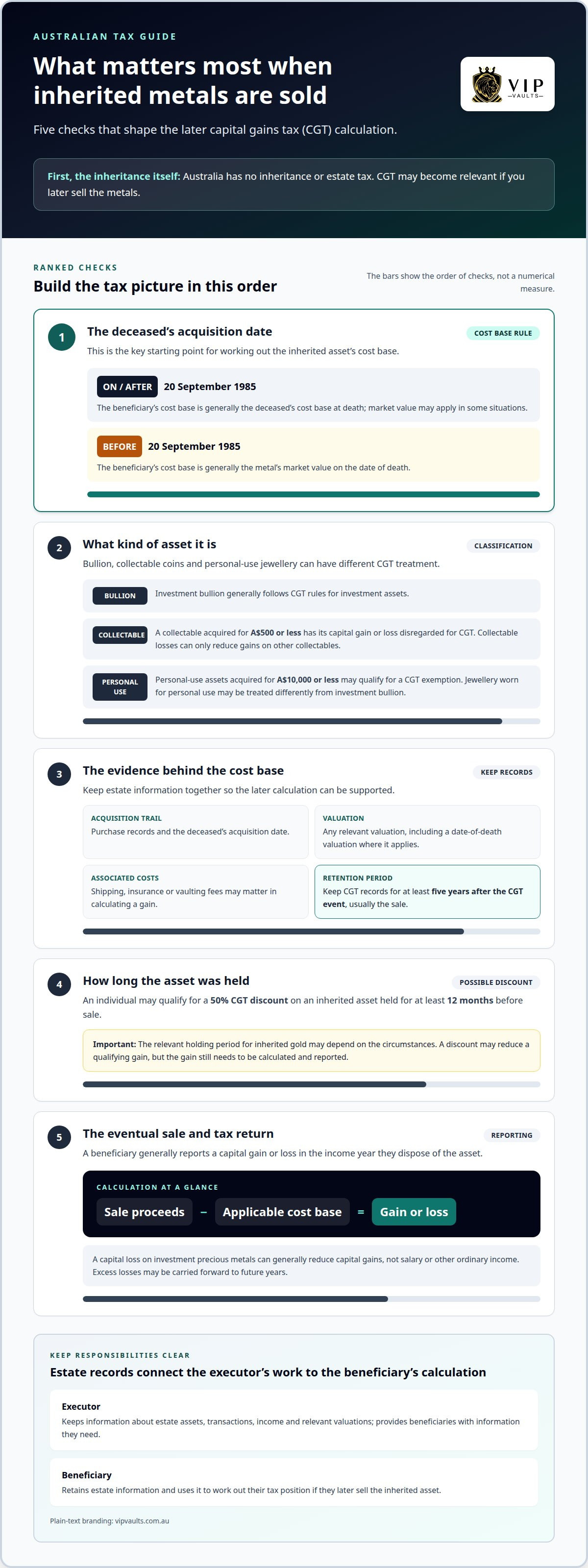
Australia has no inheritance or estate tax, so inheriting precious metals isn’t itself a taxable event. For precious metals inheritance tax in Australia, the key issue is usually the capital gains tax cost base if you later sell: it generally carries over from the deceased for assets they acquired on or after 20 September 1985, while a different rule applies to earlier acquisitions.
It’s understandable to focus on whether tax is due when you inherit precious metals, but records behind a later sale can matter just as much. This guide explains how the deceased’s acquisition date affects the cost base, when a date-of-death valuation may be relevant, and what executors and beneficiaries should retain for tax purposes.
You’ll also learn how the holding period may affect a CGT discount, what information can support a future calculation, and how responsibilities differ between administering an estate and receiving an inherited asset. The aim is to clarify the rules before you decide whether to keep or sell inherited bullion, coins or jewellery.
Key Takeaways
- Inheriting precious metals isn’t itself a taxable event in Australia, but a later sale may have capital gains tax consequences.
- The deceased’s acquisition date can affect your cost base; identify which rule applies before working out a gain.
- A dated valuation and clear records can help support the cost base and your tax return when you sell.
- Executors and beneficiaries have different responsibilities, so keep estate information organised and understand what must be reported.
Precious metals record keeping and cost base
For inherited precious metals in Australia, records help establish the cost base and support a later capital gains calculation. The deceased’s acquisition date is central to determining the tax treatment of inherited gold.
Cost base for inherited metals
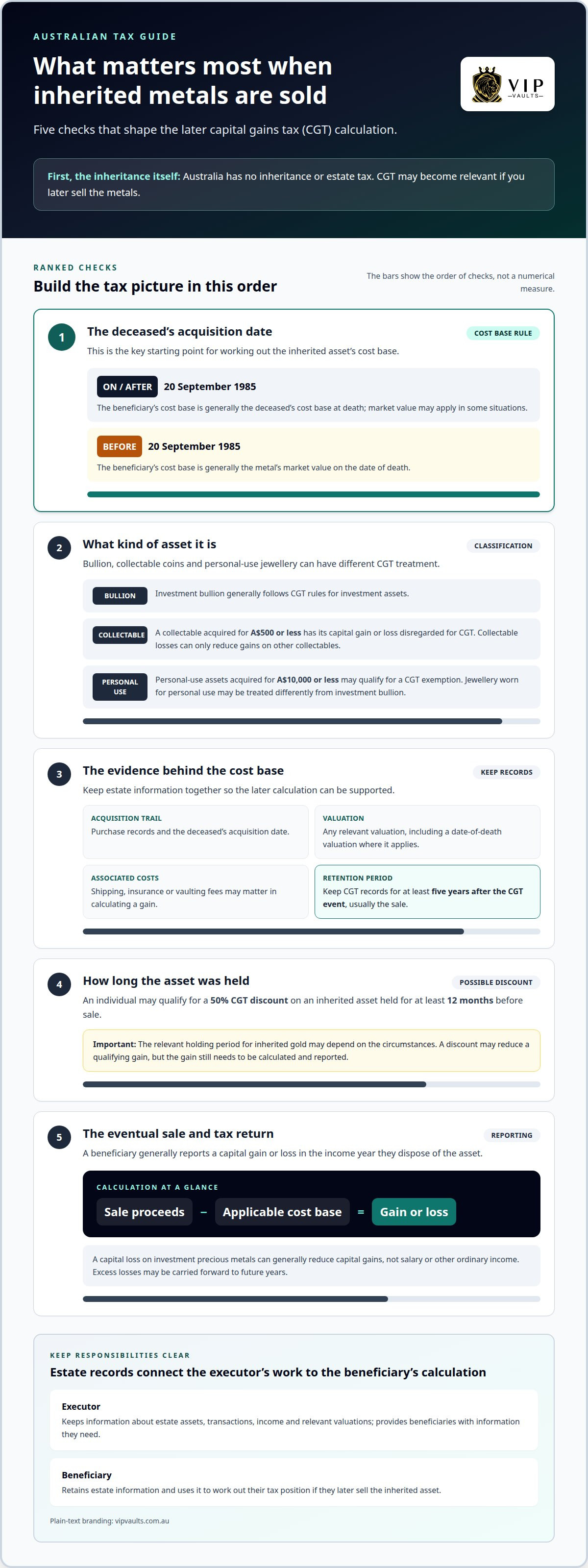
A cost base is the amount used to calculate a capital gain or loss when an asset is sold. For inherited gold acquired by the deceased on or after 20 September 1985, the beneficiary’s cost base is generally the deceased’s cost base at death; market value may apply in some situations. If the deceased acquired it before 20 September 1985, the beneficiary’s cost base is generally its market value on the date of death. This distinction affects the gain calculated on a later sale.
Keep purchase records, the deceased’s acquisition date and any relevant valuation together. Records of associated costs, such as shipping, insurance or vaulting fees, may also matter when calculating a capital gain. The Australian Taxation Office says CGT records must be kept for at least five years after the CGT event, usually the sale.
Coins, bullion and collectibles
Inherited gold and silver coins aren’t automatically treated alike: investment bullion generally follows CGT rules for investment assets, while a coin classed as a collectable may fall under separate rules. In Australia, a collectable acquired for A$500 or less has its capital gain or loss disregarded for CGT purposes; losses on collectables can only reduce gains on other collectables. Classification matters when working out the tax result of a sale.
For precious metals traders, the tax treatment of trading stock differs from an individual’s inherited investment. Traders must stocktake and value closing stock at the 30 June year-end, using cost, market selling value or replacement value. Different methods may be used for different items. Cost of goods sold is opening stock value plus purchases during the year, minus closing stock value.
For inherited metals held in an Australian SMSF, capital gains are generally taxed at 15%. The fund’s holdings, gains and losses are included in its annual audit and financial statements, so keep transaction and valuation records with the fund’s documentation.
Executor and beneficiary tax responsibilities
Executors and beneficiaries have different tax responsibilities when an estate includes gold, silver or other precious metals. The executor administers the estate and keeps information about its assets, transactions and income. A beneficiary uses relevant estate records to work out their own tax position if they later sell inherited bullion or jewellery.
In Australia, an individual may qualify for a 50% capital gains tax discount on an inherited asset held for at least 12 months before sale, according to the Australian Taxation Office. For inherited gold, the relevant holding period may depend on the circumstances of the inheritance. The discount may reduce a qualifying capital gain, but it doesn’t remove the need to calculate and report it.
How should inherited precious metals be reported on an Australian tax return? A beneficiary generally reports a capital gain or loss in the income year they dispose of the asset, using the applicable cost base and sale proceeds. Keep the estate’s acquisition details and valuation records to support the calculation.
An estate can also earn income before it is finalised. When a beneficiary becomes presently entitled to estate income, that income must be included in their tax return. The legal personal representative should provide the information the beneficiary needs to report it. This is separate from a later capital gain on selling inherited silver or bullion.
Before distributing assets, executors should preserve transaction documents, relevant valuations and details of any sale. Beneficiaries should retain the information they receive and connect it to any eventual disposal and tax return. This creates a clear record of how the asset passed from the estate and how its taxable gain was calculated.
If you’re keeping inherited bullion while managing these records, a Bullion Locker offers a dedicated storage option for physical metals.
Inheritance and estate taxes in Australia
Australia has no inheritance or estate tax, so receiving precious metals from an estate doesn’t itself trigger either tax. That doesn’t rule out capital gains tax consequences later. Inheritance and disposal are separate events: the beneficiary receives the asset first, and a later sale may produce a taxable capital gain or loss.
A capital gain generally arises when sale proceeds exceed the asset’s cost base. The cost base depends on the deceased person’s acquisition history and the applicable inherited-asset rules. Report a gain from selling investment-grade precious metals in the annual tax return for the year of sale. Keep the transaction details with the calculation so the reported gain can be traced.
Asset classification also matters. Inherited personal-use jewellery may receive different capital gains tax treatment from investment assets. Personal-use assets acquired for A$10,000 or less may also qualify for a CGT exemption. Jewellery worn for personal use can therefore receive different treatment from bullion held as an investment.
A capital loss on investment precious metals can generally reduce capital gains, not salary or other ordinary income. Losses can be offset against gains from other investments in the same financial year; excess losses may be carried forward to future years. This distinction matters if a beneficiary sells inherited silver for less than its applicable cost base.
Gifting metal during a person’s lifetime can have a different outcome from inheriting it. In Australia, gifting precious metals may trigger CGT if their market value exceeds their original purchase price. The recipient’s later tax position depends on the relevant cost-base rules and any subsequent sale, so document the transfer and its circumstances.
For an executor, the practical distinction is between administering the estate and a beneficiary’s later disposal. Record any sale made by the estate separately from a beneficiary’s sale after distribution. Those transactions may fall into different tax reporting periods. Keeping each sale’s proceeds and supporting valuation together helps preserve a clear account of the estate’s tax position.
Market value at the date of death
A valuation at the date of death can establish the starting value for certain inherited precious metals. The applicable cost base depends on when the deceased acquired the asset and the circumstances of the inheritance.
For inherited gold acquired by the deceased before 20 September 1985, the beneficiary’s cost base is generally the gold’s market value on the date the deceased died. For gold acquired on or after that date, the beneficiary’s cost base is generally the deceased’s cost base at death, although market value may apply in some situations. The acquisition date therefore determines which valuation evidence may matter.
A dated valuation records the asset’s estimated market value at the relevant date, rather than its value when it is later sold. This distinction matters because prices can change between death and disposal. Keep the valuation with the estate documents and identify the specific items it covers, such as bullion, jewellery or individual coins.
Different assets may need different valuation approaches. A bullion item can be assessed by its metal content and market value, while a collector coin may also derive value from its rarity, condition or historical significance. Valuing inherited collector coins may require numismatic expertise. A general estimate for precious metals may not capture a coin’s additional collectible value.
For individuals, the valuation can support the cost base used to calculate a capital gain or loss when selling inherited assets. Keep the date, item description and supporting valuation together, then retain them with sale records. The date of death can also affect the holding period for inherited gold: the 12-month period for the CGT discount generally begins on the deceased person’s date of death.
Estate income is separate from an asset valuation. If the estate earns income before distribution, record it separately from the inherited metals’ value and any later sale proceeds. This helps distinguish income reporting from a capital gains calculation.
For physical metals that remain in your possession, explore secure storage options as part of keeping estate assets organised.
VIP Vaults & Bullion Exchange Perth
VIP Vaults & Bullion Exchange Perth offers practical options for holding inherited precious metals, including secure storage and physical bullion. Once the estate’s records and valuation are in order, a Private Vault Rental or Bullion Locker can provide a dedicated place for metals you plan to retain. Gold Bullion and Silver Bullion are also available for people considering precious metals as part of their holdings.
Storage and bullion options don’t determine the tax treatment of an inheritance or replace advice on a cost base, valuation or tax return. They offer a practical way to hold physical metals while you manage the estate’s documentation separately.
For a straightforward discussion of your precious metals requirements, contact VIP Vaults & Bullion Exchange Perth.
Put a clear plan around inherited metals
Understanding precious metals inheritance tax in Australia is also an opportunity to consider how ownership information will be passed on. A concise inventory kept alongside estate documents can make future decisions easier for beneficiaries and executors. Record what each item is and where its supporting paperwork is held, so the next person responsible can follow the asset’s history.
Tax calculations and the practical safekeeping of physical metals are separate considerations. Keep both in view as you decide whether to retain inherited assets, sell them or arrange secure storage. For tax advice, consult a suitably qualified tax professional who can consider the estate’s documents and your circumstances.
For a practical conversation about holding precious metals, contact VIP Vaults & Bullion Exchange Perth. A measured plan can help you move forward with greater clarity and care.
Frequently Asked Questions
Are there exemptions or concessions for long-term holdings?
Yes. According to the Australian Taxation Office, an individual may qualify for a 50% CGT discount on an inherited asset held for at least 12 months before sale. For inherited gold, the relevant holding period generally starts on the deceased person’s date of death. The discount applies to qualifying capital gains, not the value of the inherited metal itself, and eligibility depends on the asset and circumstances.
Are inherited gold, silver and platinum subject to inheritance tax in Australia?
No. Precious metals inheritance tax in Australia is not a separate tax: receiving gold, silver or platinum from a deceased estate isn’t itself a taxable event. A later sale is a separate transaction and may have CGT consequences. The outcome depends on the asset’s classification, acquisition history and applicable cost base.
How does Australian capital gains tax apply when you inherit precious metals?
Inheriting the metal itself doesn’t trigger CGT, but selling or otherwise disposing of it may. A capital gain is generally worked out by comparing sale proceeds with the applicable cost base. For example, if inherited bullion is sold for more than its cost base, the difference may be a gain. Keep sale documents and report applicable gains in the tax return for the year of sale.
What cost base and acquisition date apply to inherited bullion under Australian tax rules?
The deceased person’s acquisition date helps determine the beneficiary’s cost base. For inherited gold acquired before 20 September 1985, the beneficiary’s cost base is generally its market value when the deceased died. For gold acquired on or after that date, it is generally the deceased’s cost base at death, though market value may apply in some situations. Retain purchase evidence to establish the acquisition date.
How is the market value of inherited precious metals determined for Australian tax purposes?
Market value is assessed at the relevant date, usually the deceased person’s date of death when that valuation rule applies. A dated valuation can document the amount and identify the asset being valued. Bullion may be assessed differently from a rare coin, whose condition, rarity and collectible features can affect value. For collector coins, specialist numismatic knowledge may be needed to support the assessment.
What Australian tax rules apply when you later sell inherited precious metals?
When considering precious metals inheritance tax in Australia, remember that a later sale may trigger CGT even though receiving the asset did not. Calculate any gain or loss using sale proceeds and the applicable cost base, then report a taxable gain in the relevant annual tax return. Investment-metal capital losses can generally offset capital gains, but not salary or other ordinary income.