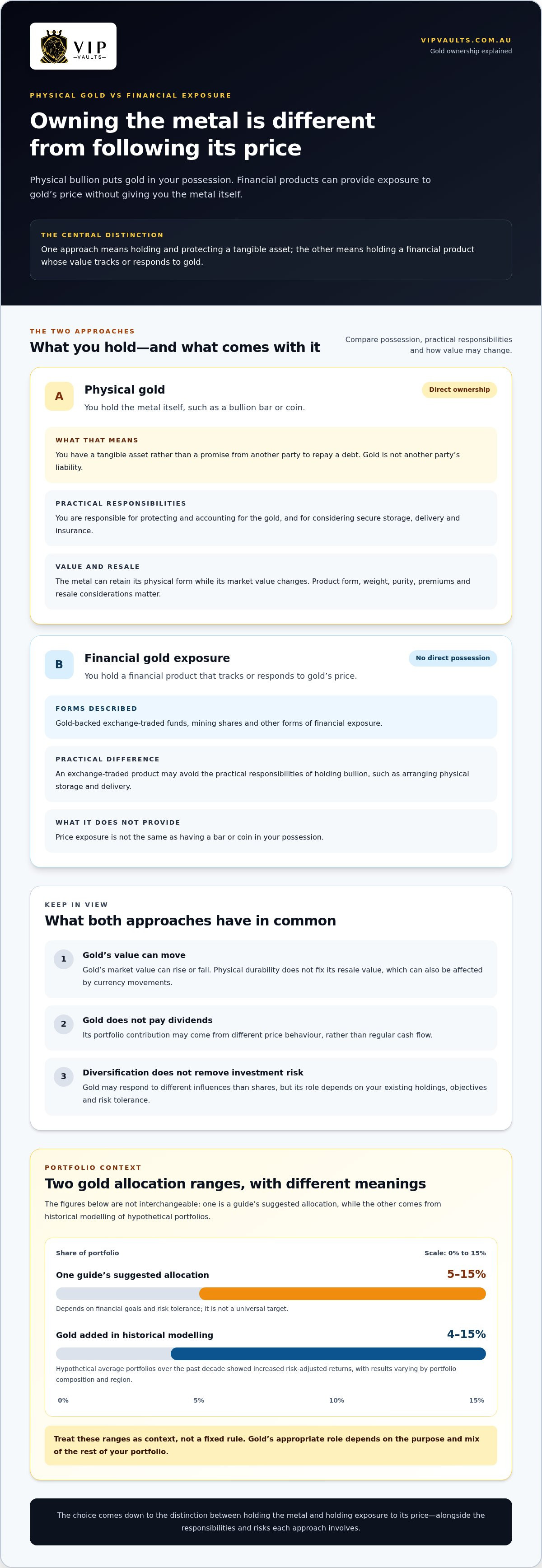

Owning gold and gaining exposure to its price are not the same. Physical gold for capital preservation means holding the metal itself; financial gold products track or respond to its price without giving you direct possession. Each approach has different trade-offs in control, access and storage.
It’s understandable to view gold as a tangible counterweight to shares and other financial assets. But its value can fluctuate, and physical ownership brings practical responsibilities that an exchange-traded product may avoid. This guide explains how bullion differs from gold-backed exchange-traded funds, mining shares and other forms of financial exposure, and what that means for diversification. It also covers gold’s potential role in a portfolio, the costs and security considerations of storing bullion, and the differences between bars, coins and jewellery. The aim is to help you weigh the benefits and limitations before deciding whether physical ownership fits your approach to preserving capital.
Key Takeaways
- Physical bullion gives you direct ownership, while financial products can track gold’s price without putting the metal in your hands.
- Gold may diversify a portfolio, but its role depends on your goals, risk tolerance and the mix of assets you already hold.
- Gold can retain physical integrity over time, yet its market value can still rise or fall and it doesn’t pay dividends.
- Owning bullion means considering secure storage, delivery and insurance alongside the purchase itself.
- Bars, coins and jewellery differ in purity, premiums and resale considerations, so the form you choose matters.
Gold's role in portfolio diversification
Gold can diversify a portfolio because its price may respond to different influences than shares do. Its contribution depends on the mix of assets and your investment objectives.
Gold and portfolio correlation
Correlation describes how closely the returns of two assets move in relation to each other. Gold’s relationship with shares can make it useful for diversification. When assets respond differently to market events, combining them may change a portfolio’s overall risk profile. This matters because a portfolio concentrated in assets that move together may be more exposed to a shared market shock.
Consider an Australian investor whose portfolio holds domestic and international shares. If both holdings fall during the same market event, an asset responding to different influences may change the combined outcome. Gold can play that role, but its price also moves, so diversification doesn’t remove investment risk. The effect depends on the portfolio’s composition, the period considered and the amount of gold held.
A gold-correlation comparison uses monthly returns from 31 December 2015 to 31 December 2025. That period gives a defined basis for comparing movements, rather than relying on a single day or market episode. Correlation is a measure of relationship, not a forecast. It describes how assets moved over the comparison period, while future trading conditions can differ.
Gold’s portfolio roles
Gold can act as a diversifier and store of wealth within an investment portfolio. Its role differs from that of assets that produce income, such as dividend-paying shares. This distinction matters when setting a target: gold’s contribution may come from its different price behaviour, not regular cash flow. Weigh that role against the purpose of your other holdings.
One guide recommends allocating 5-15% of an investment portfolio to gold, depending on financial goals and risk tolerance. This is a reference range, not a universal target for every Australian investor. A person focused on income may choose a different mix from someone prioritising diversification. The appropriate allocation depends on the existing portfolio, time horizon and tolerance for price changes.
Historical modelling also illustrates why portfolio composition matters. Adding between 4% and 15% gold to hypothetical average portfolios over the past decade would have increased risk-adjusted returns, depending on portfolio composition and region. The result varied across portfolios, so it doesn’t establish one ideal allocation. Treat it as evidence to assess alongside your own holdings, rather than as a fixed rule.
To assess gold’s place in your portfolio, first identify what your current assets are intended to do. Then consider whether gold would diversify those exposures or simply add another price-sensitive holding. Compare the proposed allocation with your target mix and review how changes could affect income and risk. This keeps diversification tied to your portfolio’s purpose, rather than treating gold as a standalone solution.
What defines physical gold as a store of value?
In Australia, GST treatment depends on whether a gold product qualifies as investment precious metal, while capital gains tax may apply on a later disposal. Keep purchase and sale records, as the form of gold and transaction details are relevant to assessing your tax obligations.
Gold has traditionally been viewed as a safe haven during economic or political instability. That reputation reflects its scarcity and independence from any one currency or issuer. Unlike a bank deposit or bond, physical gold is not another party’s liability. You hold a tangible asset rather than a promise that someone will repay a debt.
Physical gold also has properties that support long-term storage. It doesn’t corrode or react easily with other chemicals, so an intact bar can remain untarnished without losing size through ordinary chemical reactions. This physical durability doesn’t fix its market value. The price can still change as trading conditions, investor demand and currency movements shift.
If you’re considering physical gold for capital preservation, distinguish preservation of the metal from preservation of purchasing power. A gold bar can retain its physical form while its value in Australian dollars rises or falls. For example, changes in the global gold price or exchange rates can alter its local resale value, even when the bar itself remains unchanged.
Gold is often described as highly liquid, but liquidity doesn’t mean every form sells at the same price or with equal ease. A recognised bullion bar may be simpler to value by weight and purity than jewellery with design value. Before buying, consider how the product’s form affects valuation, potential resale and the records needed to establish what you own.
You can gain exposure to gold through financial products, but they don’t provide the same direct possession as a physical bar or coin. Physical ownership gives you the metal itself, but also makes you responsible for protecting and accounting for it. That distinction matters during an economic shock: you may value tangible possession, but still need to manage access and security.
A disciplined gold investment starts with a clear purpose. Decide whether you want a tangible holding, exposure to gold price movements, or both. Then record the product type, weight, purity and purchase details. These steps help separate the metal’s enduring physical qualities from the market and currency factors that determine its value when you sell.
GST treatment depends on whether a product qualifies as investment precious metal, while a later sale may have capital gains tax implications. The product’s form and transaction details are relevant to assessing both obligations.
How does physical gold differ from financial gold exposure?
Physical bullion gives you direct ownership of metal; financial products provide exposure through contracts, funds or company shares. This distinction affects control, storage and what your investment represents. A gold bar is an asset you own, while a gold-backed exchange-traded fund (ETF) is an investment traded on a stock exchange. Choose according to your objectives, not simply the shared connection to gold.
A physically backed gold ETF usually tracks the underlying gold spot price. It lets investors gain exposure without personally buying, selling or storing bullion. Units trade on stock exchanges like shares, so an ETF may fit an investment account more readily than a physical bar. The trade-off is that an ETF is a financial holding, not bullion in your possession.
Other paper instruments work differently. Gold certificates provide evidence of ownership and are required to sell or withdraw the holdings. Some represent ownership through pooled allocated large bars, which are available at a lower premium than individual bars. Gold futures are contracts, not bars: trades settle through a central clearing house, where deposit margins are required. Each structure creates different requirements for access and ownership.
Gold mining company shares represent an interest in a business, not ownership of its gold output. Their prices can magnify gold price movements, increasing potential gains and losses. A miner’s performance also depends on its operations and business conditions. Investors should be wary of exploration-stage companies, as many may fail to find gold. A mining share therefore adds company-specific exposure alongside gold price exposure.
Compare these holdings with other assets by asking what claim you own. A share represents part ownership in a company, while a bond represents a debt claim. Property is a physical asset with costs and practical considerations when selling; cryptocurrency is a digital asset, not a gold holding. Gold itself doesn’t pay dividends like shares do. These differences matter when balancing income, liquidity and direct ownership.
Physical bars and coins require you to arrange storage, delivery and security. An ETF avoids personal bullion storage, but its value remains linked to a financial product and its structure. For example, an investor seeking direct possession may prefer a bar, while someone prioritising exchange trading may favour an ETF. Neither choice removes price risk. Match the form to your objectives, access needs and willingness to manage the asset.
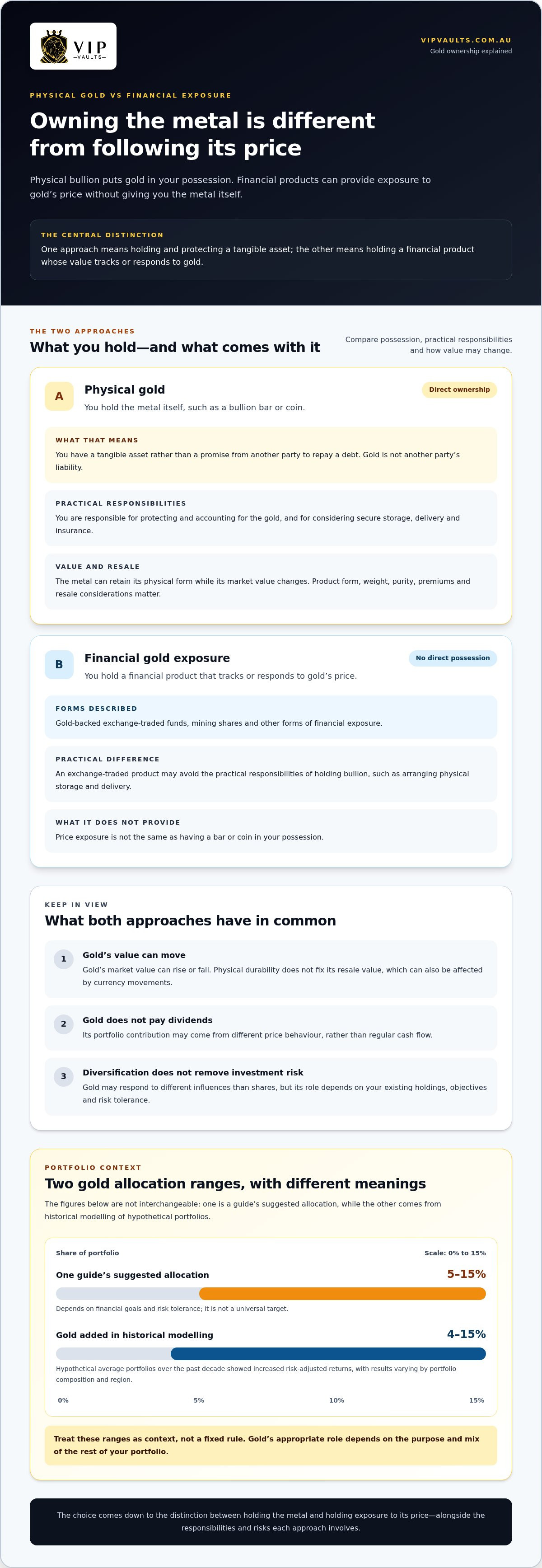
Gold storage, delivery and insurance
In Australia, you can buy physical gold from registered dealers, including online dealers. To buy with confidence, compare the product’s weight, purity and premium over the spot price. Then plan delivery, secure storage and insurance before completing the transaction.
Direct ownership means you’re responsible for protecting the metal after purchase. A bar kept at home may be accessible, but it also needs secure handling and a suitable place away from casual discovery. Consider who can access the storage area, how you’ll record the holding and what you’ll do if you need to move it. Gold’s value doesn’t remove these practical responsibilities.
A secure deposit box or professional vault can separate storage from your home. If a dealer doesn’t provide storage, physical gold buyers need to arrange secure storage themselves. Vaulted gold buyers can own the metal outright while it remains in a professional vault, without storing it personally. This can suit owners who want direct ownership but prefer not to keep bullion at home.
Ask how ownership is recorded and how you can access or withdraw your holding. Gold certificates, for example, provide evidence of ownership and are required to sell or withdraw holdings. Some represent ownership through pooled allocated large bars rather than an individual bar. The format affects what you own and the process for accessing it.
Delivery creates a separate security decision. If bullion is sent to your address, plan for its receipt and transfer into storage rather than leaving a parcel unattended. Keep purchase records with details such as product type, weight and purity. These records can help identify the holding later and support an orderly sale or insurance discussion.
Insurance should match how the gold is stored. Review whether a policy covers bullion at home, in transit or in a private vault, and understand its exclusions and claim requirements. A household policy may treat a gold bar differently from ordinary contents. Storage and security fees also affect ownership costs, so compare them with the convenience and access provided.
Gold can be liquid as an asset, but selling still involves confirming what you hold and arranging a transaction. If a bar is stored away from home, access and withdrawal arrangements become part of the sale process. Consider these practical steps before buying, not only when you need to sell. Physical security and clear ownership records help reduce avoidable complications.
For owners who want bullion stored separately from home, a Bullion Locker provides a dedicated storage option. Private Vault Rental can suit other valuables. Choose the arrangement that fits what you hold and how you intend to access it. Storage doesn’t remove market price risk, but it helps address the separate responsibility of safeguarding physical property.
Physical gold bullion, coins and jewellery
Physical gold comes in coins, bullion bars and jewellery, but these forms serve different purposes. For someone investing in gold, the choice affects how purity is assessed, how value is determined and what happens when they sell. Bullion and investment coins are generally valued around their metal content, while jewellery can also carry craftsmanship or design value. Compare the form with your reason for holding gold.
Investment bars are available in gram denominations from 1 gram to 1,000 grams. Listed gram denominations include 1, 10, 20, 50, 100, and 1,000 grams. Bars are also available in 1, 10, 100 and 400 troy ounces. Their purity ranges from 99.5% to 99.99%. A London Good Delivery bar weighs approximately 400 troy ounces, a much larger format than typical personal holdings.
Investment coins have a different standard. Their purity typically ranges between 91.67% and 99.99%, depending on the coin. That range means a coin’s face appearance alone doesn’t establish its fine gold content. Check its stated purity and weight when comparing options. Smaller coins and bars can make holdings easier to divide for a future sale, while larger units concentrate more value in each piece.
Demand figures also show why bars and coins feature prominently in gold investment. Small gold bars and coins accounted for approximately two-thirds of annual gold investment demand. Over the past decade, they represented around one quarter of global gold demand. These figures describe different measures: annual investment demand and total global demand across a decade. They provide context, not a forecast of future prices.
Jewellery is another way to own physical gold, but its value may involve more than metal weight and purity. Design, workmanship and condition can influence how a piece is assessed, making a jewellery valuation different from a bullion valuation. If your objective is exposure to gold’s metal value, compare purity and premium carefully. Gold prices can still fluctuate, whatever form you hold.
Buyers of bars and coins pay a premium over the spot gold price. Consider that premium alongside the product’s purity and the price at which you may later sell. Delivery, storage and insurance also form part of ownership. A small bar may be easier to handle, while a larger bar may suit someone prioritising fewer units. The right balance depends on your intended holding and practical needs.
Choose the format before you invest, then keep its weight and purity details with your purchase records. If you hold bullion or jewellery, explore secure bullion storage as part of planning for its safekeeping.
VIP Vaults & Bullion Exchange Perth: Private Vault Rental
VIP Vaults & Bullion Exchange Perth offers Private Vault Rental for people seeking a dedicated place to store valuables they own. If you hold physical gold, a Bullion Locker provides a dedicated storage option, while Private Vault Rental may suit broader storage needs. The business also offers Gold Bullion and Silver Bullion.
Consider these services when owning metal raises a separate question: where will you keep it? Choosing storage alongside your bullion can help you plan for safekeeping and future access. Physical gold remains subject to market movements, and storage addresses security, not investment performance.
For a discreet next step, contact VIP Vaults & Bullion Exchange Perth to discuss Private Vault Rental or Bullion Locker storage.
Make your next ownership decision with care
A considered approach starts with a clear purpose for holding gold and a written record of your decision. Decide what role you want the asset to play, how you’ll assess it over time and what circumstances might prompt you to change course. This gives future decisions a consistent basis, rather than leaving them to short-term market movements.
If you’re considering physical gold for capital preservation, make ownership and safekeeping part of the same plan. VIP Vaults & Bullion Exchange Perth offers Gold Bullion, Bullion Locker and Private Vault Rental, connecting physical ownership with storage options. Choose the next step that reflects what you hold and how you want to manage it.
For a discreet conversation about bullion or private vault storage, contact VIP Vaults & Bullion Exchange Perth. A clear plan can help you move forward with greater confidence and control.
Frequently Asked Questions
How does physical gold hedge inflation and currency risk?
Gold provides exposure to an asset priced in global markets, which can move differently from the Australian dollar and local prices. The Australian-dollar value of bullion reflects both the gold price and exchange rates, so currency movements can affect its purchasing power. During economic or political instability, investors have traditionally treated gold as a safe haven. That role doesn’t make its value immune to market changes.
How liquid is physical gold under stressed market conditions?
Gold is generally considered a highly liquid asset, but selling physical bullion still requires a buyer and a clear valuation. In stressed conditions, market access, dealer spreads and the product’s recognisability can affect how quickly you can sell and the price offered. A recognised bar with clear weight and purity details is easier to assess than an item whose gold content or condition needs closer examination.
What risks remain when holding physical gold?
Physical ownership leaves you exposed to price movements, theft, loss and the costs of secure storage and insurance. Gold also produces no dividends or interest, so it doesn’t generate income while you hold it. For example, if you need to sell during a price decline, the sale value may be below your purchase cost. Premiums paid above spot can also affect your break-even point.
Why invest in gold?
Investors use gold to diversify assets, hold a tangible store of wealth or gain exposure to a market influenced by different forces than shares. Physical bullion is also no one’s liability, unlike a debt claim. Your reason matters: someone prioritising income may value shares or interest-bearing assets differently, since gold pays no dividends. Set a clear objective before choosing how much gold belongs in your investment mix.
How does physical gold preserve capital during inflation and market downturns?
Gold can support a capital-preservation strategy by adding an asset with different market drivers and a long-standing safe-haven role. Its price can respond to economic uncertainty and currency movements, which may matter when other holdings face pressure. But physical durability doesn’t guarantee stable purchasing power: gold’s market value changes. Assess its effect in Australian dollars and against your actual spending needs.
What are the historical returns and volatility of gold compared with Australian shares, bonds, and cash?
Compare returns over the same period and in Australian dollars, because gold’s local performance includes exchange-rate movements. Include dividends for shares and interest for bonds or cash, rather than comparing gold’s price change with returns that include income. Volatility describes how widely returns fluctuate over the chosen period. The comparison can change with the dates, income assumptions and portfolio mix, so use a consistent method for each asset.
What types of physical gold can Australians buy: bullion bars, coins, and allocated gold?
Australians can buy physical gold as bars, coins or jewellery, including through registered dealers. Investment bars are available from 1 gram to 1,000 grams, with purity between 99.5% and 99.99%. Investment coins typically range from 91.67% to 99.99% purity. Allocated gold represents ownership of specified bullion; certificates can also represent pooled allocated large bars, rather than individual bars.
What premiums, dealer spreads, storage fees, and insurance costs apply to physical gold in Australia?
Buyers pay a premium over the spot price, while the difference between a dealer’s buying and selling prices affects resale proceeds. Storage and security fees depend on the arrangement, and insurance costs depend on the cover and holding circumstances. Compare the purchase premium, expected sale terms, delivery, storage and insurance together. This gives a clearer view of ownership costs than considering the spot price alone.