
A 24K stamp doesn’t tell the whole investment story: investment-grade gold purity standards generally cover bullion from 99.5% to 99.99% pure. Fineness marks such as 995 and 999 indicate the gold content, while testing can provide further verification.
When assessing gold, look beyond the label. Purity, the way it is marked and the method used to test it all help you understand what the item contains.
This guide explains investment-grade gold purity standards and how to read karat and fineness markings. It also covers verification methods, from non-destructive testing to fire assay, and the documentation that can help support an item’s authenticity.
Key Takeaways
- Learn what bullion stamps and assay documents can tell you, and where each has limits.
- Understand how fire assay differs from non-destructive testing when verifying gold content.
- See how karat and millesimal fineness markings translate into the proportion of gold in an item.
- Identify the purity range used to distinguish investment bullion from gold more commonly made into jewellery.
How to Check Gold Purity?
Assess bullion using its assay, stamped fineness and supporting certificate. Together, these details help establish the item’s gold content, which affects its market pricing.
Bullion Assays and Purity Markings
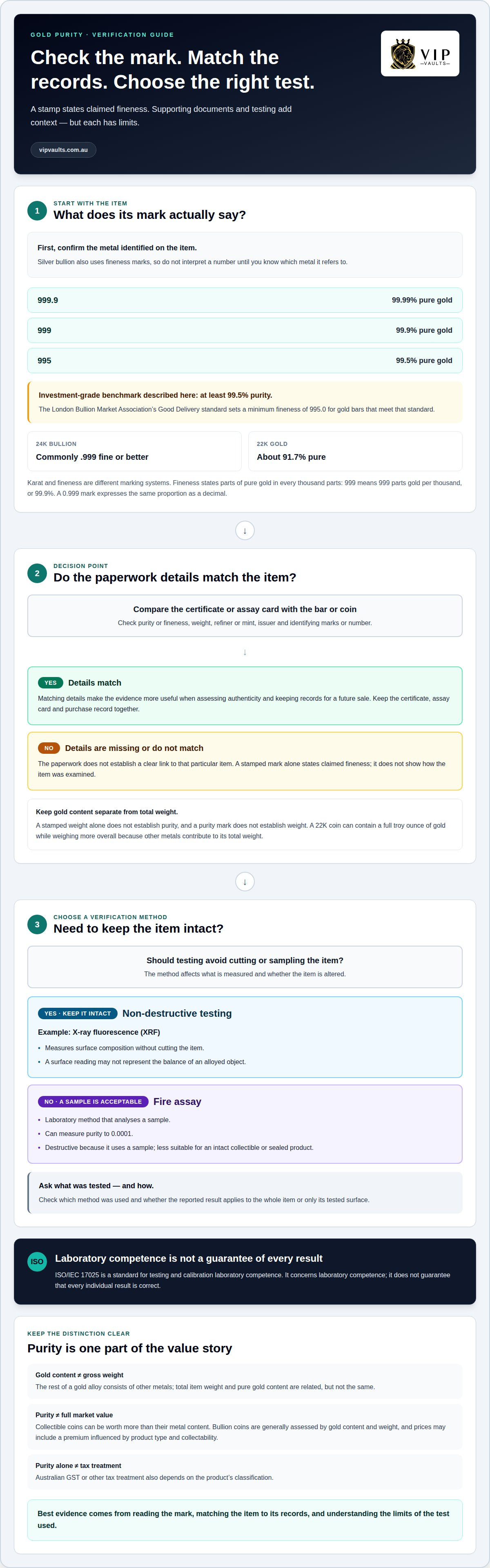
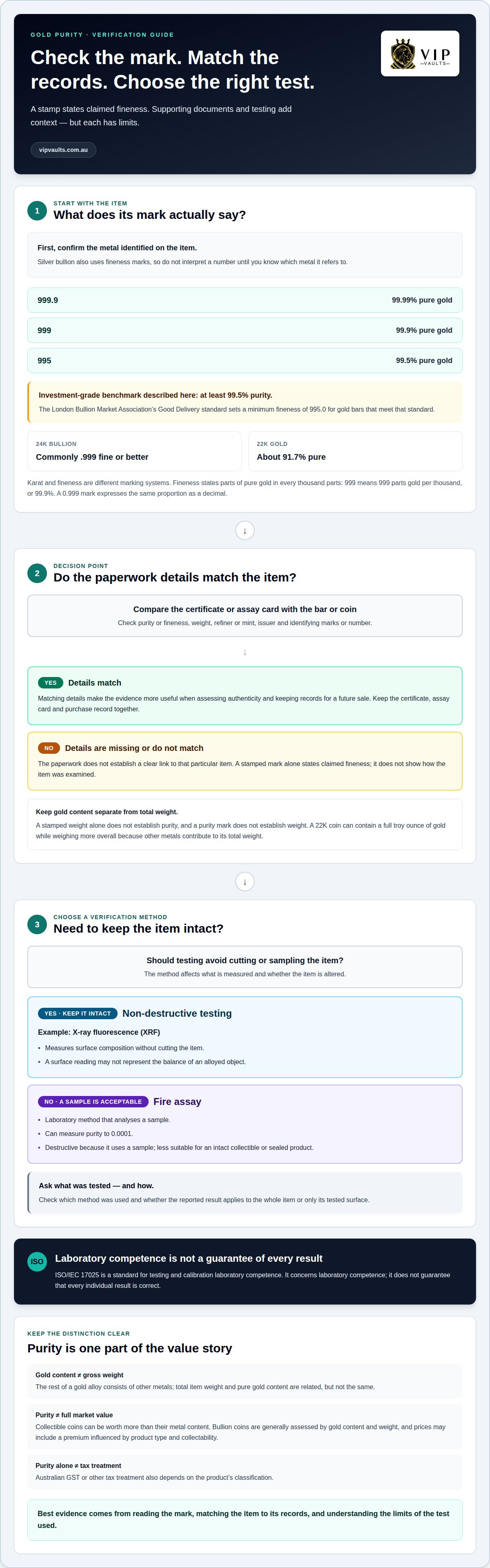
An assay measures the metals in a sample, while a stamped mark states the claimed fineness. A certificate can link that result to a particular bar or coin. Compare its purity, weight, refiner or mint, and any identifying number with the item itself. Matching details make the evidence more useful when assessing authenticity or keeping records for a future sale.
Purity and Weight Guarantees
For gold bullion, stated purity and weight describe the amount of gold and the product’s total mass. A guarantee is more meaningful when the seller’s documentation identifies these details and corresponds with the bar or coin. A stamped weight alone does not establish purity, just as a purity mark does not establish weight. Keep the certificate, assay card and purchase record together to support the item’s provenance.
Common 24K and 22K Standards
Twenty-four-karat gold bullion is commonly .999 fine or better, while 22K gold is about 91.7% pure. Some documentation may show purity as 99,9%; read the stated fineness and certificate together. A 22K coin can contain a full troy ounce of gold while weighing more overall, because other metals contribute to its total weight. Distinguish gold content from the item’s gross weight.
Purity alone does not determine Australian GST or other tax treatment; the product’s classification also matters. A certificate should identify the metal, stated purity or fineness, weight and issuer, as well as a bar’s identifying mark where present.
Collectible coins can be worth more than their metal content, while bullion coins are generally assessed by gold content and weight. Their prices may include a premium over spot, influenced by factors such as product type and collectability. Choose with your purpose in mind: a coin’s purity tells you about its gold content, not its full market value.
Fire assay and non-destructive verification methods
Testing methods vary in what they reveal about gold and whether they alter the item. The appropriate evidence depends on the item, its documentation and the level of detail you need.
Assay Cards and Verification
An assay card records test and product details alongside a bar, helping connect its stated purity to a particular item. Compare the card’s weight, fineness and identifying marks with the bar, then retain it with purchase records. This record can support later authentication and resale discussions. A card marked 99.99% describes the stated gold content, while the bar’s own marks provide a separate point of comparison.
Fire assay is a laboratory method that analyses a sample and can measure purity to 0.0001. Because it uses a sample, it is destructive, making it less suitable for an intact collectible or a sealed product. Non-destructive testing, such as X-ray fluorescence, measures the surface composition without cutting the item. Surface readings can be useful, but they may not represent the balance of an alloyed object.
Laboratory quality matters for a valuable purchase. According to the International Organization for Standardization, ISO/IEC 17025 is a standard for testing and calibration laboratory competence. It concerns laboratory competence, not a guarantee that every individual result is correct. Ask what the test measured, which method was used, and whether the reported result applies to the whole item or its tested surface.
Assay Marks and Hallmarks
An assay mark or hallmark is a stamp identifying details such as fineness, maker or testing authority. It gives buyers a quick reference, but a stamp alone doesn’t show how the item was examined. Match it with the certificate and product identifiers, including karats where used. A 22K stamp, for example, describes an alloy’s gold proportion, not the total gold weight of the piece.
Silver bullion also uses fineness marks, so check the metal identified on the item before interpreting its number. Keep assay cards and certificates with the corresponding purchase records during storage. If verified jewellery also forms part of your holdings, jewellery storage is one consideration alongside bullion documentation.
What Makes Gold "Investment-Grade"?
Investment-grade status centres on gold content, expressed as fineness or a percentage. These markings help distinguish bullion from lower-purity alloys.
Millesimal Fineness and Purity Percentages
Millesimal fineness states the parts of pure gold in every thousand parts of the item. It lets you compare gold content directly, rather than relying on a karat label alone. For example, 999 fineness means 999 parts gold per thousand, or 99.9% purity. A 0.999 mark expresses the same proportion as a decimal.
Use the percentage to understand what proportion of the item is pure gold; the rest consists of other metals in the alloy. This distinction matters when buying: a gold bar’s total weight and its pure gold content are related, but not the same.
Common Fineness Levels
The 999.9, 999 and 995 marks represent 99.99%, 99.9% and 99.5% pure gold, respectively. Each meets the commonly cited investment-grade minimum of 99.5%. The London Bullion Market Association’s Good Delivery standard sets a minimum fineness of 995.0 for gold bars that meet that standard.
These marks make comparisons clearer. A bar stamped 999.9 contains a higher percentage of gold than one stamped 995, although both sit within the stated investment-grade range. Read the mark alongside the bar’s weight and product documentation.
Hallmarks and Fineness Stamps
A fineness stamp states the claimed proportion of gold, while a hallmark may also identify a maker or testing authority. Together, these marks help describe the item and support comparison with its certificate. They indicate gold content, not the item’s full weight or collectable value.
For jewellery, a karat mark such as 18K indicates an alloy rather than pure gold. Bullion marks such as 999 and 995 use millesimal fineness. Check which system appears before comparing products.
Australian Purity and Hallmarking Standards
In Australia, the investment-grade benchmark described here is at least 99.5% purity; 999 and 999.9 marks indicate higher fineness. Purity marks communicate gold content, but a stamp alone does not establish the complete test history. Read the mark with the item’s supporting documentation.
The Perth Mint is an Australian mint that produces gold bullion bars. Gold below 99.5% purity falls beneath the commonly cited investment-grade threshold, so its gold content and bullion-market pricing may differ from qualifying bullion. Confirm the stated fineness before comparing it with higher-purity bars.
Investment-grade gold purity range
The key range is 99.5% to 99.99% pure gold. Both ends are considered investment-grade, but the percentage shows how much of each item is gold. For buyers comparing products, investment grade gold purity standards provide a useful screening benchmark, not a complete measure of value.
At the lower threshold, 995 fineness means 99.5% gold. At the upper end, 999.9 fineness means 99.99% gold, often described as four-nines fine. A 999 mark represents 99.9%. These figures make the range easier to compare across precious metals markets worldwide.
The difference between 995 and 999.9 is the proportion of other metals in the item. With 995 fineness, 5 parts in every thousand are not gold; at 999.9, that falls to 0.1 part per thousand. This distinction clarifies the gold content behind a product’s stated weight and helps you compare products on a like-for-like basis.
Investment-grade describes a purity threshold, not a guarantee of uniform pricing or value. Product form, weight, recognition and market conditions also influence bullion prices. When considering gold for investment, assess its purity alongside its documentation and identifying marks. Investment grade gold purity standards can help narrow your options, but they do not determine whether a particular product suits your goals.
Purity and authenticity are separate considerations. A fineness stamp states the claimed gold proportion, while an assay or suitable test provides evidence about composition. Consider both: a high fineness mark without matching records offers less context than one supported by product documentation.
For a practical comparison, start with the stated fineness, then translate it into a percentage. A 995 bar is 99.5% pure; a 999 bar is 99.9%; and a 999.9 bar is 99.99%. This simple step shows where each product sits within the range.
Gold below 99.5% falls below the commonly cited investment-grade benchmark. That doesn’t make it worthless: lower-purity gold can serve jewellery or other purposes. It does mean its gold content differs from bullion meeting that threshold, which matters when comparing products or discussing a sale with dealers.
For a considered next step, explore gold bullion options and compare stated purity with your investment aims.
VIP Vaults & Bullion Exchange Perth: Gold Bullion
VIP Vaults & Bullion Exchange Perth sells gold bullion for those considering physical gold. Once you understand purity marks and assay evidence, the next decision is whether to acquire bullion and how to store it.
When buying, consider the product’s stated gold content and documentation in light of your purpose. If you already own physical bullion, a bullion locker or private vault rental can provide secure storage. These options address separate needs: acquiring gold and storing physical assets.
Contact VIP Vaults & Bullion Exchange Perth to discuss gold bullion or secure storage.
Make your next bullion decision with care
Use investment grade gold purity standards to inform your decision, not define it. Consider how physical gold fits your wider financial priorities, how you intend to hold it and which records you want to keep. A clear plan connects the purchase decision with the practical responsibilities of ownership.
Take time to choose a next step that suits your circumstances. You may be considering a first bullion purchase, reviewing how to store assets you already own, or bringing both decisions into one plan. Aim for a considered choice based on what matters to you.
For a conversation about your bullion plans and available options, contact VIP Vaults & Bullion Exchange Perth. A thoughtful approach can help you move forward with greater confidence and purpose.
Frequently Asked Questions
What Is Bullion Purity?
Bullion purity is the proportion of a metal present in a bar or coin. It’s expressed as a percentage or fineness, so you can distinguish the precious metal content from other metals in an alloy. For example, a 20-gram item marked 18K contains 15 grams of gold. The rest of its weight comes from other metals.
Which Matters More: Purity or Weight?
Neither matters alone: together, purity and weight indicate the amount of fine gold. Multiply the item’s weight by its purity percentage to estimate its gold content. For example, a 10-gram bar marked 999 fineness contains 9.99 grams of gold. Compare that figure with the stated weight and product records, particularly when assessing items with different fineness marks.
What purity standard qualifies gold as investment grade in Australia?
Gold bullion is commonly considered investment-grade at a purity of at least 99.5%. This is a practical benchmark for comparing bullion, rather than a claim that every gold item must meet it. A bar marked 995 meets the threshold; jewellery with lower gold content may serve a different purpose. Check the product’s stated fineness when comparing options.
What is the minimum fineness for investment-grade gold bullion?
The commonly cited minimum is 995 fineness, equal to 99.5% gold. The London Bullion Market Association’s Good Delivery standard also sets minimum fineness at 995.0 for gold bars within that standard. The LBMA specification applies to Good Delivery bars, so use it as a reference point, not as a description of every bullion product.
How do 999.9 fine gold and 999 fine gold compare?
999.9 fine gold is 99.99% pure, while 999 fine gold is 99.9% pure. The difference is 0.09 percentage points in gold content. Both marks indicate high-purity bullion, but the finer mark means a greater proportion of the item is gold. Read the fineness alongside the product’s weight to understand its stated metal content.
Are 22-carat gold coins considered investment grade?
At 91.7% gold, 22-carat coins sit below the commonly used 99.5% investment-grade purity threshold. However, a coin’s stated fine-gold content can differ from its total weight: a 22K bullion coin may contain a specified amount of gold, with alloy metals adding to its overall weight. Consider purity and fine-gold weight separately when assessing it.