What if the silver price you see isn’t the price you pay? The spot price is a market reference, but physical bullion also carries a premium, and the price offered when you sell may differ. Understanding that gap is an important first step when investing in silver bullion Australia.
Silver’s potential role in a diversified portfolio needs to be weighed against its price volatility and the practicalities of resale. Product choice matters too: bars and coins can differ in premiums, recognition and handling. Checking a product’s purity and refiner helps you understand what you’re buying, while planning custody early helps you decide whether home storage or a professional vault better suits your needs.
This guide explains how bullion pricing relates to the spot price, what to compare when assessing bars and coins, and which risks to consider before buying. It also covers sourcing recognised-refiner silver and choosing storage, including private vaults and bullion lockers. VIP Vaults & Bullion Exchange Perth offers investment-grade silver bars and coins, with transparent live pricing linked to global markets.
Key Takeaways
- Understand how investing in silver bullion Australia differs from gaining silver exposure through shares or funds.
- Compare bars and coins by format, recognition, premiums and handling needs before choosing what suits your goals.
- Weigh silver’s potential diversification role against price volatility, possible losses and the fact that physical bullion pays no interest or dividends.
- Set an allocation and risk tolerance before comparing products, then keep clear records of purchases and sales.
- Consider how home storage and professional vaulting differ as custody choices for physical silver.
What investing in silver bullion in Australia actually means
Silver bullion is investment-grade physical silver held as bars or coins. Buying it means acquiring the metal itself, rather than shares in a mining company, units in a fund or another financial product whose value is linked to silver. That distinction affects how you hold the investment, arrange custody and eventually sell or access the underlying asset.
Physical ownership gives you direct exposure to silver, but it doesn’t remove investment risk. The market price can fall, and a sale may return less than you paid after premiums and the buy-sell spread are considered. Silver bullion also pays no interest or dividends. Its role, if any, is different from an income-producing asset, and it shouldn’t be treated as a guaranteed hedge or protection against losses.
How physical silver bullion differs from other silver investments
With bullion, you own a tangible bar or coin and must decide where and how to keep it. Selling involves a physical product and a transaction with a buyer. Exchange-traded silver exposure, by contrast, is generally held through a financial product or account. The product’s structure determines your rights and whether you have a claim to specific physical metal. Neither form guarantees a profit. The overview of silver as an investment describes the range of ways investors can gain exposure and factors that can influence value.
Ownership method also shapes practical access. Physical bullion must be stored and later transferred or presented for sale. Financial exposure is managed through an investment account, with access governed by that product’s arrangements. Before choosing, consider whether direct possession matters to you and which custody and transaction steps you’re prepared to manage.
What moves silver bullion value in Australia?
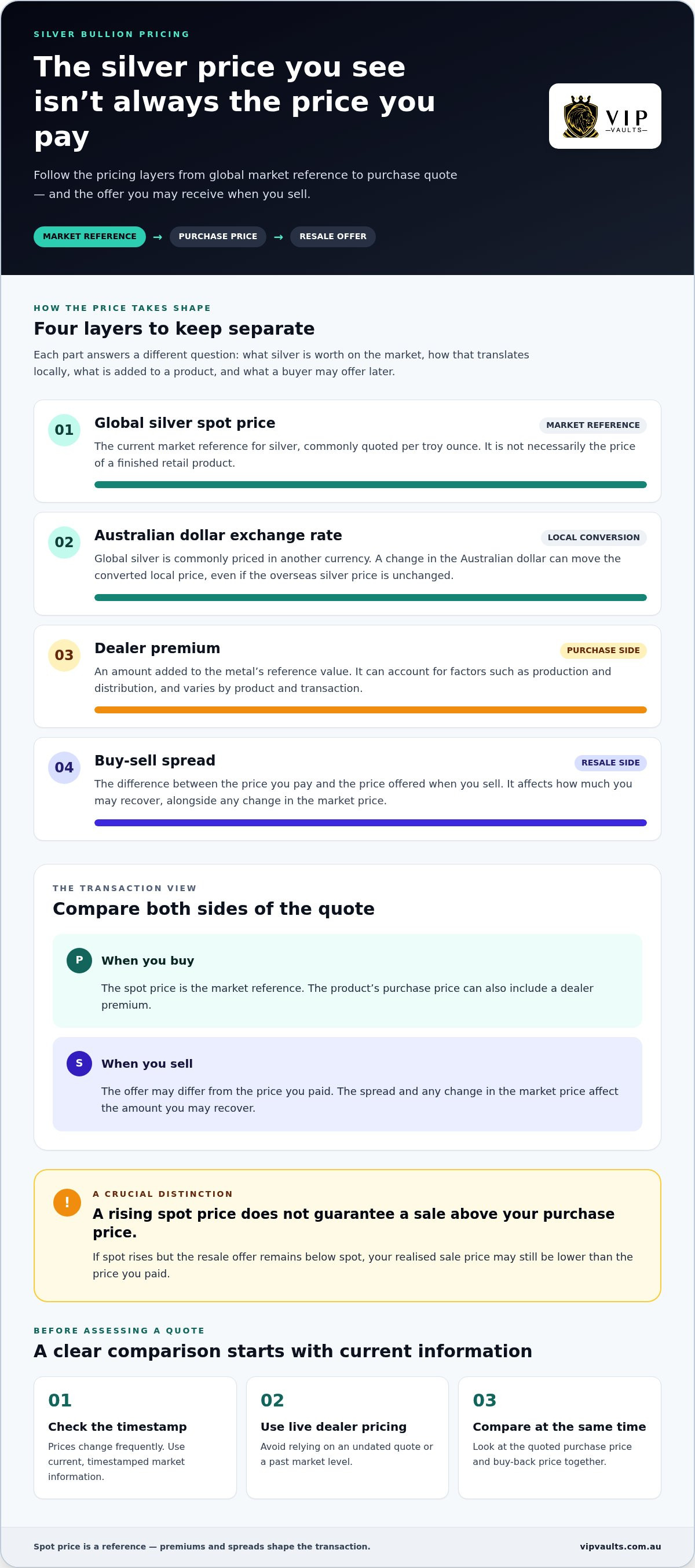
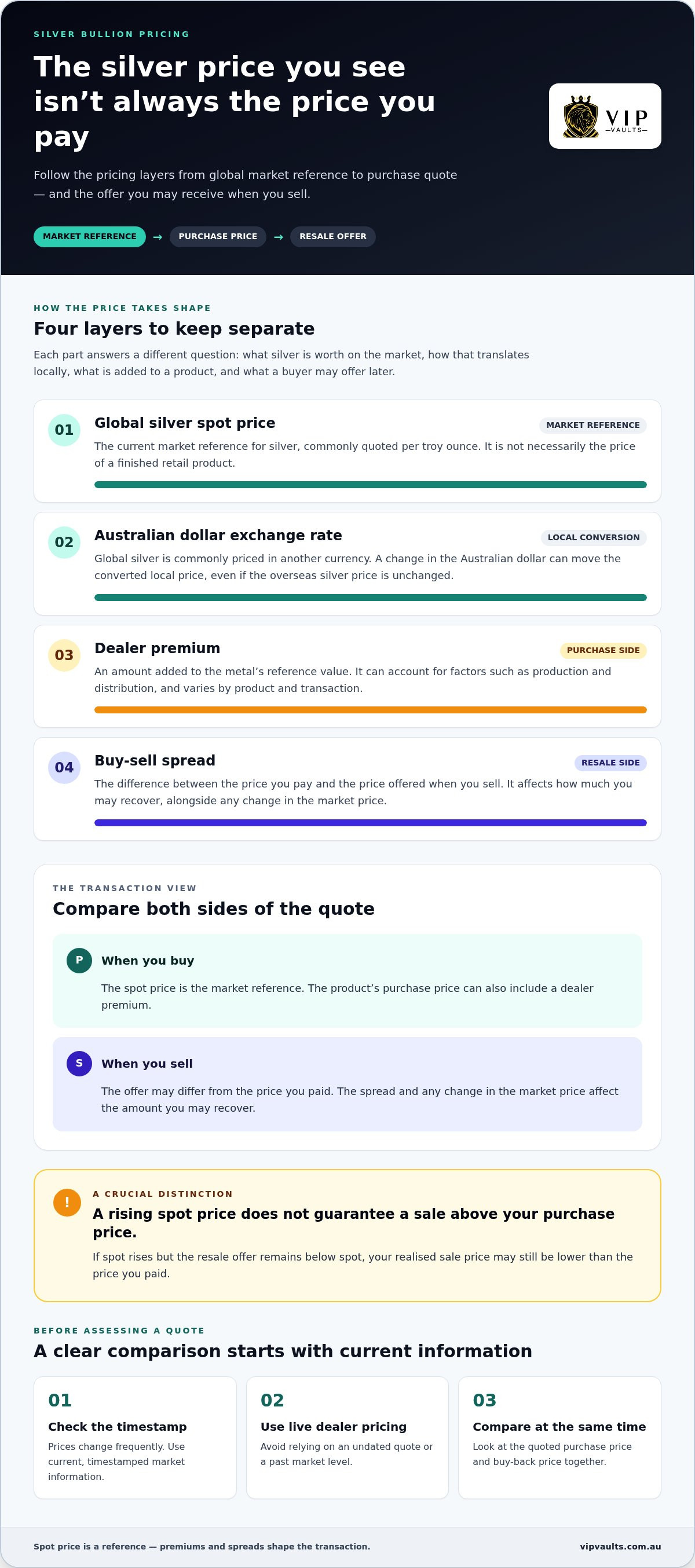
Local bullion pricing starts with the global silver spot price, commonly quoted per troy ounce. The Australian dollar exchange rate matters too, because global silver trading is commonly priced in another currency. If the Australian dollar changes value against that currency, the converted local price can move even when the overseas silver price is unchanged.
Separate these three elements when assessing a transaction:
- Spot price: the current market reference for silver, not necessarily the price of a finished retail product.
- Dealer premium: an amount added to the metal’s reference value to account for factors such as production and distribution.
- Buy-sell spread: the difference between the price you pay and the price offered when you sell. It affects the amount you may recover, alongside any change in the market price.
If spot rises but the resale offer remains below spot, your realised sale price may still be lower than your purchase price. Premiums and spreads vary by product and transaction, so compare the quoted purchase and buy-back prices at the same time. Prices change frequently. Use current, timestamped market information and live dealer pricing when assessing investing in silver bullion Australia, rather than relying on an undated quote or past market level.
Silver bars, coins and pricing: understand what you are buying
Bars and coins both provide physical silver exposure, but the format can affect handling, comparison and resale. The right choice depends on your priorities, including product recognition, ease of storage and transaction price. Use this comparison as a starting point, then check the specific product details before purchasing.
| Consideration | Bars | Coins |
|---|---|---|
| Format | Typically a compact bar, with its weight and purity identified on the product or accompanying documentation. | A minted coin, with its weight and silver content stated in its product details. |
| Recognition | Recognition can depend on the refiner, markings and supporting documentation. | Recognition can depend on the mint and the coin’s identifying details. |
| Premiums | The premium varies with product, size and market conditions. | The premium varies with product and may reflect minting and other product-specific factors. |
| Handling | Consider how the bar’s size and packaging suit your storage and resale plans. | Consider protecting the coin’s condition and retaining its packaging where relevant. |
Silver bullion bars or coins: which factors matter?
Neither format is universally better. Compare the stated weight and purity, the refiner or mint, product markings and any documentation supplied. Recognised names, such as LBMA-accredited manufacturers, can help identify a product and support a clearer resale discussion. Documentation also helps you keep a record of what you bought. The Royal Australian Mint investment coins information is a useful reference for understanding this coin format.
Product sizes, specifications, packaging and premiums vary, so verify current details at the time of purchase. Condition can matter when a buyer assesses an item. Keep packaging and transaction records together, and don’t assume that products with the same stated silver content will have identical premiums or resale offers.
How spot price, premium and spread fit together
The spot price is a market reference for silver, not a guaranteed retail price or the amount you’ll receive when selling. A product’s metal value is based on its silver content and the relevant market price. The dealer premium is the amount by which its purchase price exceeds that metal value, reflecting product and transaction factors.
The buy-sell spread is the difference between the price you pay and the price offered to buy the product back. It affects your break-even point: the market price may need to rise enough to offset the premium and spread before a sale recovers your original outlay. Compare both sides of a transaction, not just the spot price. For investing in silver bullion Australia, timestamped live pricing helps you compare against current market conditions.
VIP Vaults & Bullion Exchange Perth offers silver bars and coins sourced from recognised refiners, with transparent live pricing linked to global markets. Review the silver bullion options alongside product details and transaction pricing to assess what you’re buying.
Silver bullion investment risks and trade-offs to weigh
Silver may provide a different source of return from shares and bonds, so some investors consider it as one part of a diversified portfolio. Diversification can spread exposure across asset types, but it can’t prevent losses. Silver prices can fluctuate sharply, and market conditions don’t guarantee that bullion will rise when other investments fall.
Physical silver also has no interest or dividend payments. Any return depends on the price you can achieve when selling, after accounting for what you paid and the costs of holding and transacting. A rising spot price alone doesn’t determine your outcome.
- Price volatility: Silver’s value can move in response to investment demand, industrial activity, currency movements and broader market sentiment. A fall may leave you selling at a loss.
- Transaction friction: Purchase premiums and the buy-sell spread can affect your break-even point. The resale offer may differ from the market reference price.
- Liquidity: Physical bullion must be sold through a transaction. How quickly and on what terms you can sell may depend on the product, buyer and market conditions.
- Custody: Home storage means taking responsibility for safekeeping. Professional storage has its own arrangements and potential costs, which should be weighed against convenience and control.
Does silver bullion suit every investment timeframe?
Your timeframe matters because a short-term need to sell can coincide with an unfavourable price or leave less opportunity to absorb transaction costs. Decide whether you’re considering a deliberate long-term allocation or trying to profit from short-term price movements. The latter requires accepting that timing can be difficult and outcomes uncertain. Consider how a fall in value would affect your wider financial circumstances before committing funds.
Physical bullion compared with digital silver exposure
Physical ownership gives you a bar or coin to custody and sell; platform-based exposure is held through a financial product, with rights determined by its structure and terms. Digital access may change how transactions and custody are handled, but it doesn’t make exposure risk-free or guarantee access to specific metal. Compare the product’s ownership arrangement, fees, liquidity and sale process rather than assuming all forms of silver exposure work alike.
For anyone considering investing in silver bullion Australia, the useful question isn’t simply whether silver could rise. Ask how much volatility you can tolerate, whether you need income, how you’d access funds if plans change, and whether the practical responsibilities of physical ownership suit you. These trade-offs help put bullion in context alongside your broader investment goals.
A practical Australian checklist before investing in silver bullion
A considered purchase starts with your investment plan, not a particular bar or coin. Work through these steps in order so the decision reflects your objectives, risk tolerance and practical arrangements.
- Define your purpose. Decide what role, if any, physical silver would play alongside your other assets. Be clear about why you’re considering bullion and what would prompt you to sell.
- Set an allocation and risk tolerance. Choose an amount you could commit without relying on a particular price rise or needing to sell at short notice. Consider how a fall in value would affect your wider financial position before comparing products.
- Compare product details. Check the stated silver content, weight, form, refiner or mint identity, markings and condition. Recognised refiners, including The Perth Mint and LBMA-accredited manufacturers, can make product identification clearer.
- Review the transaction price. Compare the quoted purchase price with a current, timestamped market reference and understand the stated premium. Review the buy-back terms too, so you can see how the spread could affect a future sale.
- Plan custody before purchase. Decide whether you’ll store bullion at home or use professional storage. Consider how each arrangement fits your access needs, security preferences and ongoing responsibilities.
- Keep a complete record. Retain invoices, payment records, product descriptions and any documentation provided. Record purchase dates and amounts, then keep sale records with them for your own financial and tax records.
What to check before completing a bullion purchase
Before proceeding, make sure the product description matches what you intend to buy and that the transaction documents clearly identify the product and price. Keep records in a secure, organised place, separate from the bullion itself. If your circumstances raise tax questions, seek tailored advice rather than relying on a general guide or assumptions based on another investor’s situation.
Australian tax, records and SMSF considerations
GST treatment can depend on the silver’s form and characteristics, while capital gains tax may be relevant when you dispose of an asset. Check current Australian Taxation Office guidance before acting, as tax rules and their application can depend on the details. Keep accurate records to help establish your purchase history and consult a registered tax professional for advice suited to your circumstances.
SMSF trustees must consider the fund’s investment strategy, custody arrangements and applicable superannuation rules. Requirements can be specific, so obtain specialist SMSF advice before purchasing or arranging storage. The topic also connects with SMSF gold storage and compliance considerations, although advice for a fund should be tailored to its circumstances.
For a purchase grounded in clear product details and market-linked pricing, explore silver bullion options from VIP Vaults & Bullion Exchange.
Sourcing and storing silver bullion with confidence
Good due diligence connects the product you buy with the way you plan to hold it. A recognised refiner and clear transaction documents help you identify the silver and keep a reliable purchase record. Custody is a separate decision: you might keep bullion at home or use professional private storage, depending on your priorities around access, privacy and responsibility.
Before choosing, understand the storage arrangement in practical terms. Consider how access works, what terms apply, how the metal is identified and whether insurance applies to your circumstances. Don’t assume a storage method includes insurance or guarantees a specific level of protection. Understanding the arrangement helps you choose custody that fits your needs.
Choosing a considered custody approach for physical silver
Home storage gives you direct control over where your bullion is kept, while making you responsible for its safekeeping and records. Professional vaulting can suit investors who prefer not to store metal at home. Compare the options in light of:
- Access: Understand the process and any conditions for retrieving or handling your bullion.
- Privacy: Consider how much discretion you want around possession and storage.
- Responsibility: Clarify who holds the metal, how it is identified and what documentation records the arrangement.
- Insurance: Establish whether cover applies, what it covers and whether you need to arrange anything separately.
These details matter as much as convenience. Private vault rental and bullion lockers provide professional storage options for investors who prefer an alternative to home custody. Review the applicable terms before deciding, and keep storage documentation with your purchase records.
Sourcing silver bullion through a specialist dealer
Refiner identity is a useful part of product due diligence. VIP Vaults & Bullion Exchange sells silver bullion bars and coins sourced from recognised refiners, including The Perth Mint and LBMA-accredited manufacturers. Check the product description and transaction documents so you can match the item to the details recorded at purchase. Retain invoices and related records for your reference and future transactions.
Pricing linked to global markets helps put a quote in context, but review the product’s live purchase price and transaction details together. In investing in silver bullion Australia, a sound decision depends not only on the metal itself, but also on clear sourcing and a custody arrangement you understand.
Explore silver bullion and private storage options from VIP Vaults & Bullion Exchange.
Make your next bullion decision with clarity
Before taking the next step, turn your research into a decision you can revisit calmly. Write down what you want silver to contribute, the level of exposure you’re comfortable with and the conditions that might lead you to buy, hold or sell. This gives you a consistent basis for reviewing your choices, rather than letting a sharp market move dictate your approach.
For investing in silver bullion Australia, confidence comes from understanding the commitment as well as the opportunity. Consider how a purchase fits your broader plans, and seek qualified financial or tax advice if your circumstances call for it. A measured decision is more useful than acting under pressure.
When you’re ready, explore silver bullion and private storage options from VIP Vaults & Bullion Exchange. A clear plan can help you move forward with care and confidence.
Frequently Asked Questions
Is silver bullion a good investment in Australia?
Silver bullion may suit some Australian investors, but it isn’t right for everyone. Consider whether you could hold it through price falls without needing to sell to cover everyday expenses or an unexpected bill. Weigh its lack of regular income against your goals too. Before investing in silver bullion Australia, decide what role it would play in your wider financial plan and seek personal financial advice if you need help assessing suitability.
Is silver bullion GST-free in Australia?
Qualifying investment-grade silver bullion is generally GST-free in Australia under the ATO’s guidance, including GSTR 2003/10. The form and characteristics matter: qualifying bullion must meet the relevant purity and investment-form requirements. Jewellery, lower-purity silver and some collectible or numismatic products may receive different treatment. Check current ATO guidance for the exact item you’re considering, as a product described as silver isn’t automatically GST-free.
Can silver bullion lose value?
Yes. If silver’s market value falls, the amount you could receive on sale may also fall. An investor who needs to sell during a downturn may realise a loss, especially after allowing for transaction costs. A loss is realised when you sell for less than your total purchase outlay; until then, a lower market valuation is an unrealised change. Don’t rely on a future recovery to meet a fixed expense.
What purity should I look for in investment silver bullion?
A common benchmark for investment-grade silver bullion is at least 99.9% purity, often shown as .999. Check the product’s stated fineness and weight on its markings or documentation, and make sure those details match the transaction record. Purity alone doesn’t establish a product’s full suitability or resale terms, so consider the refiner and product type as well. Verify the specifications of a particular coin or bar before buying.
Can silver bullion be held in an Australian SMSF?
An Australian SMSF may be able to hold investment-grade silver bullion, subject to superannuation rules and the fund’s circumstances. Trustees need to consider the fund’s written investment strategy, acquisition arrangements and custody obligations. Rules can restrict transactions involving related parties, and fund assets generally need to be kept separate from personal assets. Check current ATO guidance and obtain specialist SMSF advice before a trustee makes a purchase or storage decision.
How should I store silver bullion safely?
Choose storage that suits the quantity of metal, your access needs and the responsibility you’re comfortable managing. At home, limit who knows the location, keep an inventory and review whether your insurance arrangements address bullion. For professional storage, understand access procedures, custody terms and whether insurance applies to your holdings. Keep purchase and storage records securely, with copies stored separately so you can refer to them if your circumstances change.