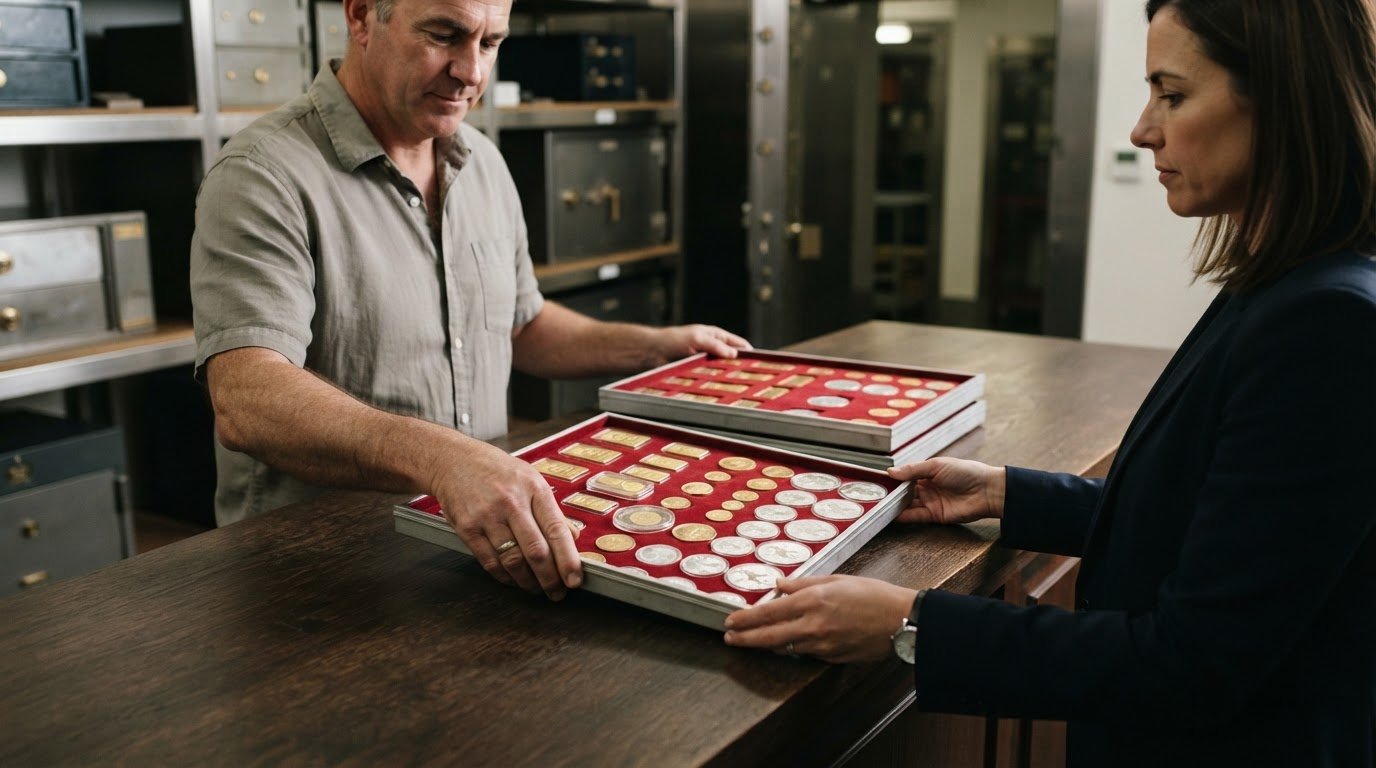
Gold bullion can be straightforward to sell, but a large holding needs careful preparation. To understand how to liquidate a large bullion portfolio, organise ownership records and list each item by type, purity and weight. Then obtain quotes from at least three reputable dealers and compare each offer with the current market price. A dealer can inspect and test the bullion, explain how the offer is calculated, and make payment after you accept.
A clear valuation and controlled process matter when selling significant physical assets. Records help establish ownership, while verified purity and weight determine the metal being valued. This guide explains how to prepare your holdings, assess pricing and documentation, and complete the transaction carefully, including considerations for Australian investors.
Key Takeaways
- Bring together purchase records, invoices and item details so ownership and the transaction can be clearly documented.
- Expect bullion value to depend on product type, verified purity and weight, and the current market price.
- According to the Australian Transaction Reports and Analysis Centre, a bullion dealer may be exempt from initial customer due diligence when the retail value is less than A$5,000, subject to the exemption’s other condition.
- Before completing a sale, understand how the offer was calculated and confirm payment before handing over the bullion.
Why Is It Easy to Liquidate Gold Bullion?
Gold bullion can be sold through dealer buybacks, auctions or private sales. Choose a channel by comparing its offer, process and costs.
- Understand the Australian rules and tax treatment before selling. Australia's AML/CTF Act was introduced in 2006, according to the Federal Register of Legislation. Section 41 concerns reports of suspicious matters, according to the Federal Register of Legislation. According to the Australian Transaction Reports and Analysis Centre, a bullion dealer may be exempt from initial customer due diligence when the retail value is less than A$5,000, subject to the exemption's other condition. For GST, investment-form gold that is generally at least 99.5% fine is GST-free; silver's treatment depends on its form and applicable GST rules. According to the Australian Taxation Office, qualifying gold assets held for 12 months or longer may receive a 50% capital gains tax discount, subject to individual circumstances.
-
Compare bullion sale channels
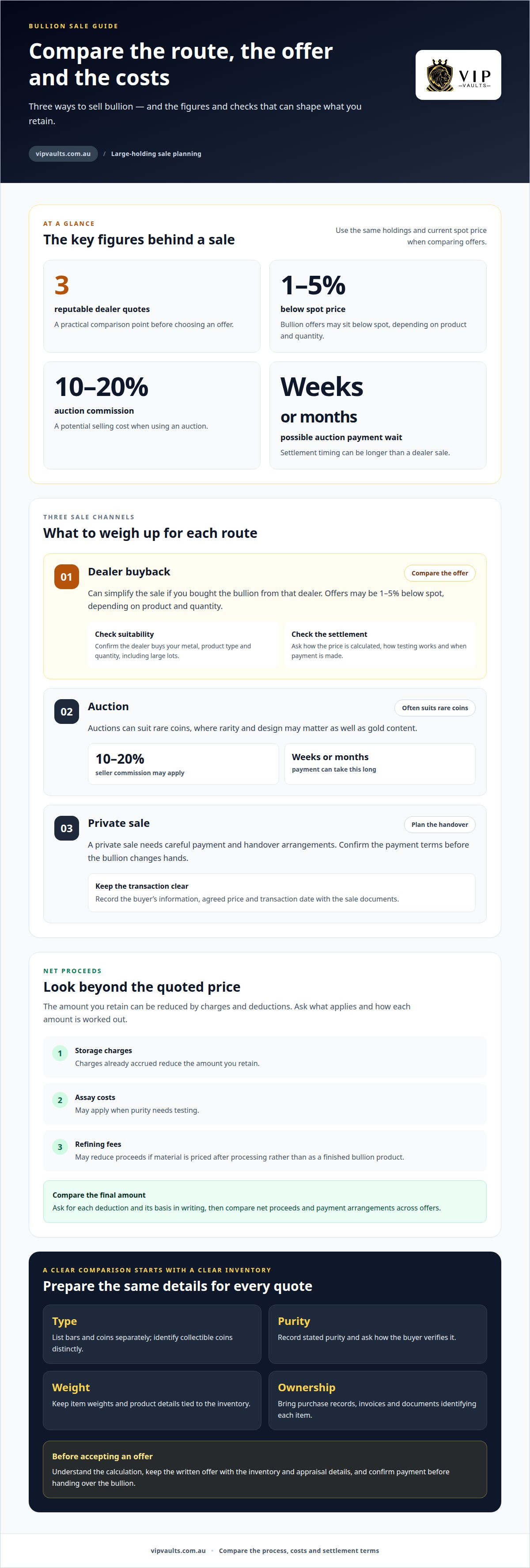
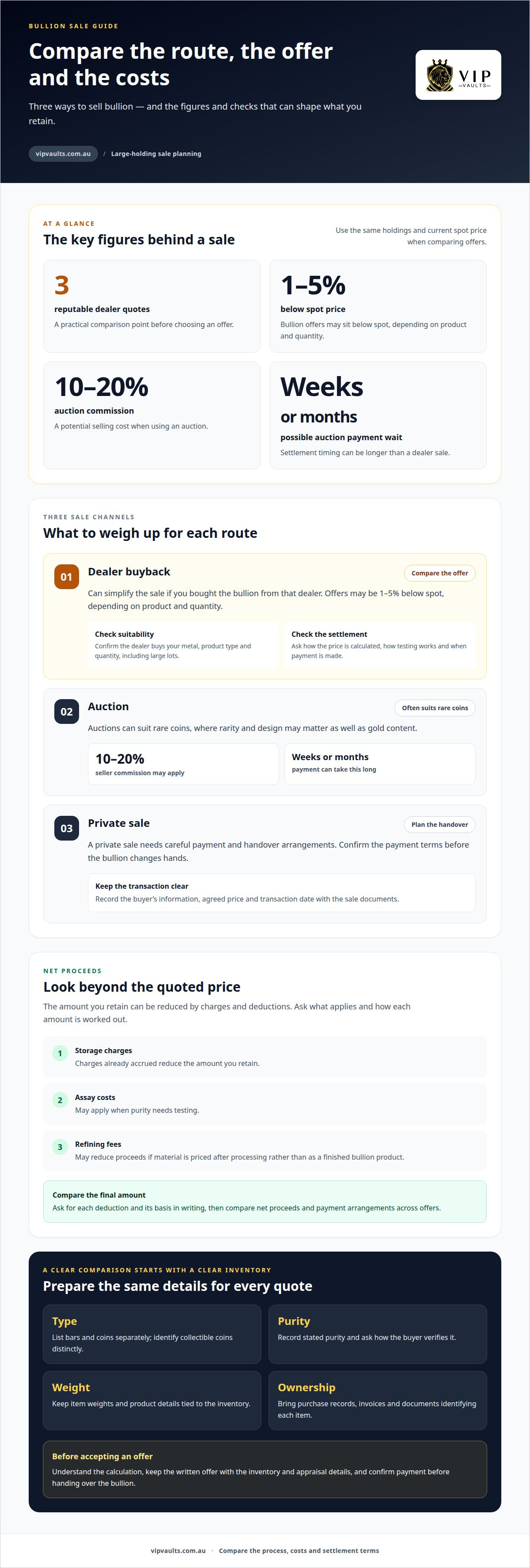
Compare dealer buybacks, auctions and private sales using the same holdings and current spot price. Ask three reputable dealers for quotes; bullion offers may sit 1-5% below spot, depending on product and quantity. A dealer buyback can simplify selling bullion previously bought there. Auctions suit rare coins, but sellers may pay 10-20% commission, and payment can take weeks or months. Private sales require careful payment and handover arrangements.
-
Check dealer suitability
Approach Australian precious metals dealers or refiners that buy your metal, product type and quantity. Confirm their purchasing criteria and whether they accept large lots. Compare the proposed price, testing process and settlement terms. Dealers may buy directly from individuals, while refiners may assess material for processing. The right option depends on whether you hold standard bullion or collectible coins.
-
Account for sale costs
Calculate likely net proceeds, not just the quoted price. Storage charges already accrued reduce the amount you retain, while assay costs may apply when purity needs testing. Refining fees can also reduce proceeds if the buyer prices material after processing rather than as a finished bullion product. Ask for each deduction and its basis in writing. Compare the final amount across offers and confirm payment arrangements before handing over the gold.
Ownership records and sale documentation
Build a clear ownership trail before arranging an appraisal or accepting an offer. Tie each record to the specific bullion item or group of assets it describes.
-
Gather ownership records
Collect purchase records, invoices and documents identifying each bar or coin. Create an inventory that pairs each item’s description with its recorded weight, purity and purchase details. This makes it easier to reconcile the physical holdings with the ownership paperwork during a sale.
For an SMSF, retain purchase records, invoices, bullion bar or coin details, and other documents showing the bullion belongs to the fund. Keep fund assets distinct from a trustee’s personal holdings. If several trustees are involved, record their agreement on the sale decision and process before proceeding.
Coin records deserve particular care. A coin’s value may reflect its rarity and design as well as its gold content. Record its identifying details and condition so the appraisal can consider it as a coin, rather than only as metal.
-
Arrange appraisals and sale documents
Prepare an itemised schedule for the appraisal, grouping matching bars or coins while keeping distinct pieces identifiable. A professional appraisal can assess gold by weight, purity and current market prices. For coins, include details that may help explain rarity and design, and record condition for the buyer’s review.
Before accepting an offer, understand how the buyer calculated it. Keep the written offer with the inventory and appraisal details, so the agreed price can be traced to the assets being sold. For an SMSF transaction, ensure the documentation records a sale by the fund, not a personal sale by an individual trustee.
Complete the sale record with the buyer’s information, agreed price and transaction date. Retain it alongside the purchase documents and appraisal. This creates a coherent record of what the fund or individual owned, what was sold and the circumstances of the sale.
Purity, weight and market-price valuation
Assess each holding as physical metal, then relate its verified content to the market price used by buyers. A clear calculation shows how the offer reflects your bullion’s contribution to your wealth.
-
Assess purity and weight
Record each item’s product type, stated purity and weight, keeping bars and coins separately identifiable. Investment-grade gold coins are generally 99.9% fine. The fineness indicates the proportion of gold in the item, while its weight establishes how much material is being valued.
Have the buyer inspect and weigh the bullion, then test its purity where needed. Compare the assessment with item markings and accompanying product details. If the measured weight or tested purity differs from your records, ask how that changes the valuation before considering an offer.
For a mixed portfolio, avoid treating every piece as interchangeable. A gold bar and a coin can contain different amounts of fine gold, even at similar gross weights. Coin rarity and design may also affect value beyond metal content, so identify collectible pieces separately.
-
Value bullion against market prices
Ask buyers to show how they calculated the offer from the item’s fine-metal content and the gold price used. Gold prices change daily with supply and demand, so note the quote’s timing and whether it uses a live spot price. Spot price is a market reference, not automatically the amount payable for each item.
Check the calculation item by item: product type, purity and weight determine metal value, while the buyer’s offer reflects its pricing terms. That dated example illustrates why Australian-dollar valuations can move with both gold markets and currency conversion.
Compare offers using the same stated holdings and valuation time. If a buyer’s calculation differs, identify whether the reason is a different weight, purity result, market reference or treatment of the product. This clarifies the basis for each proposed return before you decide whether to accept.
Preparing and completing a sale
Deciding how to liquidate a large bullion portfolio means balancing your cash needs against exposure to changing market prices. Selling in stages can spread the timing of the sale, while selling at once converts the holding sooner. Neither approach removes price risk, so base your choice on how you intend to use the proceeds.
- Set the sale scope before approaching a dealer. List the gold and silver you intend to sell, then separate any pieces you plan to retain. For an SMSF, have all trustees agree on the sale decision and process first. This distinguishes the investment decision from personal holdings and clarifies which assets the fund will dispose of.
- Arrange an inspection and agree on the sale terms. Ask the buyer to explain its calculation, deductions and settlement method. Compare the written offer with your item schedule, and ensure the agreed price and transaction details are recorded. A direct sale can proceed after you accept the offer. Keep the offer with your other sale documents.
- Plan the handover around payment. Confirm receipt of funds before transferring possession of the bullion. For a posted sale, shipment insurance can protect against potential loss in transit. Retain dispatch and tracking records with the sale documents to document the bullion’s movement from your possession to the buyer.
- Keep the transaction aligned with Australian requirements. A large bullion sale may involve legal requirements for sellers to follow. Retain the offer, sale record and payment evidence together. A tax professional can explain potential tax liabilities using your purchase records, sale details and individual circumstances.
- For SMSF bullion, record the sale as a fund transaction, not an individual trustee’s personal sale. Match the payment and sale record to the fund’s ownership documents. A considered plan for how to liquidate a large bullion portfolio also accounts for the fund’s investment purpose and intended use of the proceeds.
If you need a secure place for bullion while organising a sale, explore secure bullion storage options.
VIP Vaults & Bullion Exchange Perth
VIP Vaults & Bullion Exchange Perth can support your broader precious metals plans while you prepare a sale or retain part of your holdings. If you need secure storage for bullion while organising records, valuation and timing, consider its Private Vault Rental or Bullion Locker options. The business also offers Gold Bullion and Silver Bullion for investors managing physical precious metals.
These services are relevant when secure storage or continued access to physical bullion forms part of your decision. They are separate from the sale steps above, such as choosing a buyer, reviewing an offer and recording the transaction. Contact VIP Vaults & Bullion Exchange Perth to discuss secure bullion storage or precious metals holdings.
Plan what comes after the sale
A sale can change more than your account balance. Before setting a date, decide what the proceeds need to do next, whether that means meeting a planned expense, holding cash or reshaping your investment mix. That decision can help you choose how much bullion to sell and whether to retain any physical metals. Keep the intended use of the funds in view as you consider how to liquidate a large bullion portfolio; the transaction is one part of a broader financial decision.
If secure storage remains relevant while you make that decision, discuss your requirements with VIP Vaults & Bullion Exchange Perth. A considered next step can help you manage the timing and handling of your holdings.
Contact VIP Vaults & Bullion Exchange Perth to discuss your next step with confidence.
Frequently Asked Questions
How do I value a large gold and silver bullion portfolio in Australia?
Value each metal separately, using its verified weight and purity against the relevant market price. Keep gold and silver in distinct schedules, with coin and bar details, so buyers can see how the calculation applies to each holding. Record the pricing time and Australian-dollar basis used. Treat collectible coins separately from standard bullion because rarity and design may affect their value.
What are current Australian bullion buyback prices and dealer spreads?
Buyback offers move with market prices and depend on the metal, product type, purity, weight and quantity. Ask each buyer to state the spot-price reference and explain any difference between that reference and the proposed payment. Compare offers for the same items at a similar time, in Australian dollars. This makes the quoted spread and product-specific deductions easier to assess.
What identity checks and reporting requirements apply to large bullion sales in Australia?
Expect a dealer to consider its customer due diligence obligations and request information to establish who is selling and who owns the bullion. According to the Australian Transaction Reports and Analysis Centre, a dealer may be exempt from initial customer due diligence below A$5,000, subject to another condition. Larger transactions may fall outside that exemption; section 41 of the AML/CTF Act concerns reports of suspicious matters.
What security, insurance and transport precautions are needed for a large bullion sale?
Keep details of your holdings and collection arrangements private, and use a secure handover plan that limits unnecessary handling. For a shipment, arrange insurance against potential loss and retain dispatch and tracking records. Confirm that payment has arrived before releasing the bullion. If collection is in person, agree on the inspection and settlement process beforehand, then keep the sale and payment records together.
Which Australian bullion dealers and refiners buy large quantities?
Approach Australian precious metals dealers or refiners and confirm that they buy your product type and accept large lots. Compare their prices, testing processes and settlement terms.