
What if the hardest part of choosing to invest in gold through an Australian SMSF isn’t selecting bullion, but establishing that the fund can own, document and safeguard it appropriately? Physical gold may appeal as a tangible diversifier, but trustees need to weigh its role against price movements, liquidity and concentration risk. A sound purchase also depends on a clear investment rationale, reliable ownership records, defensible valuation and suitable custody arrangements.
This guide covers the decisions to make before your SMSF buys physical bullion: how to assess gold’s place in the fund’s investment strategy, what to verify about the bullion and its ownership, and how storage, insurance, valuation and audit records fit together. It also distinguishes investment-grade bullion from items that may fall under collectible rules, so you can identify the right questions for your SMSF professional. The aim is to map a practical route from research to a well-documented purchase, with investment and custody planned as separate but connected decisions.
Key Takeaways
- Before you invest in gold through an SMSF, assess its role alongside the fund's objectives, diversification and investment timeframe.
- Verify current ATO guidance, superannuation law and your fund deed before deciding whether a particular bullion asset and transaction are suitable.
- Account for gold's price volatility and lack of interest or dividends when weighing its potential portfolio benefits against concentration risk.
- Use a practical purchase process: review the strategy, confirm the rules, assess the bullion, retain transaction records and plan custody separately.
- VIP Vaults & Bullion Exchange Perth offers gold bars and coins from recognised refiners, including LBMA-accredited manufacturers, alongside private vault and bullion locker storage.
Why invest in gold through an Australian SMSF?
For some trustees, physical gold may have a place in a broader investment strategy. Its value is linked to market demand and can move differently from other assets, which may contribute to diversification. That possibility is not a promise of protection: gold prices can fall as well as rise, and past performance cannot establish future returns.
In brief: SMSF gold investing means the fund owns physical bullion as a fund asset for retirement investment purposes, rather than a member buying and holding gold personally.
What does it mean for an SMSF to invest in physical gold?
The distinction is about ownership and purpose. If a member buys gold in their own name, it is a personal asset. If the SMSF purchases bullion, the fund must own and account for it as a fund asset. A member’s personal gold should not be treated as though it belongs to the SMSF.
Before investing, trustees need to consider whether the proposed asset and transaction fit the fund deed, investment strategy and applicable superannuation obligations. A purchase is not automatically suitable or compliant simply because it involves physical bullion. Verify current ATO guidance and seek advice from an appropriately qualified SMSF professional about your fund’s circumstances.
Why might trustees consider adding gold to a portfolio?
Gold is a tangible asset, and some trustees may consider it as one component of a diversified portfolio. Its price can respond to different market influences from shares or fixed-interest investments, but diversification cannot remove investment risk or guarantee a positive result. The appropriate role for gold depends on the fund’s objectives, existing holdings and investment timeframe.
Bullion also differs from income-producing assets: it does not pay interest or dividends. A trustee’s return depends on the value at which the gold can be sold, relative to its purchase price and holding costs. Consider whether the fund can accommodate price fluctuations and meet cash needs without relying on a particular future gold price. The general overview of Gold as an investment outlines common forms of gold investment and factors that can influence its price.
Investment and custody are connected, but they are separate decisions. Trustees considering physical bullion need to decide how the asset will be held and how the arrangement supports fund records and oversight. The SMSF gold storage guide explores custody considerations in more detail.
Deciding whether to invest in gold requires more than a view on the metal’s price. Trustees should be able to explain its intended role in the fund and assess its risks in the context of the fund’s wider circumstances.
What SMSF trustees should verify before buying gold
Before committing fund money, trustees need to establish that the proposed gold asset and transaction fit the fund’s circumstances. Eligibility is not determined by the metal alone. The fund deed, investment strategy, nature of the asset, transaction arrangements and applicable superannuation rules all matter. A purchase that appears straightforward can raise different questions if it involves coins, personal-use items, a related party or an arrangement that could benefit a member personally.
Trustee obligations apply to the decision, purchase, ownership and records. Treat each stage as part of the same governance process and verify current requirements before proceeding.
Which rules and fund documents need attention?
Start with the fund deed and current investment strategy. Check that the proposed holding is consistent with the fund’s governing rules and documented investment approach, and that trustees have considered its place in the fund’s overall circumstances. Then verify relevant requirements against current ATO guidance, the Superannuation Industry (Supervision) Act 1993 and associated rules. Don’t rely on a general online summary for a fund-specific decision.
Asset classification deserves careful attention. Investment bullion and items that may be treated as collectables or personal-use assets can raise different considerations. Don’t assume every gold coin has the same status as a bullion bar, or that an asset’s description alone settles its treatment. Have claims about the sole purpose test, collectables and personal-use assets, or related-party transactions checked against current authoritative guidance by a qualified SMSF professional. The exact asset and transaction circumstances matter.
What evidence should trustees retain?
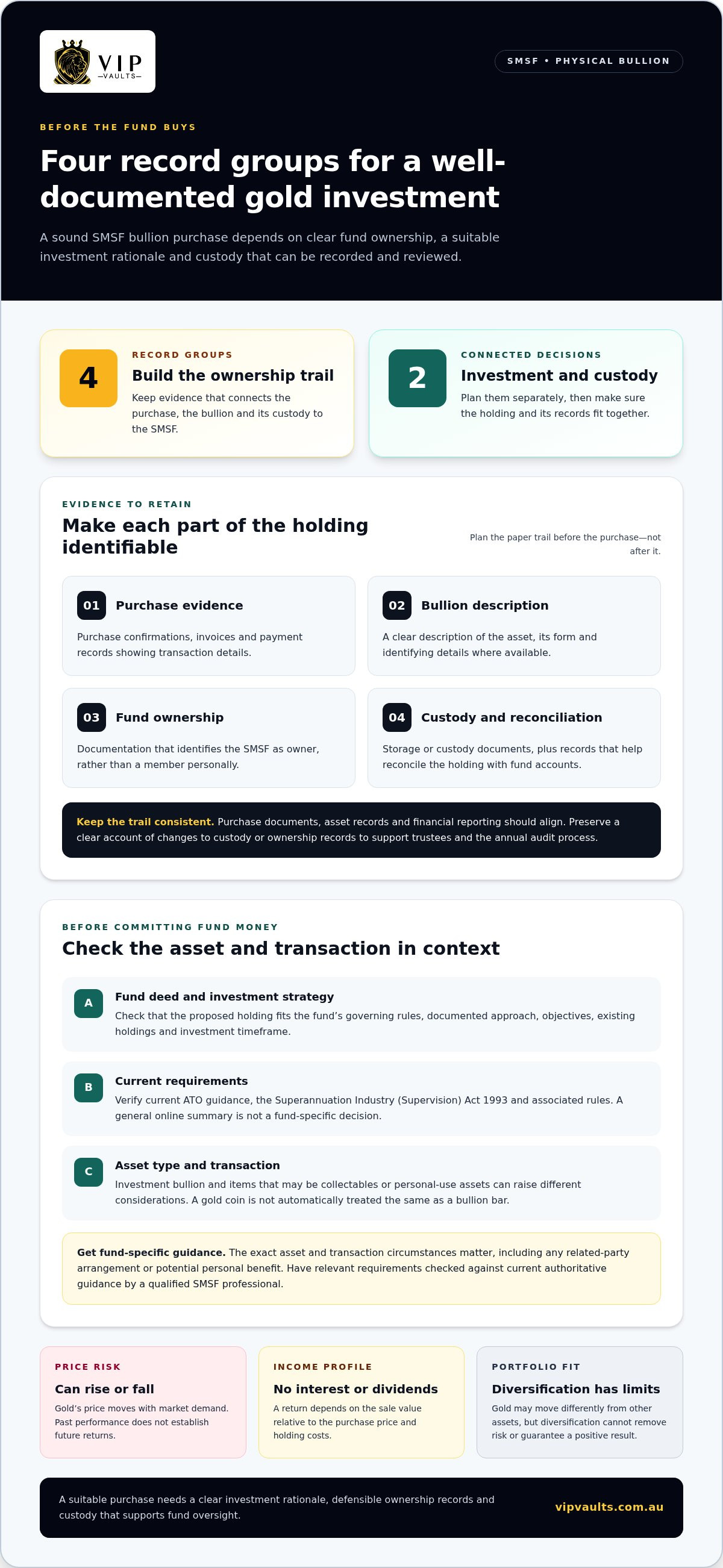
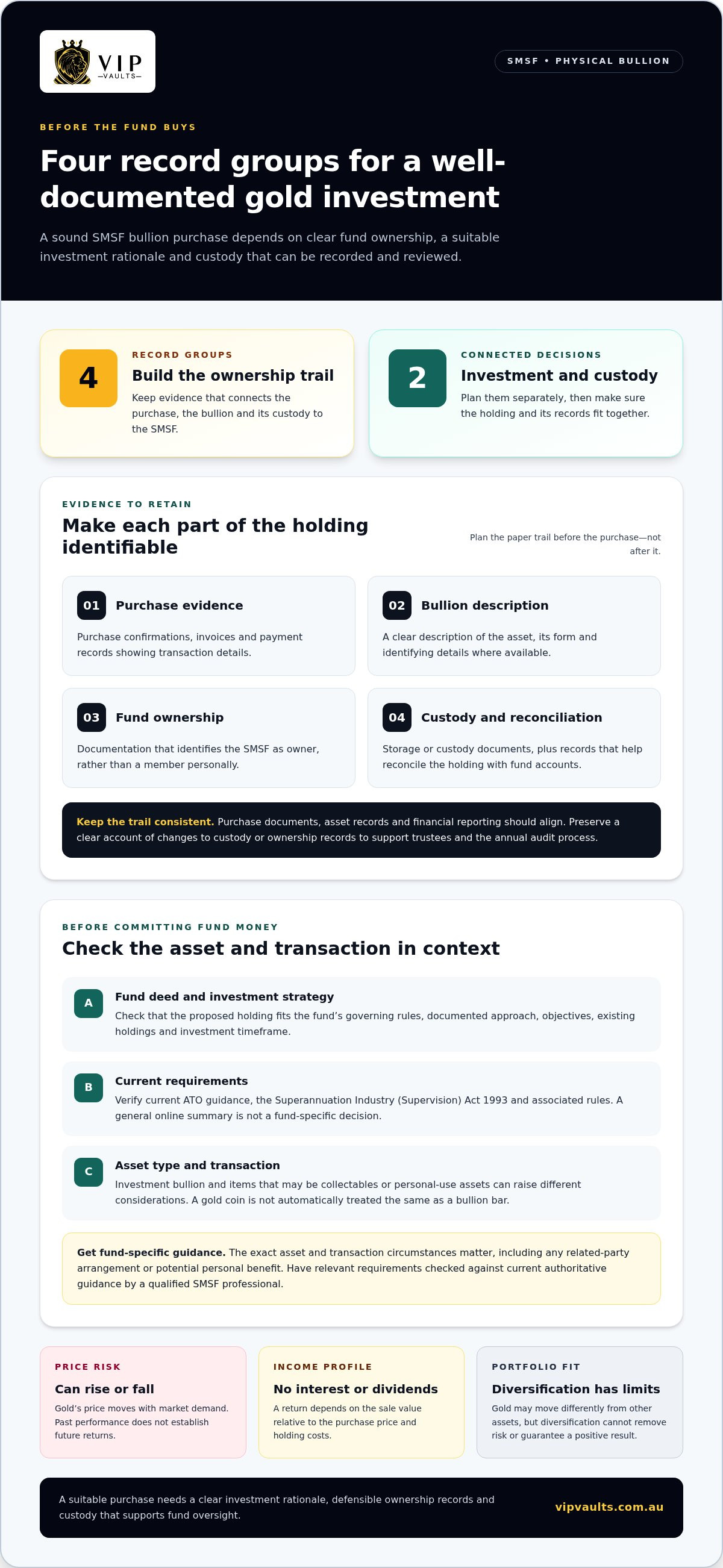
Plan the paper trail before the purchase, not after it. Records should make it possible to follow the transaction and identify the gold as a fund asset. Consider retaining:
- Purchase confirmations, invoices and payment records showing the transaction details.
- A clear description of the asset, including its form and identifying details where available.
- Ownership documentation that connects the holding to the SMSF rather than a member personally.
- Relevant custody or storage documents, together with records that help reconcile the holding against the fund’s accounts.
Keep information consistent across purchase documents, asset records and the fund’s financial reporting. If details change, such as the custody arrangement or the fund’s ownership records, preserve a clear account of what changed and when. This supports trustees and the fund’s annual audit process. Confirm recordkeeping requirements with current ATO guidance and the fund’s SMSF professional, as the appropriate records and retention periods depend on the applicable obligations.
For trustees comparing physical options, VIP Vaults & Bullion Exchange supplies gold bars and coins from internationally recognised refiners, including LBMA-accredited manufacturers. Explore physical gold bullion as a purchase option, and arrange SMSF, tax and compliance advice separately.
Gold in an SMSF: weigh diversification against the risks
Physical gold can add a different kind of exposure to an SMSF portfolio, but a different asset is not automatically a safer one. Its value can fluctuate, and a fall in price can reduce the fund’s balance just as a rise can increase it. Assess gold against the fund’s objectives, other investments, cash requirements and investment timeframe, rather than judging it in isolation.
Gold is not a guaranteed hedge against inflation, market falls or economic uncertainty. Its performance in one set of conditions cannot assure how it will behave in another. Believing gold may have a role in a portfolio is an investment thesis, not certainty about future returns.
What are the potential advantages of physical gold?
Physical bullion is a tangible asset with international recognition, which some trustees may value as a source of diversification. Its market drivers can differ from those of shares and interest-bearing investments, so its price may not move in the same way at the same time. That difference may help broaden a portfolio, but it does not prevent losses or ensure gold will offset falls elsewhere.
Consider the fund as a whole. Compare the proposed holding with existing asset exposures, the fund’s objectives and its expected need for accessible cash. Also consider how a change in gold’s value could affect the portfolio balance over time. Australian-dollar gold pricing reflects market conditions; the Australian gold price guide provides context for understanding market prices, not a forecast or guarantee.
What risks and limitations should trustees understand?
Gold produces no interest or dividends. A return depends on the price achieved when the fund sells, relative to its purchase price and any costs associated with holding and selling it. That can make physical bullion less suitable for a fund that relies on regular investment income or may need to sell at a particular time.
Liquidity needs a practical assessment too. How readily bullion can be sold, and on what terms, depends on market conditions, the product and the transaction arrangements. Consider whether a sale could align with the fund’s cash-flow needs, rather than assuming a tangible asset can always be converted to cash immediately or at a preferred price.
Concentration is another consideration. A substantial gold holding may leave the fund more exposed to changes in one asset class, even if trustees originally bought it to diversify. There is no universal allocation that suits every SMSF. Suitability depends on the fund’s circumstances, other assets, liabilities, time horizon and tolerance for price movements. Before investing, trustees should be able to explain both the intended portfolio role and the risks they are prepared to accept.
A practical SMSF checklist for a physical gold investment
A disciplined process helps trustees connect the investment case with the fund’s rules, transaction records and custody arrangements. Use the sequence below to organise the decision before the SMSF commits funds. This is an educational checklist, not fund-specific financial, legal or SMSF advice. Requirements can depend on the asset and circumstances, so verify current guidance and obtain advice for your fund before acting.
How can trustees prepare before a bullion purchase?
- Review the fund’s position. Revisit its investment strategy, objectives, existing assets and expected cash needs. Consider whether bullion has a clear role in the portfolio and whether the fund can meet its obligations without relying on a particular gold price.
- Assess the investment case. Record why the trustees are considering gold, the risks they have considered and how the holding fits the fund’s timeframe. Avoid relying on a general belief about inflation or market uncertainty as the sole reason for the decision.
- Compare the physical formats. Consider practical differences between bars and coins, including how the proposed format fits the fund’s investment rationale and recordkeeping. The gold coins versus bars guide outlines factors to consider when comparing them.
- Verify the proposed asset and transaction. Check the fund deed and verify current ATO guidance and applicable superannuation requirements. Consider the specific bullion, seller, payment and ownership arrangements. Don’t assume a format or transaction is suitable simply because it is described as investment gold.
- Document the trustees’ decision. Keep a clear rationale for the purchase and retain relevant transaction documents, such as purchase confirmations and payment records. The records should help show what the fund acquired, when it acquired it and how the transaction relates to the fund.
How should trustees plan custody and ongoing records?
Decide how custody will work before purchase. Compare arrangements by how clearly they identify the fund’s asset, the access controls in place, the documentation provided and their fit with current fund requirements. Keep the SMSF’s bullion clearly separate from members’ personal assets. Personal use or access can raise important questions about the asset’s purpose and treatment, so review the specific arrangement against current rules before proceeding.
Retain accurate custody documents and record storage or insurance details where they apply to the arrangement. Make sure records can be reconciled with the fund’s accounts and updated if the holding or custody arrangement changes. This creates a clearer trail for trustees and supports fund oversight. The required documents and retention periods depend on the applicable obligations.
Once the fund’s requirements and custody plan are understood, explore physical gold bullion options from VIP Vaults & Bullion Exchange, including bars and coins from recognised refiners. Bullion purchase and secure storage are separate decisions, so plan both with the fund’s professional advice in view.
Buying and securely storing SMSF gold with VIP Vaults
For trustees who have completed their fund-specific checks, the next decisions concern the bullion itself and where it will be held. VIP Vaults & Bullion Exchange provides physical gold bullion and private storage options. Keep professional guidance on the fund’s obligations separate from decisions about bullion and custody.
What can investors consider when sourcing physical gold?
Refiner recognition is one factor to assess when comparing bullion. VIP Vaults & Bullion Exchange offers gold bars and coins from internationally recognised refiners, including LBMA-accredited manufacturers. These details help identify what you are purchasing and maintain clear asset records, but they do not establish that an investment is suitable for a particular fund or guarantee its future value.
Transparent live pricing linked to global markets gives buyers a current pricing reference for a transaction. Consider the quoted price alongside the investment rationale and the fund’s circumstances, rather than treating a live market price as a recommendation. The purchase record should clearly describe the asset and connect it to the SMSF’s records in line with the fund’s processes and current obligations.
Before proceeding, organise the transaction details needed for the fund’s records, including the purchase confirmation, payment information and asset description. Keep the documentation consistent with the fund’s ownership records. If the proposed bullion or transaction raises classification or compliance questions, resolve them through current authoritative guidance and fund-specific professional advice before committing.
How can private storage fit into an SMSF custody plan?
Buying bullion and arranging its custody are separate decisions, but they should be planned together. VIP Vaults & Bullion Exchange offers private vault rentals and bullion lockers for precious metals. Assess a custody arrangement by considering how it identifies the SMSF’s holding, what documentation supports it, how access is managed and whether the details can be reflected accurately in fund records.
Keep the fund’s gold clearly distinguishable from a member’s personal assets. Personal use or informal mixing of holdings can complicate evidence of ownership and raise questions about the purpose and treatment of the asset. Assess the actual arrangement against current requirements, rather than assuming a particular storage choice automatically satisfies the fund’s obligations.
Record storage and insurance details where they apply and are accurate for the arrangement. Keep relevant documents with the fund’s records and update them if custody arrangements change. This helps trustees maintain a coherent account of the holding without treating storage as a substitute for proper ownership documentation or SMSF advice.
If you’re preparing to invest in gold through an SMSF, explore VIP Vaults & Bullion Exchange bullion and storage options as a practical next step for considering physical bullion and private custody.
Make your next step a considered one
Before your SMSF acts, bring the investment rationale, fund-specific guidance and custody plan together so trustees can see how the proposed holding fits the fund’s circumstances. If you’re ready to explore how to invest in gold physically, review bullion and storage choices as practical arrangements, not as a promise of future performance.
VIP Vaults & Bullion Exchange offers gold bullion sourced from internationally recognised and LBMA-accredited refiners, with transparent live pricing linked to global markets. Private vault rentals and bullion lockers provide storage options for precious metals. Consider these alongside the fund’s documentation and professional advice, keeping the purchase and custody decisions clear and distinct.
Explore physical gold and private storage options with VIP Vaults & Bullion Exchange, and take the next step towards an informed, well-documented decision.
Frequently Asked Questions
Can an SMSF invest in physical gold in Australia?
Yes, an SMSF may be able to own physical gold, provided the investment is permitted by the fund’s deed and complies with applicable superannuation rules. Trustees should assess the specific asset and purchase arrangement, rather than assuming every gold product is treated alike. Before proceeding, document why the holding suits the fund and confirm fund-specific questions with an SMSF professional using current ATO guidance.
What rules apply when an SMSF buys gold bullion?
Trustees need to consider the fund deed, investment strategy and the requirements of superannuation law, including the sole purpose test. The fund’s transaction and ownership records should show that the SMSF, not a member personally, acquired the asset. Rules can differ depending on the gold’s classification and transaction circumstances, including any related-party involvement. Verify the current position with the ATO and an SMSF professional before purchase.
Does SMSF gold need to be stored in a vault?
There is no universal requirement that every SMSF gold asset be kept in a commercial vault. The custody arrangement still needs to support clear fund ownership, appropriate control and reliable records, and must fit the asset’s classification and current rules. Trustees can compare private storage with other arrangements by considering access, documentation and how the holding can be evidenced for fund administration and audit purposes.
Can SMSF gold be kept at home?
It depends on the asset classification and circumstances, so trustees shouldn’t assume home storage is acceptable. Specific restrictions apply to collectables and personal-use assets, including rules concerning storage at a related party’s residence. Bullion may be treated differently, but trustees still need to demonstrate the fund’s ownership and ensure the arrangement complies with current requirements. Check the exact asset and storage facts against ATO guidance before relying on home storage.
Is gold a good investment for an SMSF?
Gold may suit some SMSFs, but it is not automatically appropriate for every fund. Trustees should consider how it fits the portfolio, the fund’s time horizon and its need for income and liquidity. Physical gold pays no interest or dividends, and its price can fall. A decision to invest in gold should rest on the fund’s documented objectives and circumstances, not an assumption that the metal will always protect value.
How should an SMSF record a gold bullion purchase?
Keep records that let the fund identify the transaction and establish ownership. These may include the purchase confirmation, payment evidence, a description of the bullion and documents showing that the SMSF owns it. Reconcile those details with the fund’s asset records and financial reporting. Suitable records and retention requirements depend on the applicable obligations, so confirm the process with current ATO guidance and the SMSF professional.
What is the difference between gold bullion and collectible gold for an SMSF?
Investment bullion is held for its precious-metal value, while collectible or personal-use gold may be valued partly for rarity, design or use. The distinction matters because specific SMSF restrictions apply to collectables and personal-use assets. Gold bullion is generally not classified as a collectible, while gold coins and jewellery may be, depending on the item and circumstances. Verify the classification of the exact asset against current ATO guidance before buying.