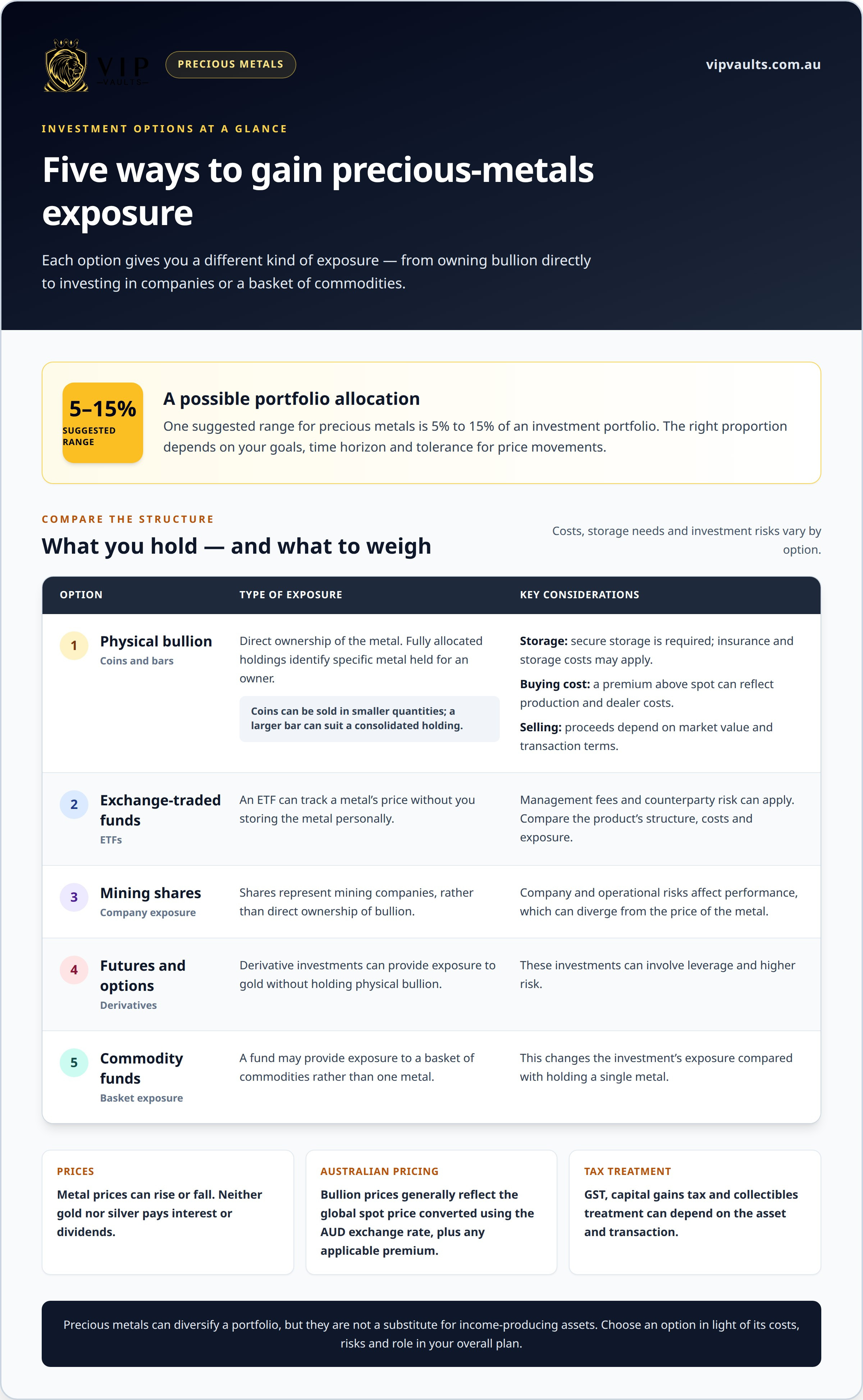

Precious metals can diversify a portfolio, but they aren’t a substitute for income-producing assets. One approach to how to build a diversified precious metals portfolio is to consider allocating 5% to 15% of your investments to metals, then choose a balance of gold and silver that fits your goals and tolerance for risk.
It’s understandable to value assets that may behave differently from shares and bonds, especially when markets are unsettled. Gold and silver can add diversification, but their prices fluctuate, and neither pays dividends or interest.
This guide explains why investors choose gold and silver, how each may contribute to diversification, and how physical bullion differs from exchange-traded funds and mining shares. It also covers the factors to weigh when choosing a mix, including price movements, storage and the role precious metals should play alongside the rest of your portfolio.
Key Takeaways
- Gold and silver can diversify a portfolio, but neither produces income and both can fluctuate in value.
- Consider your goals, time horizon and risk tolerance before deciding how much exposure to precious metals suits you.
- Physical bullion, exchange-traded products and mining shares offer different ways to gain exposure, with distinct storage and investment risks.
- Understand how secure storage fits into your plan if you choose to hold physical gold or silver.
Why Invest in Gold and Silver?
Gold and silver can diversify an investment portfolio, but their prices move and neither pays interest or dividends. Australians buying physical bullion should choose a reputable seller, arrange secure storage and consider insurance that covers both the metal and its storage arrangements.
Gold’s Scarcity and Durability
Gold is a scarce, durable metal that resists corrosion and can retain its physical form over long periods. Its limited supply and practical uses help underpin its value, while jewellery and investment demand also affect its price. For investors, physical gold means owning the asset directly, rather than holding a claim on a company or fund. Silver also has physical value, with industrial demand adding another influence on its market.
Gold as an Inflation Hedge
Gold is often considered a potential hedge against inflation and currency devaluation because its value is not issued by a government. If the Australian dollar loses purchasing power, gold prices in Australian dollars may rise, even if the global gold price changes less. But this relationship is not automatic: interest rates, investor sentiment and currency markets also affect prices. Gold may help balance a portfolio, but it cannot guarantee protection from rising prices or losses.
Economic and Geopolitical Demand
Economic uncertainty and geopolitical events can increase demand for gold as investors seek assets outside traditional financial markets. Central banks’ net gold purchases in 2022-2024 were the highest in decades, reflecting sustained official-sector demand. Global events can also affect silver, whose price responds to industrial demand as well as investment interest. These forces may push prices in different directions, so gold and silver can behave differently during the same market period.
Gold Investment Options
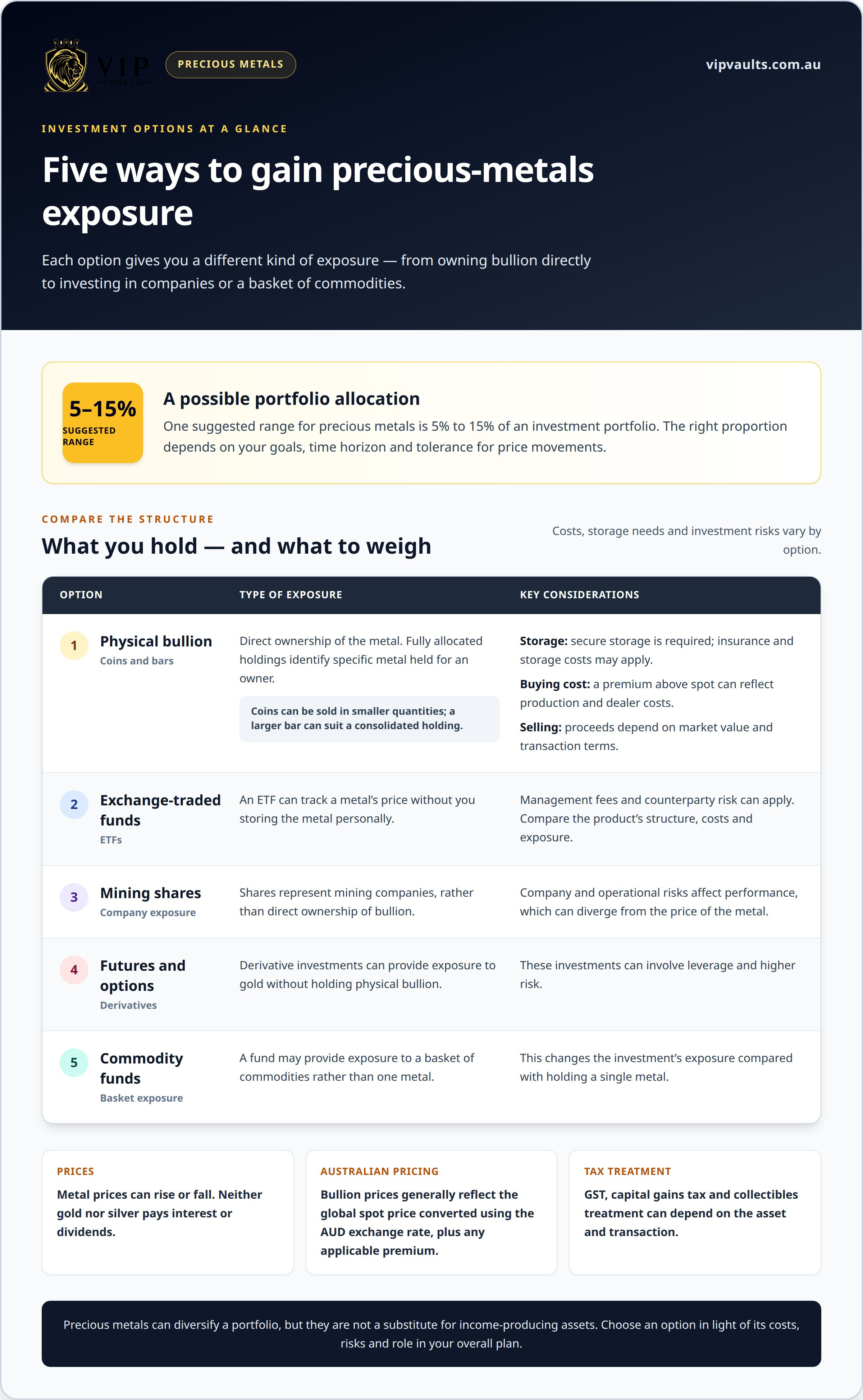
You can gain exposure to gold through physical bullion, exchange-traded funds (ETFs), mining shares or derivatives. Coins and bars provide direct ownership but require secure storage and may involve insurance and storage costs. ETFs track gold prices without personal storage, though management fees and counterparty risk can apply. Mining shares add company and operational risks, while futures and options can involve leverage and higher risk. Compare each option’s structure, costs and exposure before investing.
What are precious metals?
Precious metals are scarce metals valued for their physical properties, industrial uses and investment demand. Gold and silver are familiar bullion choices; platinum also has industrial applications. Each brings different price influences, so exposure to gold alone doesn’t provide the same mix as holding several metals.
For Australian investors, GST, capital gains tax (CGT) and collectibles treatment can depend on the asset and transaction. Don’t assume coins, bars and financial products receive the same tax treatment. Include the metal’s form, ownership and intended use in your tax planning and records.
A 5% to 15% allocation is one suggested range for precious metals within an investment portfolio. The right proportion depends on your financial goals, time horizon and tolerance for price movements. A preservation-focused investor may weigh bullion differently from someone seeking industrial exposure through silver or platinum.
Concentration creates risk. An investor holding only silver, for example, is exposed to both investment sentiment and industrial demand. Gold may respond differently to those forces. Holding more than one metal can spread exposure, but it doesn’t remove the risk of losses or guarantee that one metal will offset another.
Match the investment to your time horizon. Short-term investors may be more exposed to price fluctuations when selling, while a longer horizon allows more time to maintain a chosen allocation through market movements. Neither timeframe guarantees a particular outcome. Physical bullion also requires secure storage, which is part of the ownership decision.
Precious metals don’t generate dividends or interest, so returns depend on changes in value. Prices can fall as well as rise, and you may receive less than you invested. Set a clear role for each holding, such as diversification or exposure to industrial demand, then review whether it still fits your goals.
Physical metals, ETCs, mining shares and commodity funds
Each option provides a different kind of exposure to precious metals, from direct bullion ownership to traded investments. In Australia, bullion prices generally reflect the global spot price converted using the AUD exchange rate, plus any applicable premium.
Physical Bullion Ownership
Physical bullion means owning the metal itself, while fully allocated holdings identify specific metal held for an owner. The distinction matters because ownership and storage arrangements shape what you hold. Coins and bars require secure storage and may involve insurance and storage costs. Buying costs can include a premium above spot for production and dealer costs; sale proceeds depend on the metal’s market value and transaction terms.
Coins and Bars
Coins and bars are physical forms of gold or silver, distinguished by their weight, format and flexibility. Coins can be sold in smaller quantities, while a larger bar may suit someone seeking a consolidated holding. Physical bullion provides direct ownership, but account for the premium above spot when buying. The premium reflects production and dealer costs, so the market price alone doesn’t show the full purchase cost.
Comparing Precious-Metal Exposure
Physical bullion, Australian exchange-traded funds (ETFs) and mining shares provide distinct types of exposure. Bullion gives direct ownership; an ETF can track a metal’s price without personal storage, though fees and counterparty risk may affect returns. Mining shares represent companies, so their operational performance can diverge from metal prices. Commodity funds may provide exposure to a basket of commodities rather than one metal, changing the investment’s drivers.
ETFs and other exchange-traded products can be convenient to buy or sell on an exchange, while physical metal requires secure storage arrangements. Storage and insurance costs can affect the value of physical holdings over time. Inflation, currency movements and global supply and demand influence metal prices, but they don’t affect mining companies or funds in the same way.
Precious metals as portfolio diversifiers and volatility hedges
Gold and silver can diversify holdings because their prices may move differently from stocks and bonds. Historical examples explain why investors consider them, but they don’t assure future performance.
During market downturns, gold and stocks may move differently, but this is not guaranteed. Gold has sometimes moved differently from equities during market downturns, though that pattern is not guaranteed. These contrasting movements illustrate how gold has sometimes offset losses elsewhere, not that it always rises when stocks fall.
Investors may use physical gold as a hedge against inflation or currency weakness. Yet gold’s price also responds to interest rates, global economic events and investor sentiment. In 2022, gold ended essentially unchanged despite real interest rates acting as a counterweight. That example shows why gold is not a precise, short-term hedge against inflation.
Diversification depends on how holdings interact, not simply on owning several assets. Gold and silver have different price drivers: silver’s industrial demand can make its movements more sensitive to economic activity. A mix may spread exposure, but it can also add volatility. Consider each metal alongside stocks, bonds and cash, rather than judging holdings in isolation.
Liquidity matters when markets move. Exchange-traded products can generally be bought and sold on an exchange, while selling physical gold may take time and requires secure storage. Review your portfolio annually and rebalance if price movements have changed the intended mix. This can keep precious metals aligned with their purpose in your portfolio, rather than letting a rally dictate your allocation.
If physical gold forms part of your diversification plan, explore secure storage options for your bullion holdings.
VIP Vaults & Bullion Exchange Perth
VIP Vaults & Bullion Exchange Perth supports investors considering physical precious metals with Gold Bullion, Silver Bullion, Private Vault Rental and Bullion Locker options. If you’ve chosen bullion as part of your portfolio, these offerings address two practical needs: acquiring physical gold or silver and arranging storage. They don’t replace decisions about allocation, investment timeframe or risk tolerance. Instead, they provide a practical way to follow a plan that includes physical metal while considering ownership and storage. Once you’ve decided bullion fits your broader investment approach, contact VIP Vaults & Bullion Exchange Perth to discuss your needs.
Make your next move with intention
Turn your research into a clear decision by defining what precious metals should contribute to your financial plan. To work out how to build a diversified precious metals portfolio, start with a purpose: decide whether you’re seeking long-term wealth protection, broader asset exposure or direct bullion ownership. Then consider how each choice fits your timeframe and other investments.
If physical bullion suits your plan, VIP Vaults & Bullion Exchange Perth offers Gold Bullion, Private Vault Rental and Bullion Locker options. These provide a practical path for investors considering both bullion ownership and storage, while keeping those needs separate from the wider portfolio decision.
Keep your priorities clear as markets change, and make adjustments deliberately rather than reacting to every price movement. For a practical conversation about your bullion and storage needs, contact VIP Vaults & Bullion Exchange Perth. A considered next step can help you move forward with greater clarity.
Frequently Asked Questions
What is diversification?
Diversification means spreading investments across assets with different risk and return drivers, rather than relying on one holding. For example, an investor might combine shares, fixed-interest investments and precious metals, then consider how each fits their financial plan. The aim is to reduce dependence on any single asset’s performance. Diversification can manage concentration risk, but it can’t prevent losses across a portfolio.
Why is gold considered a safe-haven asset?
Gold is often considered a safe-haven asset because investors may seek it during financial or geopolitical uncertainty. Unlike a share, physical gold isn’t a claim on a company’s earnings or management. That distinction can matter when confidence in markets weakens. However, safe haven describes a perceived role, not a guarantee of stable value: gold prices can fall, and selling physical holdings takes planning.
What precious metals can Australian investors include in a diversified portfolio?
Australian investors can consider gold, silver, platinum and palladium through physical bullion or investment products linked to metal prices. Gold and silver have established investment roles, while silver, platinum and palladium also have industrial demand. These influences differ by metal, so prices may not move together. The right mix depends on the role each holding serves, not simply on including every available metal.
How should gold, silver, platinum and palladium be weighted in a precious metals portfolio?
There’s no single weighting that suits every investor. A suggested allocation to precious metals overall is 5% to 15% of a portfolio, but that doesn’t prescribe a split between metals. Consider your goals, time horizon and comfort with price movements. For example, an investor seeking industrial exposure may weigh silver or platinum differently from someone prioritising gold. Keep the allocation consistent with your wider plan.
What are the main risks of investing in precious metals, including volatility, liquidity and counterparty risk?
Key risks include price volatility, difficulty selling some physical holdings quickly and counterparty risk in products that rely on another party. For example, physical bullion owners hold metal directly but must arrange storage and a sale. An exchange-traded product may be easier to trade, yet its structure can create reliance on counterparties. Prices can also decline, leaving an investor with less than the purchase value.
How can investors rebalance and diversify a precious metals portfolio over time?
Review your holdings annually against your financial goals and the role assigned to each metal. If a change in relative performance shifts the mix, reweighting can bring the portfolio closer to its intended allocation. To build a diversified precious metals portfolio, consider how each metal’s demand drivers differ, not just its recent price movement. Record the reason for any adjustment, then assess whether it still fits your wider investment plan.