A precious metal can diversify a portfolio and still bring added risk. Investing in platinum for diversification may give your holdings exposure to a metal with industrial demand, but platinum prices can be more volatile than those of other precious metals.
Diversification means spreading investments across different assets so a poor result in one area has less effect on your overall portfolio. It doesn’t remove risk, and platinum isn’t automatically suitable just because it’s a precious metal. Any allocation should reflect your goals, time horizon and comfort with price movements.
This guide explains how to assess platinum’s role alongside other investments, including its industrial demand and supply risks, and how physical bullion, coins and collectibles differ. It also covers secure storage and rebalancing to help you decide whether platinum belongs in your portfolio.
Key Takeaways
- Assess platinum as a potentially volatile addition to a diversified portfolio, not a substitute for matching investments to your goals and risk tolerance.
- Weigh its industrial demand against supply risks, including the concentration of mining in a small number of countries.
- Compare bullion, coins and collectibles by their purpose, resale considerations and potential per-ounce cost differences.
- If holding physical precious metals, consider how secure storage fits your plans, including private vault rental or a bullion locker.
What kind of precious metal is platinum?
Platinum has both investment and industrial demand. Its price can move sharply, so consider its role alongside assets with different risk and return patterns.
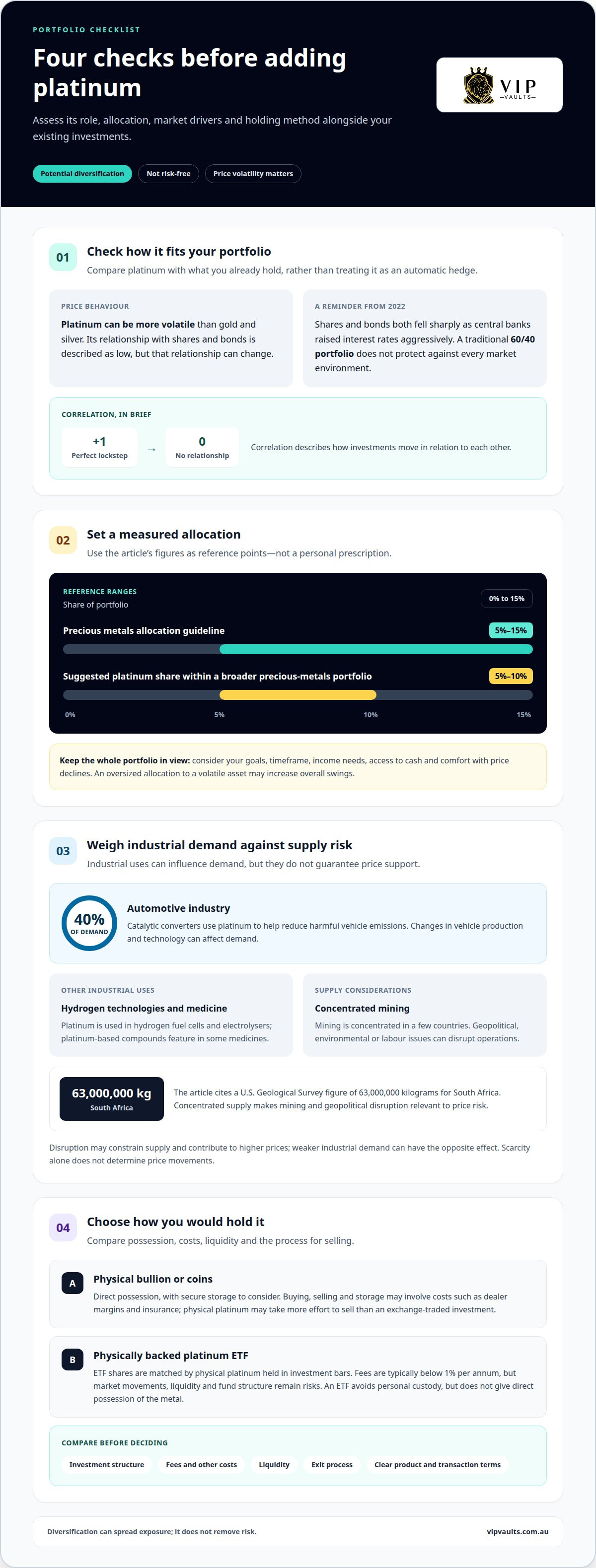
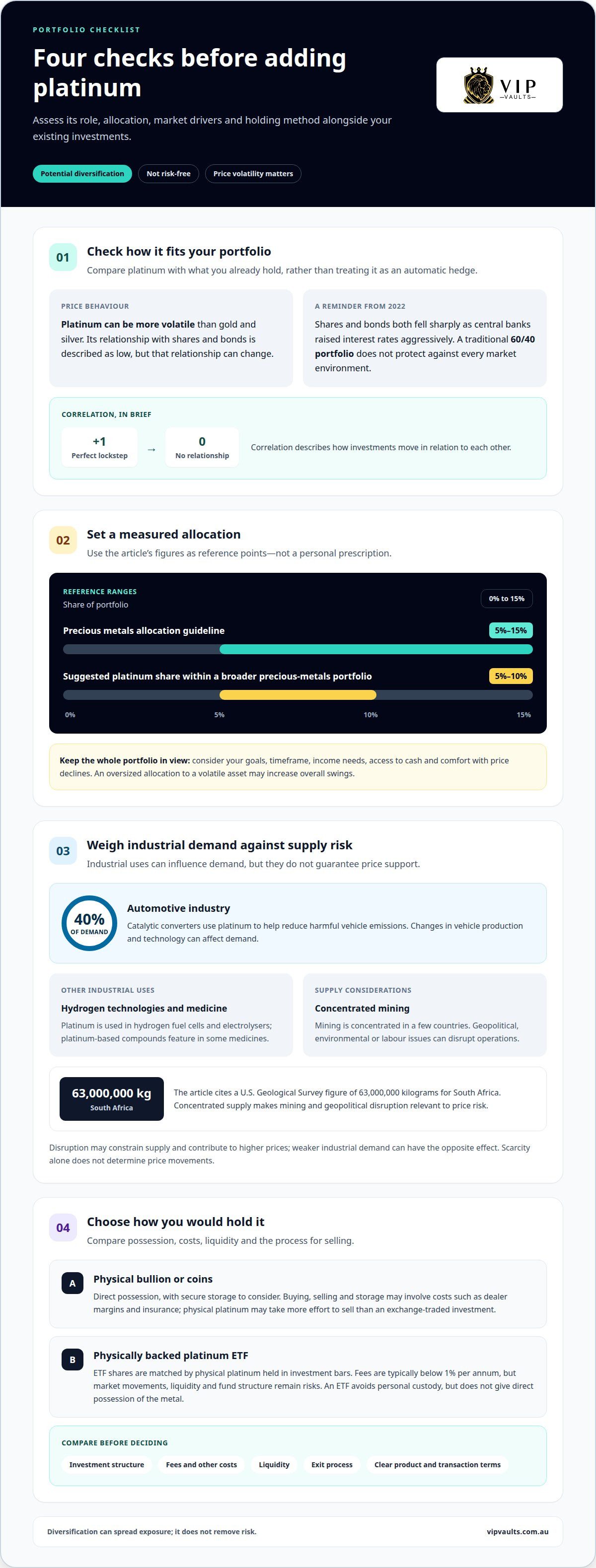
- Compare performance and access before choosing an approach. Platinum can be more volatile than gold and silver. Shares have historically produced higher returns but can fall in value in any year, while bonds typically offer lower returns and a smaller chance of falling. Australian investors can consider physically backed platinum ETFs, whose shares are matched by physical platinum held in investment bars. Fees are typically below one per cent per annum, but market movements, liquidity and fund structure remain risks.
- Set an allocation that fits your whole portfolio, rather than choosing platinum in isolation. Diversification spreads exposure across assets such as shares, bonds, real estate, precious metals and cash, so one weak area may have less influence. Cash can earn interest, although inflation reduces its purchasing power over time. A common precious-metals allocation guideline is 5% to 15% of a portfolio; a suggested platinum allocation within a broader precious-metal portfolio is 5% to 10%. Treat these as reference points, not a personal prescription.
- Weigh volatility, liquidity and supply concentration before investing. Platinum’s industrial demand can support prices, but changing demand or mining disruption can also affect them. The U.S. Geological Survey reports 63,000,000 kilograms for South Africa. Concentrated supply makes mining and geopolitical disruption relevant to price risk. Liquidity also matters: physical platinum may take more effort to sell than an exchange-traded investment.
- Choose a holding method and account based on your priorities. Physical platinum can be bought as bullion or coins and stored securely, but buying, selling and storage may involve costs such as dealer margins and insurance. An ETF avoids personal custody but does not give you direct possession of the metal. Compare the investment structure, fees, liquidity and exit process, and choose a dealer with clear product information and transaction terms.
Assessing portfolio allocation and risk tolerance
Review your current investments before adding platinum. Consider how each asset might behave during a market decline and whether you can tolerate the resulting volatility.
-
Review traditional portfolio limitations
Compare a traditional 60/40 portfolio with your actual needs. It divides holdings between shares and bonds, but both can weaken at the same time. In 2022, equities and bonds fell sharply as central banks raised interest rates aggressively. Don’t assume a balanced label protects your portfolio in every economic environment. Check whether interest-rate changes could affect several of your major holdings together.
-
Evaluate platinum’s diversification role
Assess platinum against your existing assets instead of treating it as an automatic hedge. Correlation describes how investments move in relation to each other: +1 means perfect lockstep, while 0 indicates no relationship. Platinum is described as having low correlation with shares and bonds, but that relationship can change. For investors considering investing in platinum for diversification, weigh its industrial influences alongside its potential to behave differently from other holdings.
-
Consider diversification and portfolio volatility
Consider how each holding could affect your portfolio during gains and losses. Diversification spreads exposure across assets, so weakness in one area may have less impact when other holdings perform differently. It cannot prevent losses, and an oversized allocation to a volatile asset may increase overall swings. Before deciding, consider your timeframe, income needs and ability to hold through price declines.
- Set a target allocation that reflects your risk tolerance, then review whether it still suits your goals. A measured approach to investing in platinum for diversification also accounts for practical needs, such as access to cash and the responsibilities of holding physical metals. If physical valuables form part of your plans, secure jewellery storage can be one consideration.
Industrial demand from cars, hydrogen and medicine
Consider platinum’s industrial uses alongside its investment role. Automotive demand is substantial, but it is only one influence on prices.
- Examine automotive demand through catalytic converters, which use platinum to help reduce harmful vehicle emissions. The auto industry accounts for 40% of platinum demand, so changes in vehicle production and technology can affect demand for the metal. This exposure can differ from the drivers of stocks, but it doesn’t make platinum independent of economic conditions. Consider how changes in vehicle markets could influence your diversified portfolio.
- Consider hydrogen technologies and medicine alongside established automotive uses. Platinum is used in hydrogen fuel cells and electrolysers, and platinum-based compounds feature in some medicines. These applications link demand to developments beyond car manufacturing. Their effect on platinum prices depends on how demand and supply interact, not on the needs of a single industry.
- Assess scarcity and supply concentration before treating industrial demand as price support. Platinum is rarer than gold and silver, and mining is concentrated in a few countries. Geopolitical, environmental and labour issues can disrupt operations. A disruption may constrain supply and contribute to higher prices, while weaker industrial demand can have the opposite effect. Scarcity alone does not determine how prices will move.
- Track demand and supply when considering your exposure. Historically, industrial uses have distinguished platinum from precious metals whose demand is more closely tied to investment or jewellery. But that industrial connection can also amplify price movements when manufacturing conditions change. Separate the long-term case for platinum’s uses from short-term price behaviour, and consider whether the exposure complements your other holdings. Physical platinum may also be less liquid than exchange-traded assets, so factor in how you would sell it.
Physical platinum bullion, coins and collectibles
Choose between direct ownership and exposure through a financial product. Each option affects storage, resale and how your capital is exposed to precious metals.
-
Review physical platinum investment options
Decide whether bullion, coins or collectibles suit your purpose. Bullion is valued mainly for its metal content, while collectible coins may also appeal because of their rarity or design. That extra appeal can create opportunities, but demand for a collectible may differ from demand for platinum itself. Don’t assume its resale value will closely track the metal price; consider how you would assess its value when selling.
-
Compare platinum bars and coins
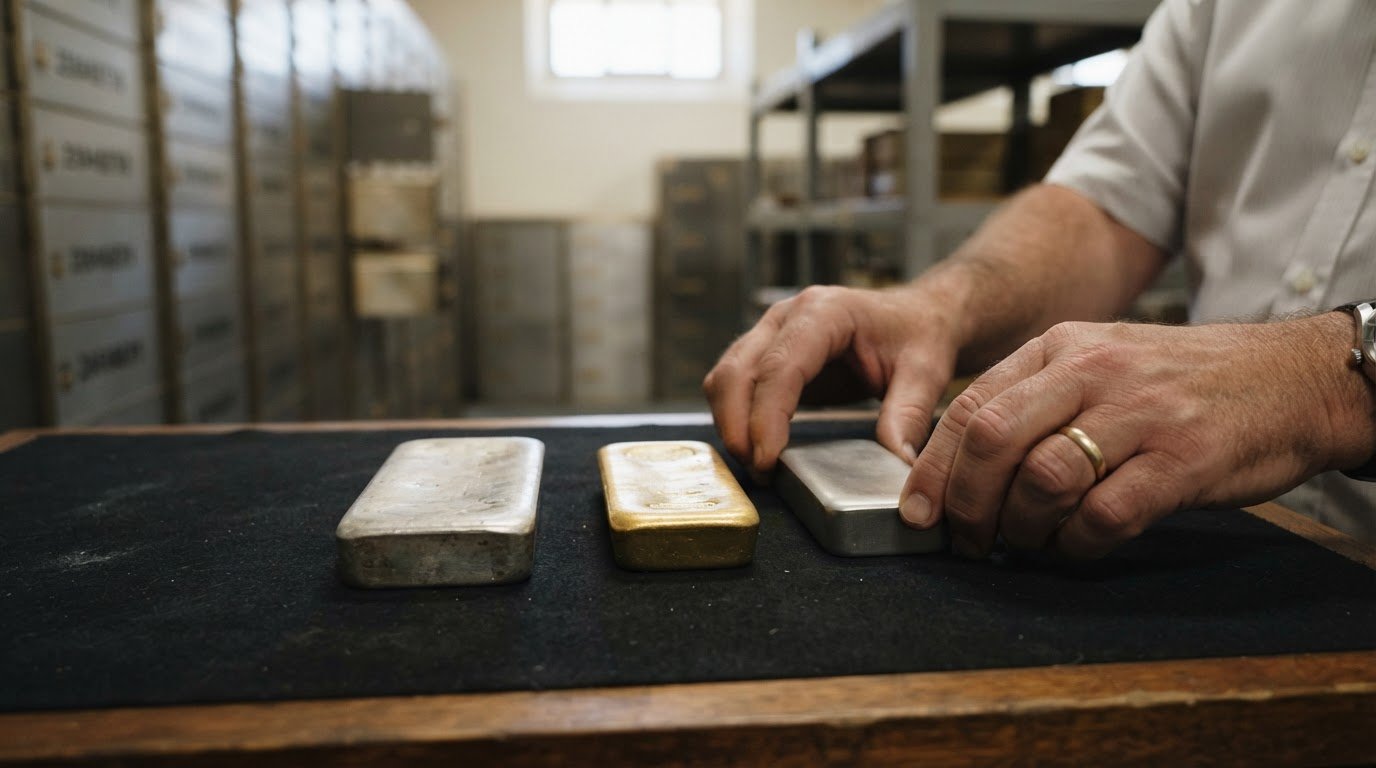
Compare size, premiums and likely resale appeal before buying. Platinum bars range from 1 gram to 1 kilogram, including 1-ounce and 10-ounce bars. Fractional coins and small bars can include 1 gram, 5 grams or 1/10 ounce sizes. Smaller pieces can cost more per ounce because of higher production costs. Consider whether the flexibility of selling smaller amounts justifies that difference.
- Distinguish physical metals from financial exposure, using gold as an example. Physical gold means owning the metal, while an exchange-traded investment provides exposure without personal possession. Physical ownership requires secure storage and may involve insurance and storage costs. Inflation concerns may influence interest in precious metals, but they do not remove price or resale risks.
- For Australian tax planning, consider GST and capital gains tax separately when assessing a purchase or sale. The treatment depends on the product and transaction, so include tax considerations in your decisions and retain purchase and sale records. Australian tax treatment is the relevant basis for a platinum investment.
- Plan custody before acquiring physical bullion. A bullion locker for secure storage can form part of that plan, alongside decisions about access and future sale.
VIP Vaults & Bullion Exchange Perth
VIP Vaults & Bullion Exchange Perth offers secure storage options for people holding physical precious metals, alongside gold and silver bullion. If you’re assessing platinum, consider how its storage needs fit your wider holdings and whether physical custody suits your investment approach. A Private Vault Rental or Bullion Locker may be relevant when secure storage is part of your plan. Gold Bullion and Silver Bullion can also be considered as distinct precious-metal holdings, each with its own market risks and demand drivers. These options support decisions about physical assets, but they don’t remove platinum’s price volatility or replace advice tailored to your financial circumstances. For a discreet discussion about storage or bullion, contact VIP Vaults & Bullion Exchange Perth.
Make your next portfolio decision with care
Before adjusting your portfolio, write down the role you expect platinum to play and what might prompt you to change the allocation. This gives you a clear basis for reviewing investing in platinum for diversification as your circumstances and market conditions evolve. Consider whether you want direct ownership, how you’ll manage physical assets and how a future sale fits your plans.
For physical holdings, VIP Vaults & Bullion Exchange Perth offers private vault rentals and bullion lockers, as well as gold bullion. These options can support decisions about custody and precious-metal holdings, while investment choices remain your own. Consider whether secure storage or bullion would fit your plans.
Contact VIP Vaults & Bullion Exchange Perth to take that next step with confidence and make a considered plan for your portfolio.
Frequently Asked Questions
What is diversification?
Diversification means spreading investments across assets whose values may respond differently to market conditions. For example, an Australian investor might hold local and international shares, fixed income, cash and precious metals rather than relying on one company or market. The aim is to reduce the effect of a setback in one holding, not to prevent every loss or ensure positive returns.
How is the price of platinum determined?
Platinum’s market price reflects buying and selling, shaped by industrial and investment demand, available supply and expectations about future conditions. For Australian buyers, global price movements and changes in the Australian dollar exchange rate can affect its local-dollar value. Physical bars and coins may also carry a retail premium, so compare purchase and resale terms, not just the quoted metal price.
How much platinum should I hold?
There’s no single allocation that suits every investor. Consider your risk tolerance, when you may need access to your capital and how platinum would fit alongside your existing investments. For example, someone relying on investments for near-term expenses may have less room for a volatile holding. Set a target based on your overall plan and review it as your circumstances change.
What makes platinum unique?
Platinum combines precious-metal status with substantial industrial use, so its market has different influences from metals held mainly for investment or jewellery. Automotive manufacturing is a major source of demand, while mining supply is geographically concentrated. This combination can make platinum prices sensitive to industrial conditions and supply interruptions. Its investment case is therefore different from simply choosing another precious metal.
Why invest in platinum?
An investor might consider platinum to add exposure to a metal shaped by distinct industrial demand and supply factors. This may complement holdings driven by different forces. The same characteristics create risks: weaker manufacturing demand or changes in mine supply can affect prices, and volatility may be higher than for other precious metals. Consider the purpose of the holding and how you would respond to price declines.
What role can platinum play in a diversified investment portfolio?
Platinum may suit a smaller, specialist holding alongside broader investments, rather than replacing shares, bonds or cash. Its contribution depends on how its price movements relate to the rest of your portfolio, and that relationship can change. Decide what role you expect it to play, set an appropriate allocation and plan regular reviews to keep the holding aligned with your investment goals.