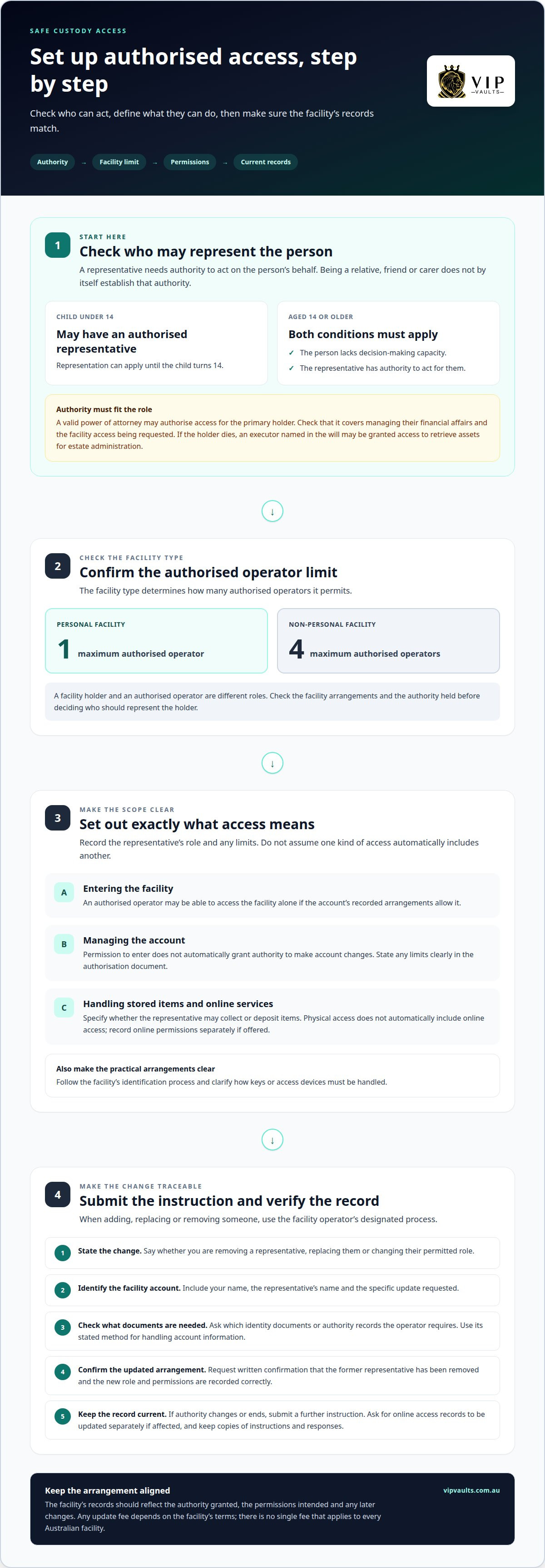
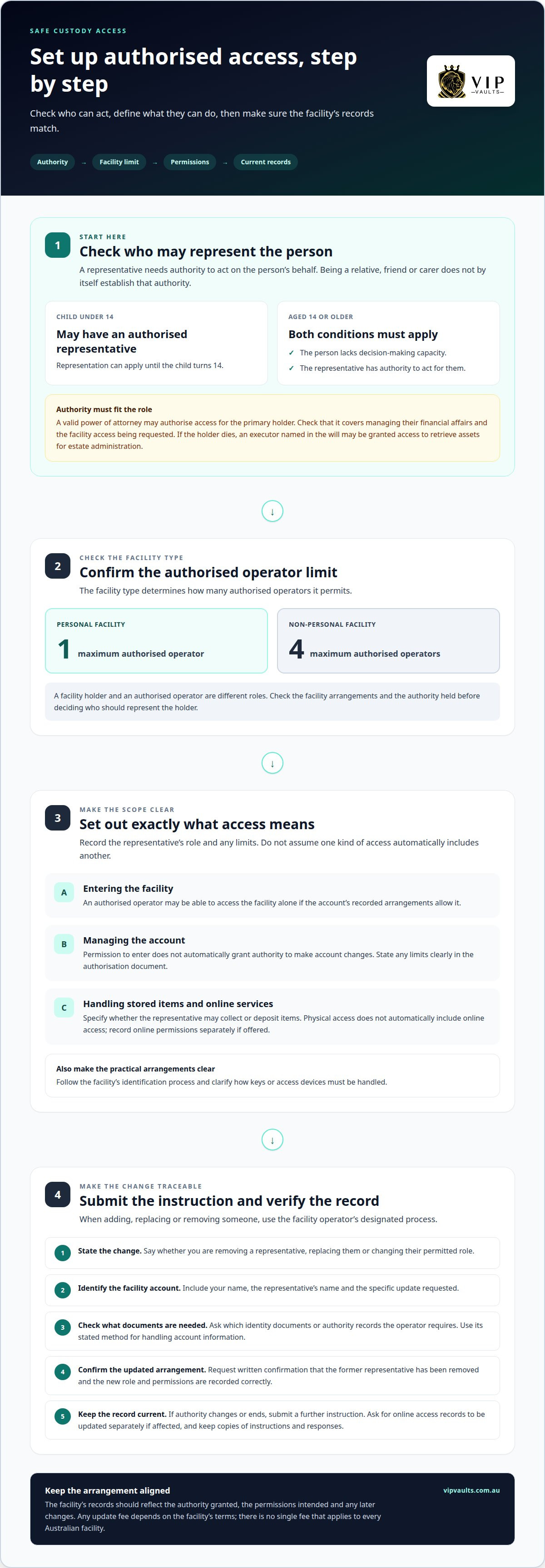
An authorised person may access a Safe Custody facility on your behalf if they have authority to manage your financial affairs. A personal facility can have a maximum of one authorised operator, while a non-personal facility can have up to four. To understand how to add an authorised person to your vault, first check which access limit applies to your facility.
Be clear about who can access the facility and what authority they hold. A valid power of attorney may allow someone to act for the primary holder, but access depends on the facility’s arrangements and the person’s authority.
This guide explains who may represent you, the difference between facility holders and authorised operators, and how viewing or editing permissions can affect access. You’ll also learn what to consider when arranging access on someone else’s behalf, so you can make a clear, informed decision about your stored assets.
Key Takeaways
- Identify whether your facility is personal or non-personal before arranging access, as the authorised operator limit differs.
- Understand how a facility holder differs from an authorised operator before deciding who should represent you.
- Learn how age and decision-making capacity affect who may act as an authorised representative.
- Find out what to consider when changing access arrangements and how an authorised person’s permissions shape their role.
Can somebody access my Safe Custody facility on my behalf?
Yes. Someone may access a Safe Custody facility on your behalf if they’re authorised to manage your financial affairs. The facility type determines how many authorised operators it permits.
A personal facility allows a maximum of one authorised operator; a non-personal facility allows up to four. A valid power of attorney may authorise someone to access a safe deposit box for its primary holder.
There is no single fee that applies to every Australian facility. Whether an update incurs a fee depends on the facility’s terms.
If the account holder dies, an executor named in their will may be granted access to retrieve assets for estate administration. If the holder loses capacity, a representative needs authority to manage their financial affairs, such as a valid power of attorney.
-
Choose an authorised representative
Choose someone with legal authority to act for you, such as a person holding a valid power of attorney. Check that the document covers managing your financial affairs and accessing the facility. A personal facility allows one authorised operator, so consider carefully who needs access. Keep the facility’s records consistent with the authority you grant.
-
Set the representative’s access permissions
Tell the facility what access you intend to authorise and ask for the permissions to be recorded. An authorised operator may be able to access the facility alone if the account’s recorded arrangements allow it. Don’t assume permission to enter also grants authority to make account changes. State any limits clearly in the authorisation document.
-
Explain access responsibilities
Specify what the representative may do, including whether they can collect or deposit items. Physical access does not automatically provide access to online services; record online permissions separately if the facility offers them. Follow the facility’s identification process and clarify how keys or access devices must be handled. Update the facility’s records whenever the authority changes.
Who can be an authorised representative
- Identify the person who needs representation, then apply the relevant age and capacity rule. In Australia, a child can have an authorised representative until turning 14. For a person aged 14 or older, representation is available only if they lack capacity to make their own decisions and the representative has authority to act on their behalf. Age alone doesn’t establish that authority.
- For someone aged 14 or older, establish both parts of the test before arranging access: the person lacks decision-making capacity, and the proposed representative has authority to act for them. Don’t assume that being a relative, friend or carer provides that authority. A representative’s role depends on the authority they hold, not simply their connection to the person.
- Describe the representative’s role in clear terms. Record whose affairs they may manage and what facility access they need, so the arrangement matches the authority granted. For example, someone acting for a person who lacks capacity needs authority for that role. Keep the record accurate if the representative’s authority or responsibilities change.
- Review the arrangement when circumstances change. If the person no longer meets the age or capacity criteria for representation, don’t assume the existing arrangement still applies. Update the facility’s records to reflect any change in authority. If you replace a representative, remove the former person’s details from the access record and document who now has authority.
How do I change or remove an authorised person from a vault?
- Write down the change you want before contacting the facility operator. State whether you’re removing an existing representative, replacing them, or changing their permitted role. For example, you might remove a former representative and nominate someone new. Clear wording distinguishes a complete removal from a narrower change to access permissions.
- Submit the request through the operator’s designated process and identify the facility account. Include your name, the representative’s name, and the specific update you want. Ask which identity documents or authority records are required. Don’t send sensitive documents through an unapproved channel; use the operator’s stated method for handling account information.
- If you’re appointing a replacement, provide their details and relevant authority documents with your change request. For example, a power of attorney should support the authority the person will exercise. Ask the operator to record the replacement’s permissions separately from the removed representative’s details, so the updated access arrangement is clear.
- Request written confirmation that the facility’s records reflect your instructions. Check that the former representative has been removed and the replacement’s role is recorded correctly. If the change affects online access, ask for that record to be updated separately. Keep the confirmation with your facility documents so you can refer to the current arrangement.
- Review the record whenever the representative’s authority changes or ends. For example, if you revoke someone’s authority, submit a further removal request rather than relying on a verbal conversation. Keep copies of each instruction and response. This creates a dated record of the changes you requested and the facility’s recorded access arrangements.
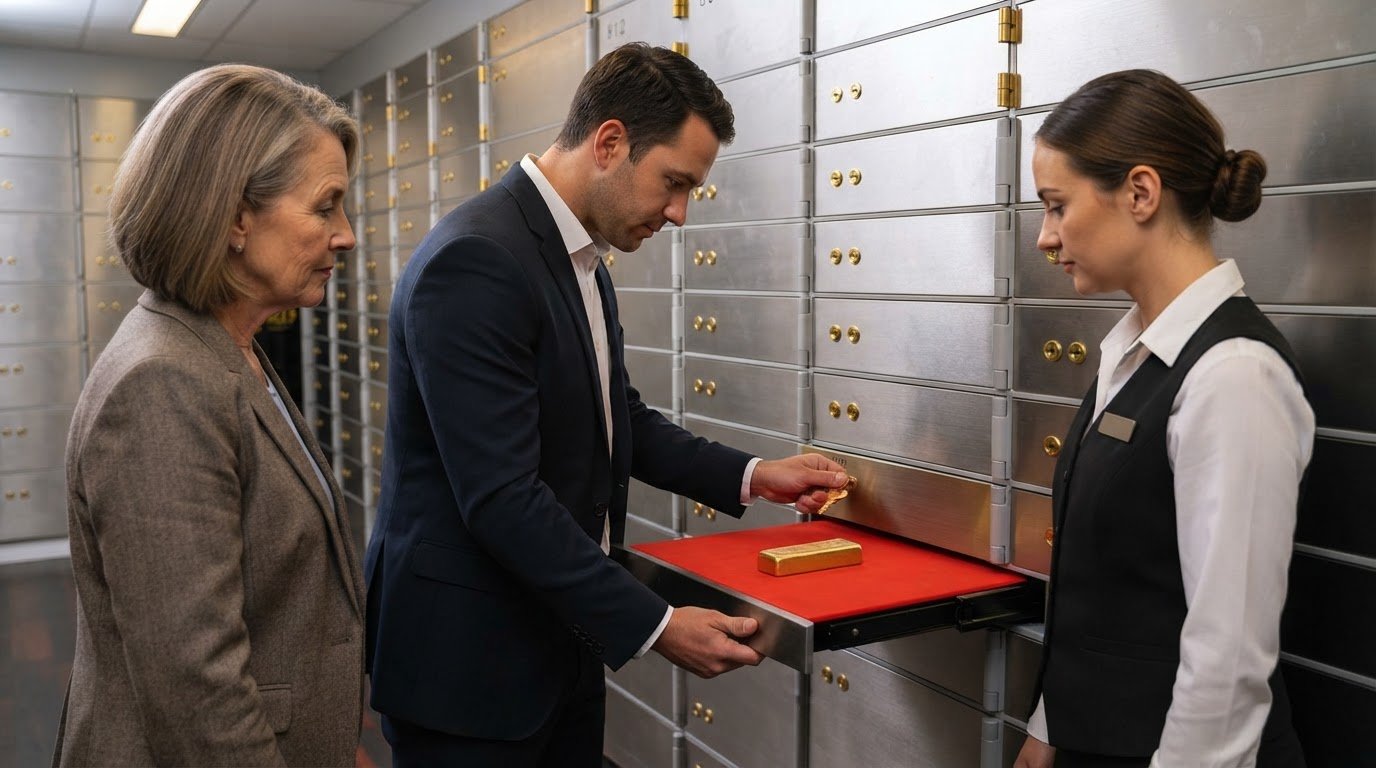
What access rights can an authorised person have, and can they access the vault alone?
- Define the representative’s role in writing before arranging access. Separate permission to enter the facility from authority to manage your financial affairs. A valid power of attorney may authorise someone to access a safe deposit box for its primary holder. Make clear which responsibilities the representative can exercise on your behalf.
- Clarify whether the representative may attend alone. Appointment as an authorised operator does not, by itself, establish whether access must be accompanied. That depends on the facility’s access conditions and the authority recorded for the person. State your intended arrangement clearly, distinguishing solo entry from access that requires the holder’s presence.
- Keep physical access separate from online permissions. Permission to enter a vault does not automatically establish access to online services or account changes. If online access is relevant, describe it separately in the authority instructions. For example, a representative may need to attend in person without being allowed to manage digital account details.
- Match each permission to the representative’s authority. Someone authorised to manage your financial affairs may act within that authority, but vault entry does not mean unlimited control over your affairs. Specify whether they may access stored items, handle account administration, or perform another defined task. Avoid broad wording that blurs these responsibilities.
- Review the recorded permissions whenever circumstances change. If you want to narrow access, replace a representative, or withdraw their authority, submit a clear update to the facility. Keep written confirmation with your records. For help considering secure storage alongside access arrangements, explore private vault rental.
VIP Vaults & Bullion Exchange Perth: Private Vault Rental
VIP Vaults & Bullion Exchange Perth offers Private Vault Rental for people seeking secure storage for valuables. If you need a suitable place to store assets, private vault rental is a natural next step after clarifying who may access them and what authority they need.
A Bullion Locker offers another storage option, while Gold Bullion and Silver Bullion are available if you’re considering bullion. Keep the distinction clear: choosing a storage option does not appoint an authorised person or define their access rights. Record those arrangements separately with the facility.
Contact VIP Vaults & Bullion Exchange Perth to discuss private vault rental and your storage requirements.
Make your next step a considered one
Decide what you need the representative to do, and keep that authority separate from your storage choice. If you’re considering how to add an authorised person to your vault, prepare clear instructions about their role and intended access. This gives you a practical basis for discussing the arrangements without treating vault access as automatic permission to manage every aspect of your affairs.
For secure storage, VIP Vaults & Bullion Exchange Perth offers Private Vault Rental and Bullion Lockers, as well as Gold Bullion. Choose the option that suits your storage needs, then document your access arrangements clearly.
Contact VIP Vaults & Bullion Exchange Perth to discuss your storage requirements. A clear plan can help you take the next step with confidence.
Frequently Asked Questions
How many facility holders can I have on my facility?
A personal Safe Custody facility can have up to two facility holders. A non-personal facility can have one. These limits apply to holders, not authorised operators, so the roles are not interchangeable. For example, a personal facility with two holders has reached its holder limit, regardless of whether another person also needs access authority.
How many people can I give authority to access my facility?
A personal Safe Custody facility can have one authorised operator, while a non-personal facility can have up to four. These operator limits are separate from the number of facility holders. Limit access to people who need it, and consider carefully who will act on your behalf. The facility’s personal or non-personal status determines the applicable operator limit.
Who can use your safe deposit box and how?
The primary holder may use the box, and an appropriately authorised representative may act for them. A valid power of attorney may authorise access on the holder’s behalf. For a child, a representative may act until the child turns 14. From age 14, representation applies only when the person lacks capacity to make their own decisions and the representative has authority to act.
How do I add an authorised person to a vault?
First identify the person and the authority under which they’ll act. Then submit an access request through the facility’s process, providing the relevant authority document, such as a valid power of attorney. State the intended role clearly and distinguish physical entry from any separate account permissions. Keep a copy of the request and the facility’s written response with your records.
What details and documents are required to add an authorised person to a vault?
Prepare the proposed representative’s identifying details and the document establishing their authority, such as a valid power of attorney. Include the facility holder’s details and state whether you’re requesting new access or changing an existing arrangement. Follow the facility’s application process for identity verification, using its designated forms and submission method for personal information and supporting documents.
What are the risks and liability of giving someone authorised access to a vault?
Authorised access lets another person enter within the scope of their authority, so unclear or overly broad arrangements can lead to disputes about their role. Limit access to people who need it, document their permitted responsibilities, and update the facility’s records when authority changes or ends. The representative’s legal responsibilities depend on the authority they hold and the circumstances of their actions.