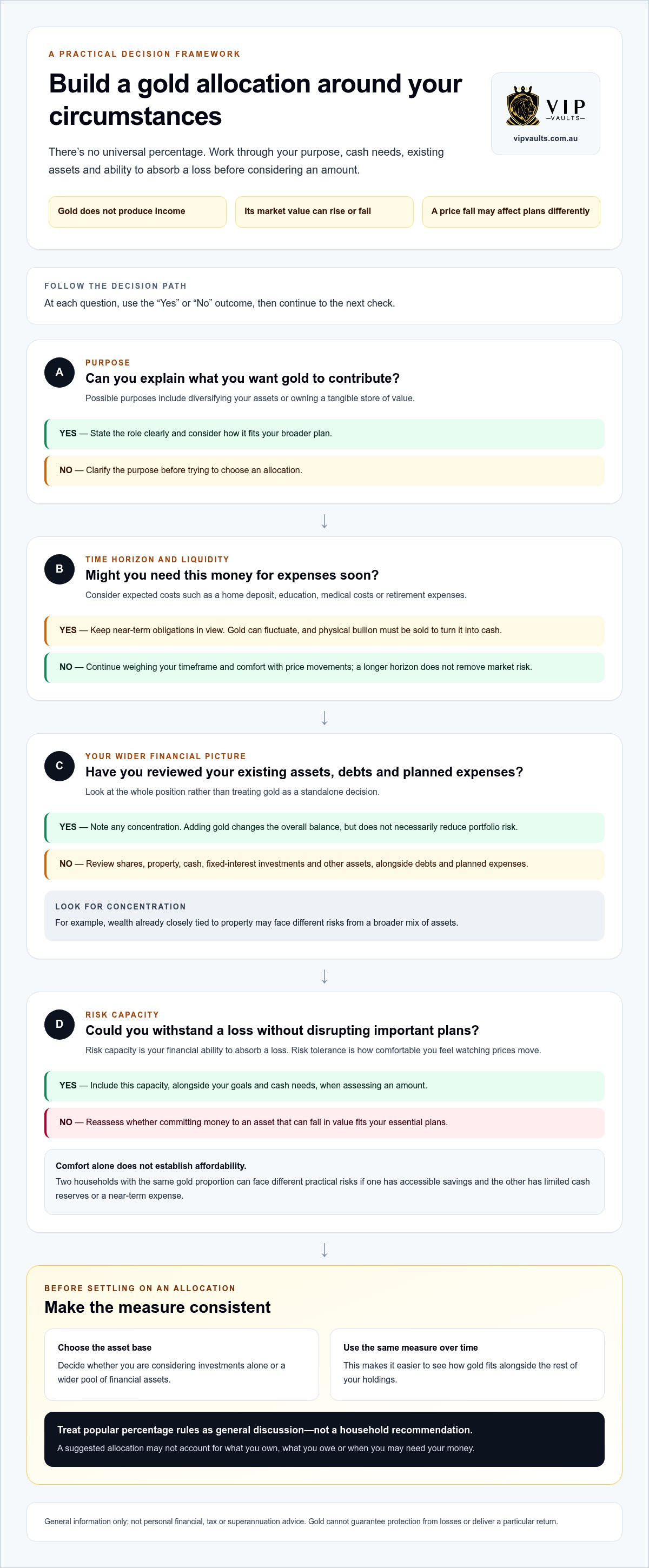

What if the answer to “how much gold should I own” isn’t a fixed percentage? Australian investors will find different allocation recommendations, but the right amount depends on what they want gold to do, what assets they already hold and how much price movement they can tolerate.
It’s understandable to consider gold as a way to diversify a portfolio or hold an asset outside traditional financial markets. But gold doesn’t generate income, its price can fluctuate, and physical bullion brings practical decisions about liquidity, storage and security. A figure that suits one investor may not suit another.
This guide offers a practical framework for weighing gold’s potential role alongside your other assets. Consider your goals, time horizon, cash needs and comfort with risk, then compare the trade-offs between physical bullion and other forms of gold exposure. If you’re considering physical ownership, we’ll also cover what to think through before buying and arranging secure storage. This is general information, not personal financial, tax or superannuation advice.
Key Takeaways
- There’s no universal answer to “how much gold should I own”. Start by defining gold’s intended role and its share of your broader assets.
- Use your investment horizon, cash-flow needs, existing holdings and comfort with price movements to assess what may suit your circumstances.
- Compare physical bullion, gold-linked funds and non-gold assets by considering how each is owned and managed, rather than assuming they will perform alike.
- Follow a clear decision process: set a purpose, review your finances, assess existing exposure, consider the form of gold and revisit your decision over time.
- Before holding physical gold, weigh product form, sourcing and safekeeping, including options such as private vault rental or a bullion locker.
How much gold should I own? Why there is no universal allocation
There’s no single figure that answers “how much gold should I own” for every Australian investor. A useful starting point is to define your gold allocation: the share of your broader assets represented by gold. Before calculating it, decide which assets you’re including. You might look at investments alone or a wider pool of financial assets. Using the same measure over time makes it easier to see how gold fits alongside the rest of your holdings.
No single gold allocation is suitable for every investor. Your goals, investment horizon, access to cash and capacity to absorb losses all shape the decision. Someone with a long timeframe and substantial liquid assets may view gold differently from someone who expects to draw on savings soon or has significant debt. The same holding can have a very different effect on each person’s financial position.
What role can gold play in a portfolio?
Gold is a tangible asset that some investors consider for diversification. Its price is influenced by factors such as interest rates, inflation trends and the value of the US dollar, so it may behave differently from other assets at times. That potential is a possible portfolio role, not a promise. Gold cannot guarantee protection from losses or deliver a particular return.
Unlike an asset that pays interest or dividends, gold does not produce income. Its value can rise or fall, and you may need to sell when the market price is lower than your purchase price. Physical bullion also involves practical ownership decisions, including how to keep it secure. The overview of gold as an investment outlines different ways to gain exposure and factors that can influence its price.
Why popular percentage rules may not suit you
Online commentary sometimes presents a percentage as a ready-made answer. Treat such figures as general discussion, not recommendations for your household. A suggested allocation doesn’t account for your circumstances unless it considers what you own, what you owe and when you may need your money.
For example, two households could hold gold at the same proportion of their assets yet face different levels of risk. One may have accessible savings and a diversified investment portfolio; the other may depend on those assets for near-term expenses or have limited cash reserves. A change in gold’s price could therefore have different practical consequences for each.
There’s also a difference between risk tolerance and risk capacity. Tolerance is how comfortable you feel watching prices move. Capacity is how much financial loss you could withstand without undermining essential plans. Both matter, but comfort alone doesn’t determine whether an allocation is affordable or appropriate.
Use general market views as context, then assess your own purpose, timeframe and liquidity needs. This article provides general information, not personal financial advice. If the decision affects a broader investment, tax or superannuation plan, consider your circumstances before acting.
Which personal factors should shape how much gold you own?
A useful allocation decision starts with your financial position, not a figure taken from someone else’s portfolio. Ask what you want gold to contribute, when you might need the money and how a fall in value would affect your plans. These questions make “how much gold should I own” a more practical assessment of your goals, liquidity and risk capacity.
Start with goals, time horizon and access to cash
Be clear about the purpose. Are you considering gold to diversify your assets, own a tangible store of value, or for another reason? Your answer can help you judge whether gold fits your broader plan and what you expect from holding it. Avoid relying on it to meet a specific future expense, as its market value can move and it doesn’t provide income.
Next, consider your time horizon and likely cash-flow needs. If you expect to pay for a home deposit, education, medical costs or retirement expenses soon, money committed to an asset that may fluctuate could be harder to access at the value you need. Physical bullion must also be sold to turn it into cash. Keep near-term obligations in view before deciding how much capital, if any, you can commit to longer-term ownership.
A considered gold allocation starts with your goals, preserves liquidity for expected needs and stays within your risk capacity. Use this as a check before focusing on a percentage or product form.
Consider your existing portfolio and risk capacity
Review your full financial picture rather than treating gold as a standalone decision. List your exposure to shares, property, cash, fixed-interest investments and other assets, alongside debts and planned expenses. Look for concentration. For instance, a household whose wealth is already closely tied to property may face different risks from one with a broader mix. Adding gold changes the overall balance, but it doesn’t necessarily reduce portfolio risk.
Separate risk tolerance, your emotional comfort with price movements, from risk capacity, your financial ability to absorb a loss without disrupting important plans. Imagine two households holding gold in the same proportion of their assets. One has stable income, accessible savings and no major upcoming costs. The other relies on its investments to fund a near-term expense and has limited cash reserves. A price decline may feel uncomfortable to both, but the second household could have less room to wait before selling.
Before committing funds, consider whether you could hold through a downturn or might need to sell at short notice. With physical bullion, include access and safekeeping in that assessment. VIP Vaults & Bullion Exchange Perth offers gold bullion and private vault rental for people planning physical ownership.
These considerations can help you prepare informed questions, but they can’t determine a suitable allocation for everyone. For recommendations tailored to your circumstances, speak with a licensed Australian financial adviser. Tax and superannuation decisions may also require professional advice specific to your situation.
Physical gold, gold funds and other assets: compare the trade-offs
Gold exposure comes in different forms, each involving a different kind of ownership. Physical bullion means holding the metal itself. A gold-linked fund is a financial product designed to provide exposure to gold, while shares, property, cash and other assets have their own drivers and practical requirements. Comparing these characteristics can help you decide which form, if any, fits your priorities.
| Asset type | Ownership | Liquidity and administration | Storage considerations |
|---|---|---|---|
| Physical bullion | You own tangible gold, such as bars or coins. | A sale requires a buyer and practical arrangements to complete the transaction. | You must plan for safekeeping, record-keeping and protecting the bullion from loss or damage. |
| Gold-linked funds | You hold units or another financial interest linked to gold, rather than the bullion directly. | Buying and selling takes place through the product’s arrangements; administration depends on the product. | You don’t store metal yourself, though you still need to understand the product and how it operates. |
| Non-gold assets | You own assets such as shares, property, cash or fixed-interest investments. | Access and ongoing administration vary by asset. Some may involve transactions, paperwork or management. | Physical storage usually isn’t the central consideration, though each asset has its own responsibilities. |
What changes when you own physical bullion?
Physical ownership gives you a tangible asset, but it doesn’t guarantee security, a particular sale price or immediate liquidity. Your plan needs to cover identifying and authenticating the metal, keeping purchase records, arranging safekeeping and understanding how you would sell it. Bars and coins can differ in size and handling, so the guide Gold Coins vs Gold Bars Australia can help you compare them.
Sourcing is another consideration. Bullion from internationally recognised refiners, including LBMA-accredited manufacturers, can help you assess its origin and market recognition. Accreditation is not a guarantee of returns or a future sale price. Physical gold’s value can change with market conditions.
How does bullion differ from fund-based gold exposure?
A gold-linked fund offers financial exposure without requiring you to store bars or coins personally. In exchange, you hold an interest in a financial product rather than direct possession of metal. The product’s terms and processes matter, so understand what you own and how transactions are handled. For Australian market context, the guide Gold Price Australia can help explain price movements without implying that past movements predict future outcomes.
Ask what matters most to you: direct possession, simpler physical safekeeping, or access through a financial product. Neither form answers how much gold should I own on its own. Compare ownership, liquidity and administration alongside the role gold would play in your wider asset mix.
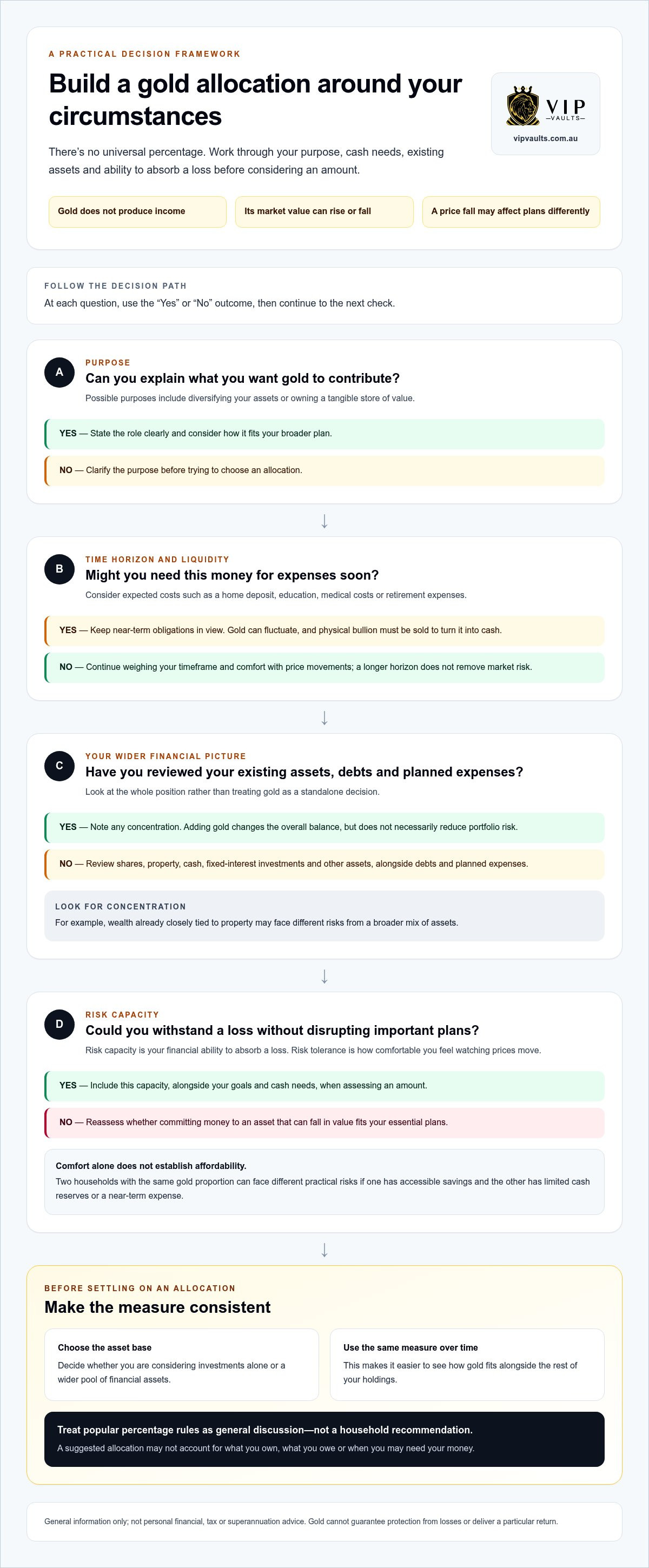
How to build a sensible gold-allocation decision framework
A written process can help you make a measured decision instead of reacting to headlines or a recent price move. Use these steps to assess whether gold has a role in your plan, what form could suit your needs and which questions require further advice. The aim isn’t to arrive at a universal percentage. It’s to make the reasoning clear and relevant to your circumstances.
- Define the purpose. Write down what you want gold to do in your broader financial plan. Is the appeal diversification, direct ownership of a tangible asset or another objective? Be specific about what you expect and what you don’t. For example, don’t assume gold will provide income or be available at a particular value when you need cash.
- Review your finances. Take stock of accessible savings, debts, expected expenses and your investment horizon. Consider whether funds you might need soon should remain readily available rather than be committed to an asset whose value can fluctuate. Include the practical consequences of selling physical bullion if circumstances change.
- Assess your existing exposure. Look across shares, property, cash, fixed-interest investments and other assets. Consider whether your household is already concentrated in particular types of investment or exposed to similar economic influences. Adding gold changes the mix, but doesn’t automatically make a portfolio less risky. Record how a fall in value might affect your plans.
- Consider the form of ownership. Compare physical bullion with a financial product linked to gold in light of your preferences, liquidity needs and willingness to manage administration. Physical ownership calls for decisions about product form, sourcing and safekeeping. A financial product avoids personal storage of metal but means holding an interest in that product rather than bullion directly. Note any practical or structural questions you need answered.
- Revisit your reasoning. Review the original purpose when your goals, income, spending plans, assets or capacity to tolerate loss change. Rebalancing is a general portfolio process: it means reviewing whether holdings still fit your intended plan. It isn’t a method for predicting gold prices, and it doesn’t require acting every time the market moves.
Keep a short record of your decision: the intended role of gold, the financial constraints you considered, the form you prefer and the points you’re uncertain about. That record can help separate a deliberate choice from a reaction to market noise. If allocation, tax or superannuation questions depend on your personal circumstances, discuss them with a licensed Australian financial adviser.
If your framework points towards physical ownership, explore gold bullion and private vault options from VIP Vaults & Bullion Exchange.
Owning physical gold in Australia: buying and secure storage considerations
Choosing physical bullion turns an allocation decision into a practical ownership plan. Alongside deciding whether gold fits your broader finances, consider what form you want to hold, how you’ll assess its source and where it will be kept. These details shape the experience of ownership, even though they can’t remove market-price risk or guarantee that you can sell at a preferred time.
What to consider before acquiring bullion
Gold is commonly available as bars or coins, with different sizes and forms to consider. Think about how each option fits your intended holding and future plans for selling or transferring it. For a broader introduction to the fundamentals, consult a guide to Investing in Gold Bullion Australia.
Sourcing is another part of the decision. Bullion from internationally recognised refiners, including LBMA-accredited manufacturers, can help you assess the metal’s origin and market recognition. Accreditation isn’t a promise of future value or a particular resale outcome. Keep purchase records and understand what you’re buying, including its stated form and weight.
Before placing an order, review the live market-linked price and the transaction terms. Gold prices move, and a quoted price can change with global markets. Make sure you understand the price that applies to your purchase and how the transaction will be completed. A measured approach helps keep the purchase aligned with your original allocation plan rather than a reaction to a short-term market move.
Plan how physical gold will be stored
Home storage can keep bullion close to hand, but it means taking responsibility for its safekeeping and maintaining reliable records. Consider how it will be protected from loss, damage or unauthorised access, and whether your arrangements suit the value and form of the items you hold.
Private vault storage is an alternative if you prefer not to keep bullion at home. Compare the practical arrangements, costs and terms with your needs. VIP Vaults & Bullion Exchange offers private vault rentals and bullion lockers, as well as investment-grade gold bullion sourced from internationally recognised refiners. For physical assets held through a self-managed super fund, consider storage and ownership decisions in the context of the fund’s obligations. Seek appropriate professional advice about SMSF requirements rather than assuming personal arrangements will apply.
Storage is part of the allocation decision, not an afterthought. Consider how you’ll maintain records, arrange access under the applicable terms and manage a future sale. This can help you judge whether physical ownership fits your liquidity needs and preferences.
If you’re ready to consider the practicalities of physical ownership, explore bullion and private vault options from VIP Vaults & Bullion Exchange.
Make your next step a considered one
The question “how much gold should I own” is best treated as part of a wider financial decision, not a target to reach for its own sake. Before acting, write down what would make ownership worthwhile for you and what circumstances might lead you to reassess. A clear rationale can help you stay steady when markets move or your plans change.
If you’re still weighing up the decision, review the practical arrangements as well as the investment case. Consider how a purchase would fit your wider finances, what form of ownership aligns with your preferences and how you want to manage safekeeping. For advice tailored to your personal financial, tax or superannuation circumstances, speak with an appropriately qualified Australian professional.
When you’re ready to explore physical ownership, VIP Vaults & Bullion Exchange offers investment-grade gold sourced from internationally recognised and LBMA-accredited refiners, with live pricing linked to global markets. Private vault rentals and bullion lockers are also available. Explore investment-grade bullion and private vault options and take your next step with care.
Frequently Asked Questions
Is gold a reliable hedge against inflation?
Gold can sometimes help offset inflation, but it isn’t a dependable match for rising consumer prices in every period. Your grocery and household costs could increase while gold’s market price moves differently. If you’re asking “how much gold should I own” for inflation protection, treat that role as uncertain rather than guaranteed. Consider how the holding fits your wider financial goals and what you could manage if its value fell.
Can gold lose value?
Yes. Gold can lose value when its market price falls, and selling may bring in less than you paid. Your result can also depend on the product and the terms available when you sell. For instance, a market reference price may differ from the price offered for a particular item. Keep purchase records and consider how a potential loss would affect your plans before committing funds.
Does physical gold pay interest or dividends?
No. Physical bullion doesn’t pay interest or dividends simply because you own it. Any gain or loss generally depends on how its value changes and the terms of a later sale. That differs from an investment that may distribute income. If you’re comparing options to meet a regular income need, assess that distinction carefully and seek advice suited to your personal financial circumstances.
Is physical gold easy to sell in Australia?
Physical bullion can be sold in Australia, but the timing, process and price depend on the item, the buyer and market conditions. Before purchasing, consider how you’d arrange a sale and what information you’d need to provide about the product. Retain transaction records and details that help identify the bullion. This preparation can make a sale easier to organise, but it can’t guarantee a particular price or timeframe.
Can gold be held in an Australian SMSF?
Whether and how an SMSF can hold physical gold depends on the fund’s circumstances, trustee responsibilities and applicable requirements. Don’t assume arrangements for personally owned bullion will suit a super fund. Before acting, discuss the proposed purchase and storage arrangements with a qualified SMSF professional who can consider your fund’s position. The guide SMSF Gold Storage offers further reading, but it isn’t a substitute for compliance advice.
How does the Australian dollar affect gold prices in Australia?
The Australian-dollar price of gold can be affected by both the international gold price and the exchange rate between the Australian and US dollars. A change in either can influence local pricing, but the relationship doesn’t make future prices predictable. When reviewing a quoted price, note when it was recorded and compare it with current market information. The guide Gold Price Australia provides further market context.