Privacy matters as much as the bullion itself. A discreet bullion purchasing service should give Australian buyers a clear way to register and verify an account, choose bullion and understand how the purchase will be completed. You can then make informed decisions without losing sight of the practical details.
It’s reasonable to want a straightforward process when buying physical gold or silver, particularly when you’re considering how to receive or collect it. This guide explains the steps involved in account registration and verification, buying bullion for delivery or collection, and trading in store through one provider.
You’ll also learn what to consider when selecting a provider, including how the purchase method fits your preferences and what information may be needed to progress an order. The sections ahead take you through each stage in turn, so you can understand the process before deciding how to proceed.
Key Takeaways
- Understand how order weight and value can shape delivery arrangements, and how collection offers an alternative.
- Learn what to expect during account registration and identity verification with a bullion provider.
- See how buying and selling through one provider can bring both sides of a bullion transaction together.
- Find out what to consider when arranging an in-store bullion trade and secure storage for your holdings.
How a discreet bullion purchasing service arranges secure delivery or click and collect
A provider matches the fulfilment method to the order, its weight and value, and the customer’s preferred way to receive bullion.
Delivery address and signature requirements
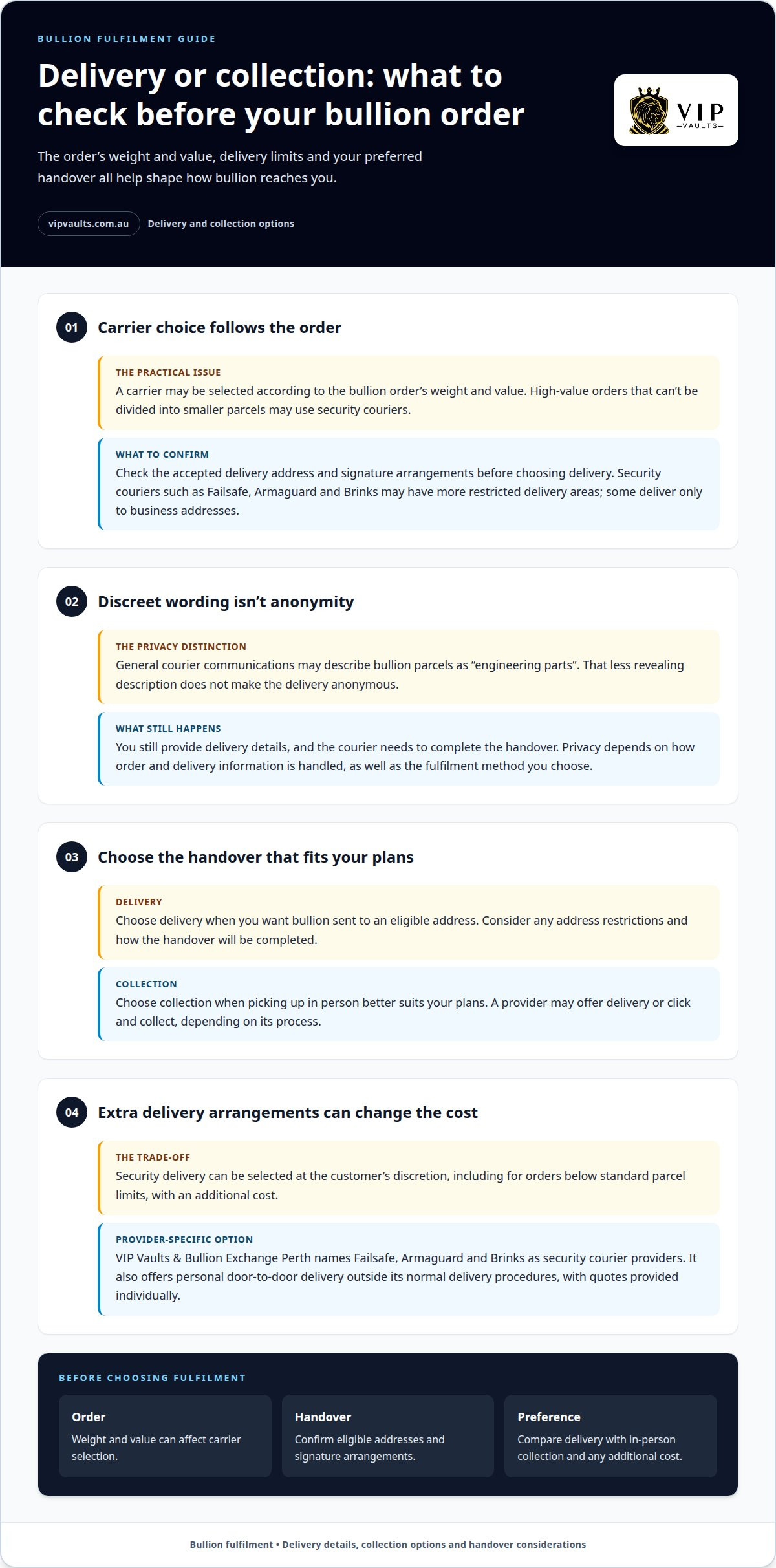
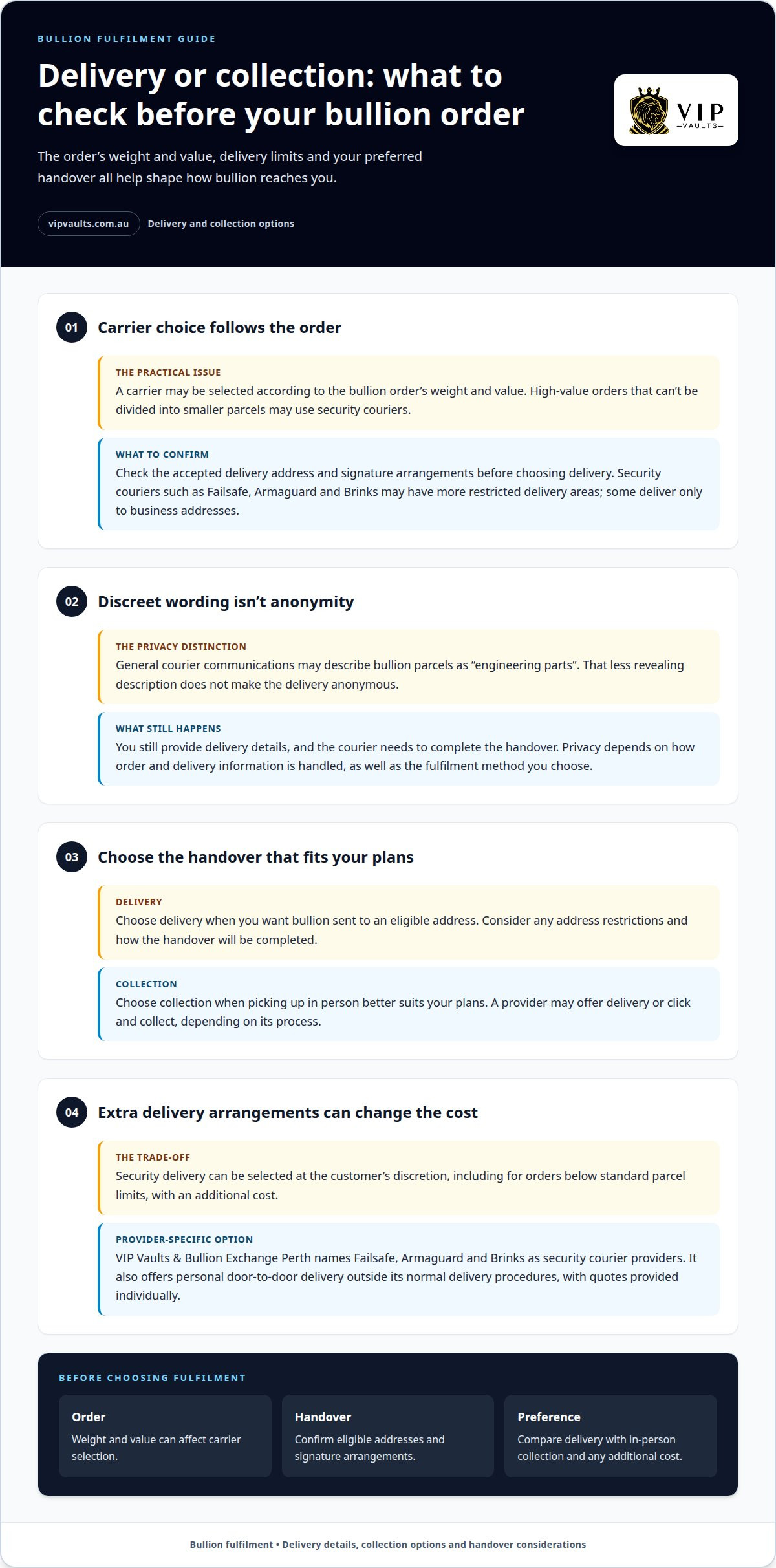
For delivery, the provider selects a carrier based on the bullion order’s weight and value. Security couriers such as Failsafe, Armaguard and Brinks may be used for high-value orders that can’t be divided into smaller parcels. Their delivery areas can be more restricted than general courier networks, and some carriers deliver only to business addresses. Confirm the accepted address and signature arrangements before selecting delivery. Compared with online dealers or local coin shops, a specialist service can bring purchasing and fulfilment together, while the options vary by provider.
Discreet delivery and collection options
General courier communications may describe bullion parcels as “engineering parts”, a less revealing description of the contents. This isn’t the same as anonymity: customers still provide delivery details, and the courier needs to complete the handover. A discreet service may arrange delivery or click and collect, depending on its process. Australian services can include buying gold or silver, arranging delivery or collection, and trading in store. Privacy depends on how order and delivery information is handled, as well as the chosen fulfilment method.
Access, liquidity and delivery choices
Choose delivery when you want bullion sent to an eligible address; choose collection when collecting in person better suits your plans. Security delivery can be selected at the customer’s discretion, including for orders below standard parcel limits, with an additional cost. Current Australian gold and silver prices vary by product, weight, spot price and premium; there’s no single price that applies to every item. Consider delivery restrictions, handover arrangements and the implications of holding physical bullion. A professional dealer should explain the product and its authenticity documentation before completing a trade.
Account registration and identity verification with a bullion provider
Registration establishes who is placing an order and where transaction records should be directed. A provider may request your full legal name, residential address, contact details and date of birth, then ask you to verify those details with identity documents. The exact documents and submission process depend on the provider’s account procedures.
Keep your purchase records, including the product description, metal, weight, price and transaction date. If you also rent storage, retain the rental agreement and relevant account statements with those records. Clear documentation helps you track your holdings and distinguish specific physical bullion from other financial assets.
Once you’ve chosen a product, check that its metal and weight are clearly identified in the order record. VIP Vaults sells investment-grade gold and silver bullion, including products from Perth Mint. Reviewing these details before purchase helps ensure the order matches what you intended to buy.
Storage choices also affect the account instructions. Allocated bullion refers to specific physical metal recorded for the account holder, while an unallocated balance represents a claim to a quantity of metal rather than identified pieces. If you plan to reserve bullion for secure storage, understand how the provider records holdings and what documents describe them.
Keep account access details private and use the provider’s designated submission process for identity documents. A dedicated account can make it easier to manage purchase records, delivery preferences and any later trade instructions in one place. Review the account details before submitting an order, especially the registered name and contact information.
Buying and selling bullion through one provider
A provider that handles both purchases and sales can keep transaction records in one place. For a purchase, the customer selects gold bullion or silver bullion, reviews the product details and pricing, then confirms the order. For a later sale, the provider assesses the bullion and sets a separate offer. Buying and selling prices can differ, so the amount received may not match the original purchase cost.
Keep each transaction’s product description, weight, payment record and date together. These details help identify what was bought and what is presented for resale. Bullion condition and product type may affect a resale assessment; coins and bars, for example, can have different specifications. A clear record also helps distinguish physical gold held by the customer from a balance recorded without specific items.
Storage is another decision to make alongside buying and selling. Customers who store precious metals away from home should understand how holdings are recorded, how access works and what insurance covers. “Insured” does not describe every possible loss automatically: coverage depends on the policy terms and the assets and circumstances included. Keep storage records aligned with purchase and sale documents.
A single provider may simplify administration, but it doesn’t remove the need to review each trade. Before accepting a sale offer, compare its stated product, weight and condition with the bullion being assessed. Check how the transaction price is calculated and what costs apply to the transaction. If selling silver bullion, confirm that the offer refers to the correct metal and form. For storing bullion between transactions, consider whether secure storage suits your access needs. The aim is a consistent record from purchase through storage and, if you choose, resale.
VIP Vaults & Bullion Exchange Perth names Failsafe, Armaguard and Brinks as security courier providers. It also offers personal door-to-door delivery outside its normal delivery procedures, with quotes provided individually. Customers can consider this delivery option when planning bullion transport, keeping in mind that each quote is handled individually.
In-store bullion trading
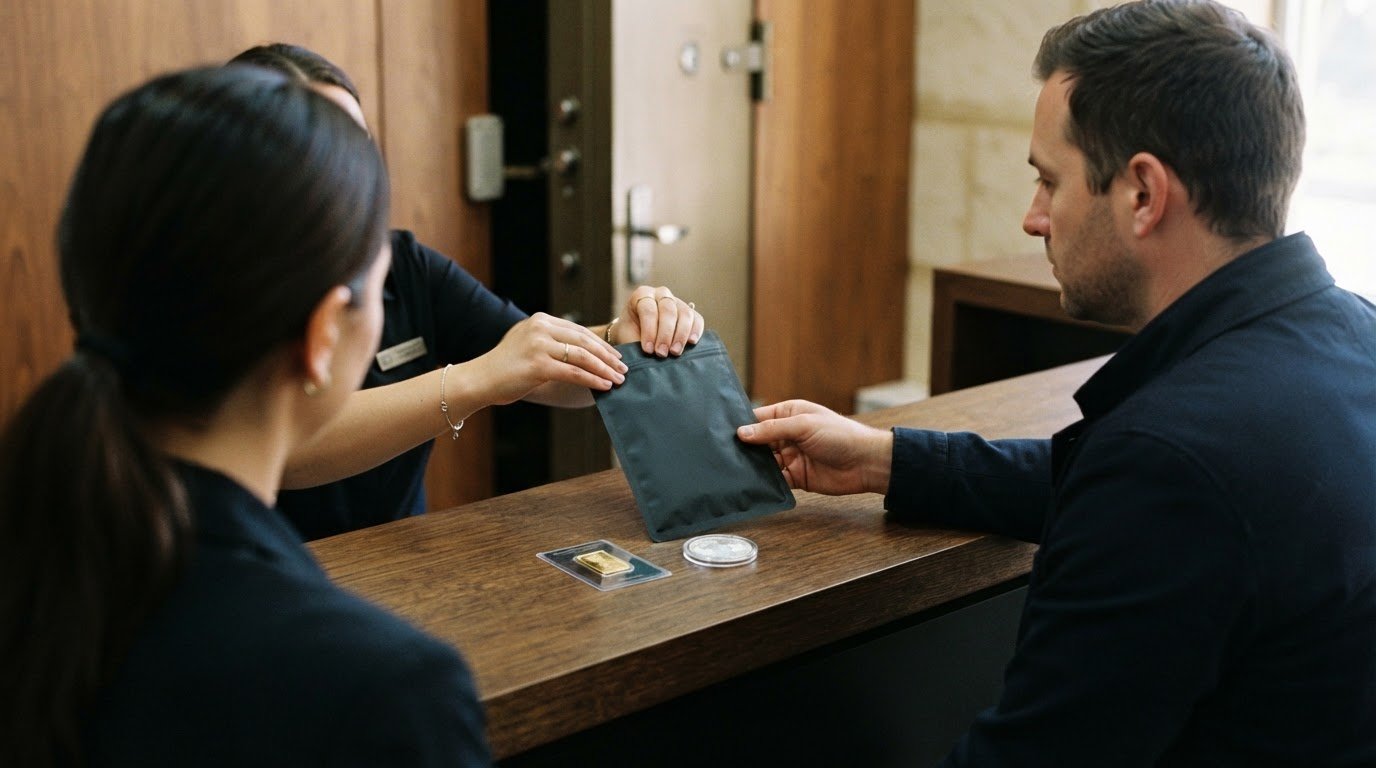
An in-store trade lets a customer present bullion for assessment and discuss a purchase or sale in person. The dealer identifies the metal and product form, then considers weight and condition when preparing the transaction. For example, a gold bar and a bullion coin may need separate descriptions on the trade record. Ask for the quoted price and transaction details before agreeing to proceed.
For a sale, the dealer assesses the specific holdings presented and explains the offer. Cash payment is a dealer-specific arrangement; agree on the payment method and how the trade will be recorded before completing an in-store sale. A receipt should identify the transaction and the bullion involved. For a purchase, confirm the product, weight and price before finalising the order.
In Australia, physical bullion can be held at home or placed in secure storage. Consider whether you want immediate possession or a storage option for your holdings. VIP Vaults offers private vault rentals and bullion lockers for precious metals and jewellery. Review the access and rental terms to decide whether they suit your needs.
Before completing a trade, make the steps clear: present the bullion, review its assessment, consider the offer, then accept or decline. If purchasing, check the product description and weight against the order record. Keep the receipt with your other transaction documents. These details help maintain a clear record when you later review or trade your holdings.
If secure storage is part of your plan, explore bullion storage options alongside your in-store trade.
VIP Vaults & Bullion Exchange Perth
VIP Vaults & Bullion Exchange Perth brings bullion purchasing and storage options together for people considering how to hold physical precious metals. Its gold and silver bullion offerings suit readers looking to buy, while private vault rentals and bullion lockers provide secure storage options for existing holdings.
Consider VIP Vaults & Bullion Exchange Perth when you’re weighing a bullion purchase alongside where to store it, or looking for secure storage for metals you already own. Its bullion sales and private storage options make it possible to consider both decisions together. The right choice depends on what you intend to hold and how you prefer to store it.
For information about buying gold or silver bullion and arranging secure storage, contact VIP Vaults & Bullion Exchange Perth.
Make your next bullion decision with purpose
Before placing an order, decide what role the bullion will play in your broader financial plans. Consider how long you intend to hold it, how readily you may want to access or sell it, and what level of personal involvement feels appropriate. These priorities can guide a discreet bullion purchasing service conversation and help keep your choices aligned with your intentions.
It can also help to write down the points you want clarified before proceeding, such as the product details, transaction records and how you prefer to hold your bullion. A calm, informed decision is more valuable than acting quickly. Take the time you need to understand the arrangements and choose an approach that suits your circumstances.
For a considered next step, contact VIP Vaults & Bullion Exchange Perth to discuss your bullion needs. Move forward when you’re ready, with your priorities clearly in view.
Frequently Asked Questions
What identification and reporting rules apply to buying bullion in Australia?
Bullion dealers may request identification to register an account, while reporting obligations depend on the business and transaction. An account verification request and a legal reporting requirement are separate matters. Don’t assume that providing identity documents means every reporting obligation has been met, or that one cash threshold applies to all bullion purchases. Keep transaction records and provide accurate account details when requested.
How does private bullion purchasing, delivery, and collection work in Australia?
Private purchasing generally involves registering an account, completing the dealer’s identity checks, selecting bullion and arranging fulfilment. For example, a buyer may choose delivery to an accepted address or arrange collection, then retain the order and payment records. Discretion concerns how transaction details and parcel communications are handled; it doesn’t mean a purchase can be made without the information required to process it.
What payment methods and delivery options do Australian bullion dealers offer?
Accepted payment methods vary between dealers and transactions, so don’t assume cash, card or electronic payment will be available for every order. Delivery choices can also depend on the bullion order and destination. Before committing, review the payment instructions and how the selected fulfilment method is arranged. Keep the payment record with the order details, so the transaction is easy to identify later.
What are current Australian prices and premiums for gold and silver bullion?
Prices vary by product, weight, spot price and premium.
How can you verify an Australian bullion dealer and authenticate bullion?
Before completing a trade, ask the dealer to explain the product and its authenticity documentation. Check that the product, metal and weight are clearly identified in the order or trade record.