An heirloom doesn’t need a high market value to deserve secure storage. The right approach depends on its material, condition and vulnerabilities. Stable temperature and humidity can help protect photographs, jewellery, metals and digital media from damaging environmental changes.
It’s understandable to think a home safe is enough, particularly for pieces valued for their family history rather than resale price. But a safe doesn’t automatically control humidity, and delicate items can be affected by dampness, heat, light or unsuitable packing.
This guide explains what to consider when arranging secure storage for family heirlooms in Australia, including how professional climate-controlled storage can help protect different materials. You’ll also learn practical ways to prepare photos, jewellery, metals and digital media, reduce exposure to damaging conditions, and decide when specialist storage is a sensible choice.
Key Takeaways
- Match storage conditions to each heirloom’s materials, as changes in heat and moisture can damage delicate items.
- Learn how careful preparation and suitable protective materials can help preserve family photographs and documents.
- See why attics, basements and other places with shifting conditions can put heirlooms at risk.
- Discover how separate, secure storage can help protect jewellery from scratching, tangling and environmental damage.
1. Climate-controlled storage
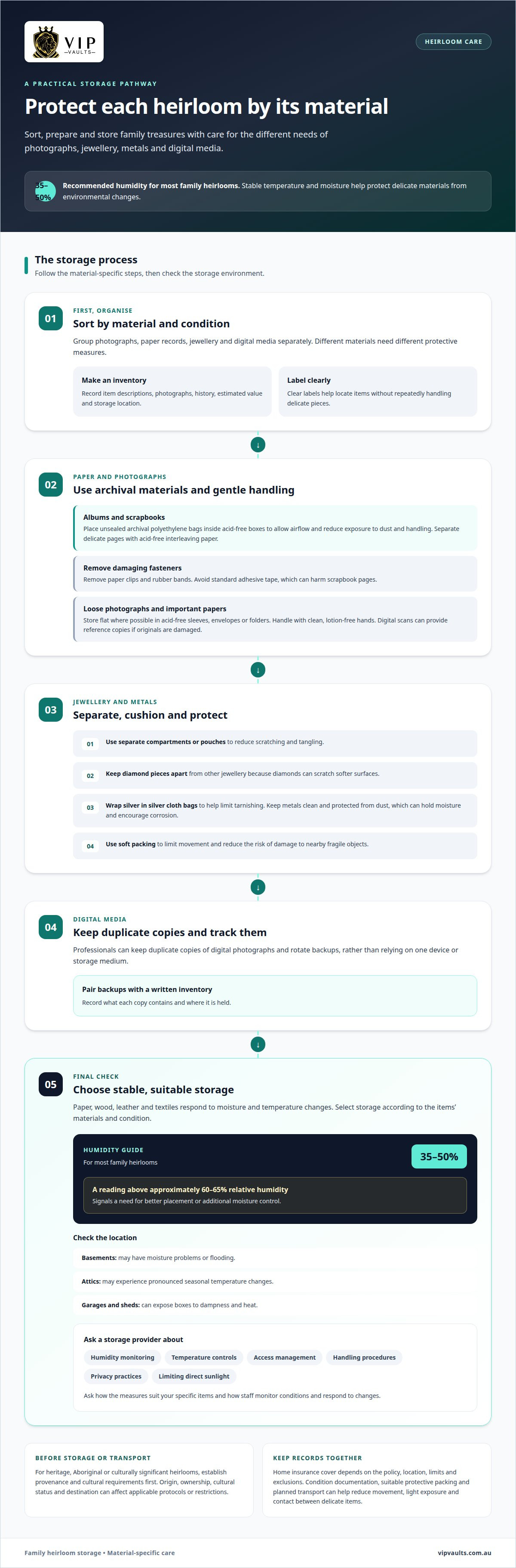
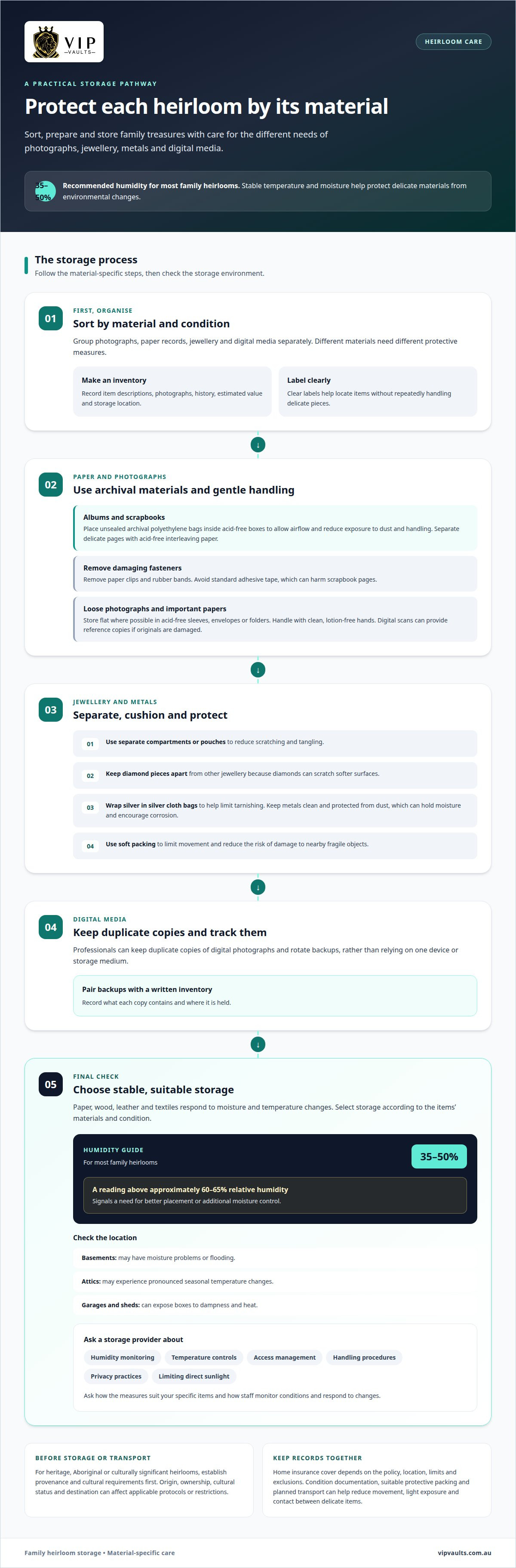
Climate control matters because paper, wood, leather and textiles respond to moisture and temperature changes. For most family heirlooms, a humidity level between 35% and 50% is recommended. High humidity can encourage mould and mildew; very low humidity can dry materials, while heat can accelerate ageing in leather and some plastics. Light matters too: direct sunlight can fade photographs and inks, so storage should limit exposure.
A home safe can restrict access, but it doesn’t automatically control humidity. A bank safe-deposit facility may provide a controlled environment, while professional climate-controlled storage suits items needing stable conditions alongside secure access. The best choice depends on the heirlooms’ materials and storage needs. For example, a paper photograph and a leather-bound book both benefit from protection against dampness and extreme temperature changes.
Professionals can measure humidity with monitoring equipment and manage moisture through environmental controls. A safe that frequently reads above approximately 60-65% relative humidity signals a need for better placement or additional moisture control. Ask how a storage facility monitors conditions, responds to changes and limits direct sunlight. Review its access controls and privacy practices, too; these matter when valuable family treasures are held away from home.
There isn’t one Australian answer for heritage, Aboriginal or culturally significant heirlooms. An item’s origin, ownership, cultural status and destination can affect whether particular protocols or restrictions apply. Establish its provenance and cultural requirements before arranging storage or transport, rather than assuming ordinary handling is appropriate.
Climate-controlled storage costs in Australia depend on factors such as the space required, storage period and handling needs. The item’s size and the level of environmental control affect the service needed, so a single general price would not represent every arrangement.
To choose a secure provider, consider its humidity monitoring, temperature controls, access management and handling procedures. Ask how these measures suit your specific items, such as photographs, jewellery or wooden objects, and how privacy is maintained.
Home insurance cover for heirlooms in storage depends on the policy, the location and any limits or exclusions. Provide an inventory with item descriptions, photographs, history, estimated value and storage location; these records also help with estate planning. Professional handlers can document condition, use protective packing suited to each material, and plan transport to reduce movement, light exposure and contact between delicate items.
2. Safe storage strategies for photographs, jewellery, metals, and digital media
Start by sorting heirlooms by material and condition. Photographs, paper records, jewellery and digital media need different protective measures. Separating them helps prevent metal fasteners, dust or contact with other objects from damaging fragile pieces. An inventory and clear labels also make it easier to locate specific items without repeatedly handling them.
For scrapbooks and photo albums, unsealed archival polyethylene bags can be placed inside acid-free boxes. The bags allow airflow, while the boxes reduce exposure to dust and handling. Separate delicate pages with acid-free interleaving paper. Remove paper clips and rubber bands, which can leave marks or damage photographs over time, and avoid standard adhesive tape, which can harm scrapbook pages.
Important papers and loose photographs are stored flat where possible, inside acid-free sleeves, envelopes or folders. These materials help limit yellowing and degradation associated with ordinary paper products. Clean, lotion-free hands help reduce residue during handling. Professionals can also make digital scans of significant family documents and photographs, giving future generations reference copies if originals become damaged.
Keep jewellery in separate compartments or pouches to reduce scratching and tangling. Store diamond pieces apart from other jewellery because diamonds can scratch softer surfaces. Silver heirlooms can be wrapped in silver cloth bags to help limit tarnishing. Keep metals clean and protected from dust, which can hold moisture and encourage corrosion. Soft packing also limits movement that could damage nearby fragile objects.
Digital media needs its own preservation plan. Professionals can keep duplicate copies of digital photographs and rotate backups, rather than relying on one device or storage medium. Pairing backups with a written inventory helps identify what each copy contains and where it is held. For physical albums, papers, jewellery or metals requiring secure custody, explore jewellery storage as one option for keeping selected family treasures protected.
3. Avoiding temperature and humidity fluctuations
Stable conditions help protect cherished pieces because materials respond differently to moisture. Paper can warp, photographs may stick together, and metals can tarnish as humidity changes. Temperature swings can also make wood and paper expand and contract, increasing the risk of cracking or warping. Choose storage that limits these shifts rather than leaving heirlooms exposed to seasonal extremes.
Location matters. Basements can have moisture problems or flooding, while attics may experience pronounced seasonal temperature changes. Garages and sheds can also expose boxes to dampness and heat. Standard self-storage may suit robust belongings, but a unit without stable conditions can put delicate photographs, books and wooden keepsakes at risk.
Professionals assess an item’s material and condition, then place it where environmental conditions remain controlled. For example, paper records and photographs need protection from dampness, while wooden pieces can be affected by repeated temperature changes. Storage staff can monitor conditions, respond to fluctuations and keep items away from known moisture sources. These measures help preserve physical condition, not the stories that make heirlooms sentimental.
Organisation supports environmental protection. Shelving keeps boxes off the floor, where leaks or damp patches could affect them, and allows airflow around stored items. A clear inventory records each piece and its location, so staff can retrieve the right box without shifting or stacking other items. Dust also deserves attention because it can hold moisture and encourage mould growth.
Winterthur recommends keeping cherished objects in spaces people live in and use, rather than attics or basements where stable conditions are harder to maintain. Private vault storage can provide a secure alternative when you need to store valuables away from home. Regularly inspect packaging and storage conditions for dampness or wear before problems affect more of the collection.
Attics and basements can expose heirlooms to temperature and humidity variations, leaks or flooding. High humidity can cause mould and mildew, while very low humidity can dry items. Keep heirloom books in a cool, dry area at home.
4. Safe storage of heirloom jewellery
An antique brooch or inherited wedding ring carries meaning beyond its material value. Secure storage should address physical security as well as the jewellery’s sensitivity to temperature, humidity, light and handling. Keep pieces away from direct sunlight, extreme temperatures and frequent temperature changes. Stable conditions help limit factors that may contribute to deterioration over time.
Separate each item before storage. Individual compartments or soft pouches help prevent chains tangling and pieces scratching one another. Store diamond jewellery apart from other pieces because diamonds can scratch other surfaces. Wrap antique jewellery in soft microfibre cloth and place it in a sturdy box. A silver cloth bag helps limit tarnishing on silver jewellery.
Take care when cleaning heirloom jewellery. Toothpaste and bleach can damage it, so avoid using them. A reputable jeweller can handle valuable pieces that need cleaning. Before storage, document each item with clear photographs and a written description. Note distinctive details, such as a maker’s mark, setting or visible wear, so the record reflects the piece’s condition.
Keep jewellery separate from paper documents and other sensitive materials. This makes each item easier to identify and reduces unnecessary handling when retrieving something else. An inventory can record each piece’s description, family history and storage location. For jewellery with sentimental significance, include who originally owned it and why your family cherishes it.
Secure private storage can suit heirlooms you want to keep away from home, particularly when a collection includes several delicate or valuable pieces. Consider how you’ll package items separately, maintain suitable conditions and access them discreetly. These practices support preservation, but they don’t replace careful records or appropriate cleaning by a jeweller.
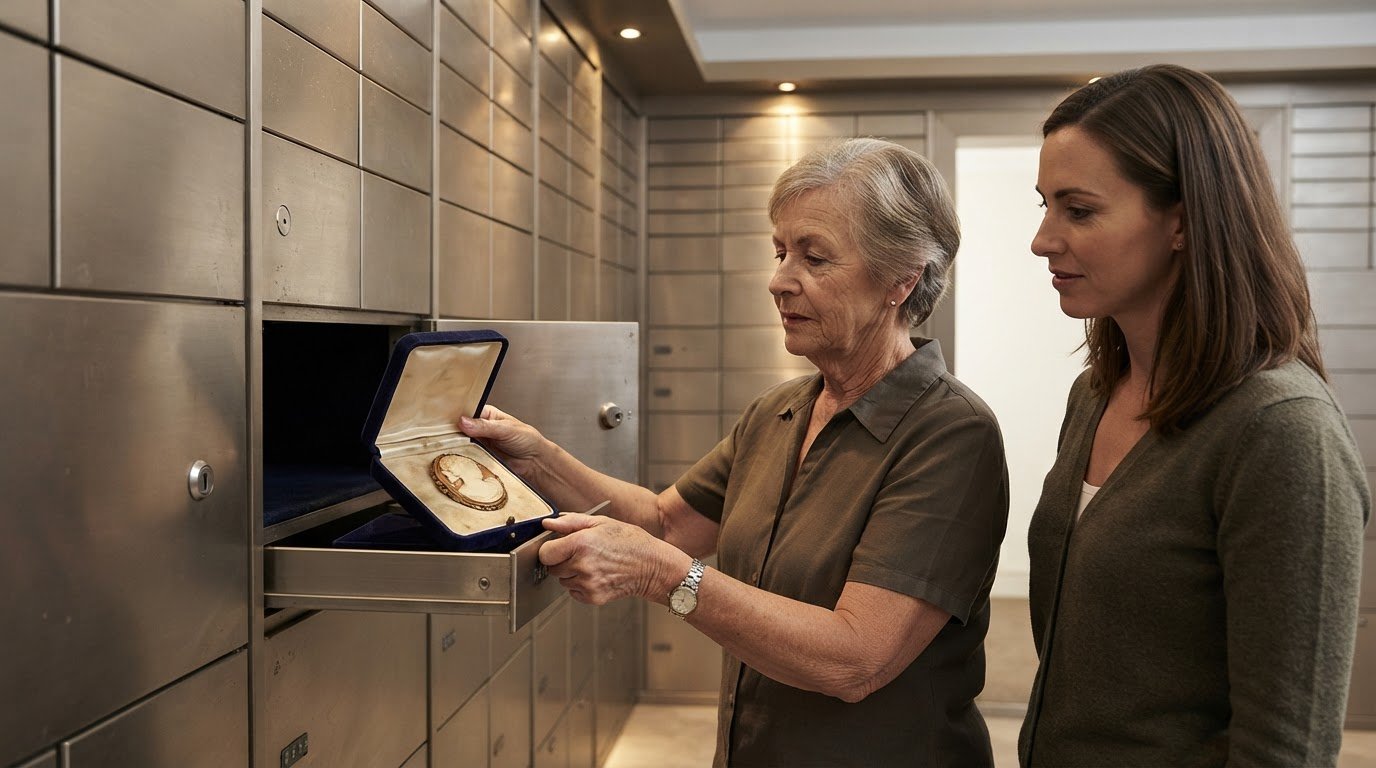
For a dedicated option, arrange secure jewellery storage for heirloom pieces that need protection beyond ordinary household storage.
VIP Vaults & Bullion Exchange Perth: Jewellery Storage
VIP Vaults & Bullion Exchange Perth offers secure storage for jewellery and family valuables, held separately from everyday belongings. It can suit inherited rings, antique brooches or a collection you don’t regularly wear. For heirlooms beyond jewellery, Private Vault Rental provides another storage option.
Decide which pieces you want to store and keep a record of their condition, ownership history and significance. Clear documentation can help your family identify each item and understand its story over time. Choose storage that fits what you’re safeguarding, whether that means selected jewellery or a broader group of valuables.
For a considered discussion about storing family jewellery, contact VIP Vaults & Bullion Exchange Perth.
Make a considered plan for your family’s treasures
A thoughtful approach to secure storage for family heirlooms begins with deciding who should care for each item in the years ahead. Consider which pieces need protected storage and which should remain accessible to family members. Recording who will take responsibility can help keep family intentions clear as circumstances change.
If you’re considering secure storage for family heirlooms alongside precious metals, VIP Vaults & Bullion Exchange Perth offers Bullion Lockers, Gold Bullion and Private Vault Rental. Choose an arrangement that reflects what you want to safeguard and how you plan to manage those holdings over time.
Take the next step at a pace that suits your family. Contact VIP Vaults & Bullion Exchange Perth to discuss storage options and make a considered plan for the treasures that matter.
Frequently Asked Questions
Do I need a safe if my heirlooms aren’t “expensive”?
No. A safe isn’t essential just because an item is a family heirloom, and sentimental importance doesn’t depend on resale value. Consider who needs access, how often the item is handled and whether it would be difficult to replace. A family agreement about who holds the item and its history can also help protect its meaning as it passes between generations.
How can professional storage help prevent damage to family heirlooms from heat, humidity, light and pests?
Professional storage can reduce exposure to temperature changes, moisture and direct light through controlled conditions and considered placement. These measures can help limit fading, warping and deterioration. Pest management is a separate part of storage care: climate control and secure access alone don’t establish that a space excludes pests. Packaging and facility practices both matter for protecting delicate items.
What temperature and humidity levels are recommended for storing family heirlooms?
A humidity level between 35% and 50% is recommended for storing most family heirlooms. This range helps balance the risks of excessive dampness and overly dry conditions. Materials respond differently, so a mixed collection may need particular attention to its most sensitive items. Paper, photographs, wood and leather can all be affected by environmental changes, making stable conditions important.