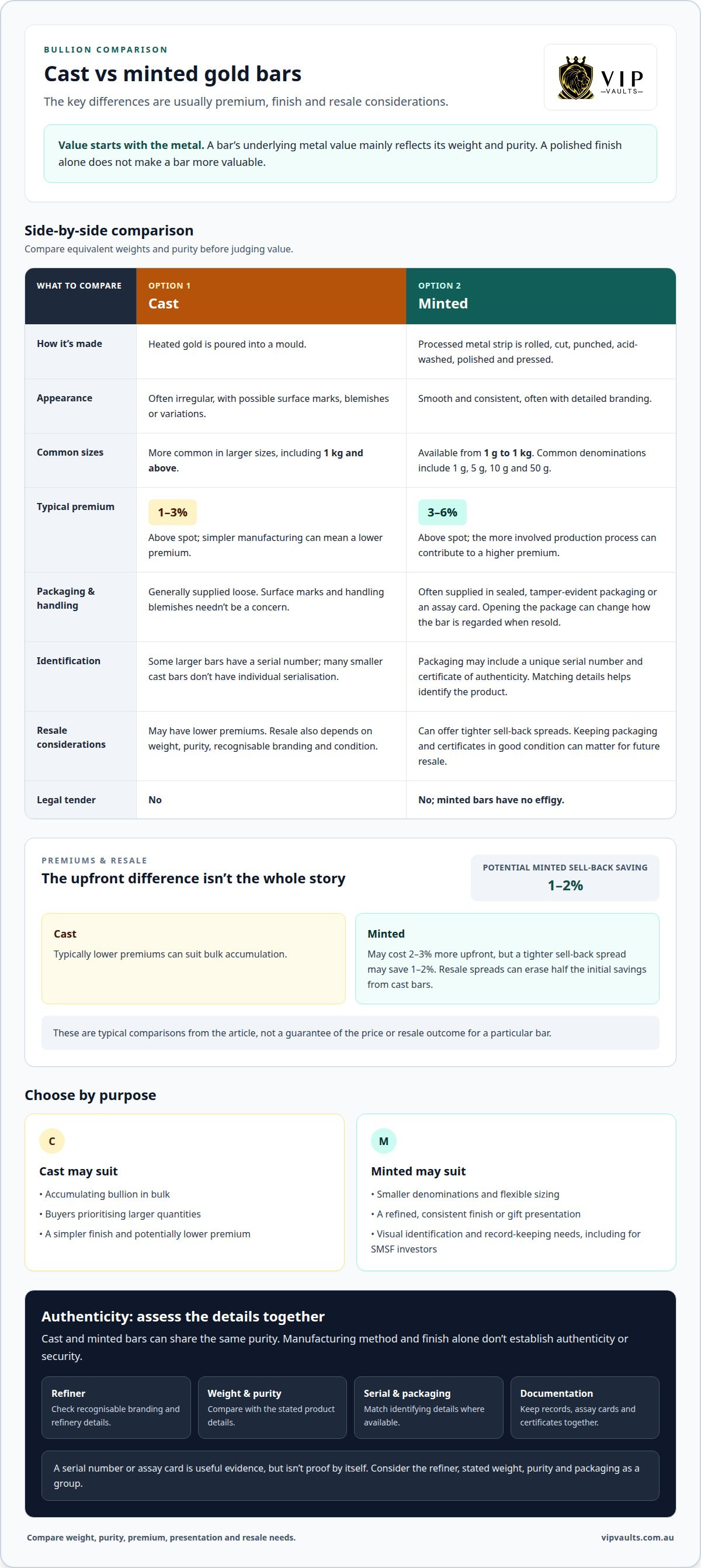
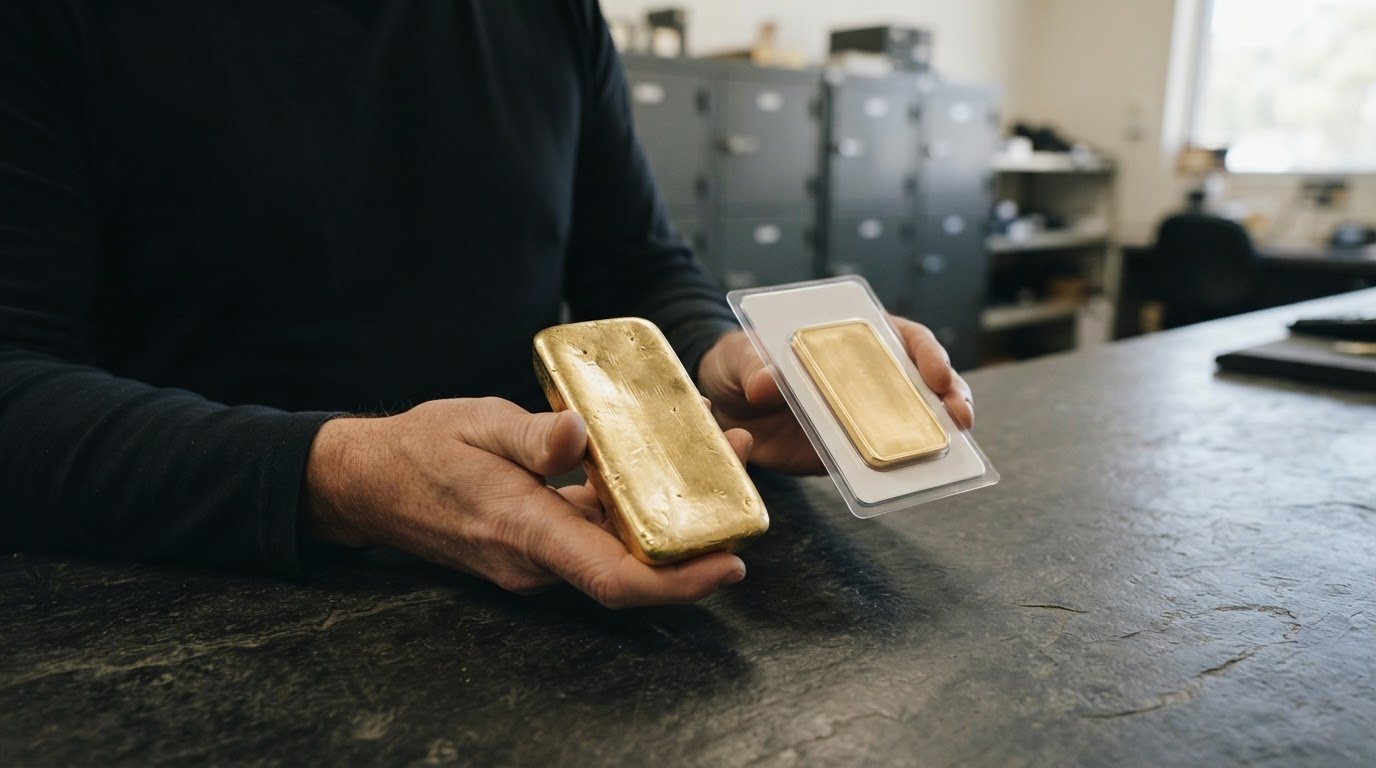
The more polished bar isn’t automatically more valuable. In a cast vs minted bullion bars comparison, a bar’s underlying metal value mainly reflects its weight and purity. The main differences are usually the premium, finish and resale considerations. Minted bars have a more consistent appearance, while cast bars often suit buyers prioritising larger quantities.
It’s reasonable to expect a refined finish and sealed presentation to matter, particularly when choosing a bar as a gift or for an SMSF. But appearance is only one part of the decision. Cast bars can be a practical choice when accumulating bullion in bulk.
This guide explains how the two types are made, what to look for in packaging and authenticity, and how their premiums and handling needs compare. You’ll also find a decision guide to help weigh finish, flexibility, storage and intended use before choosing a bar.
Key Takeaways
- Compare weight, purity and premiums to understand what drives a bar’s value beyond its finish.
- Match the bar’s appearance and handling needs to how you plan to hold or present it.
- Learn how packaging, serial numbers and refinery details can help with identification and resale.
- Use your intended purpose, from gifting to bulk accumulation, to narrow down the most suitable format.
Gold Cast Bar Vs Minted Gold Bar - Which Is More Valuable?
In Australia, resale depends on a bar’s weight, purity, recognisable branding and condition. Cast bars may have lower premiums, while minted bars can offer tighter sell-back spreads. Australian bullion dealers commonly offer minted gold bars from 1 g to 1 kg, with cast bars more common in larger sizes, including 1 kg and above. Compare equivalent weights and purity before judging value.
Cast Bar Appearance and Bulk Appeal
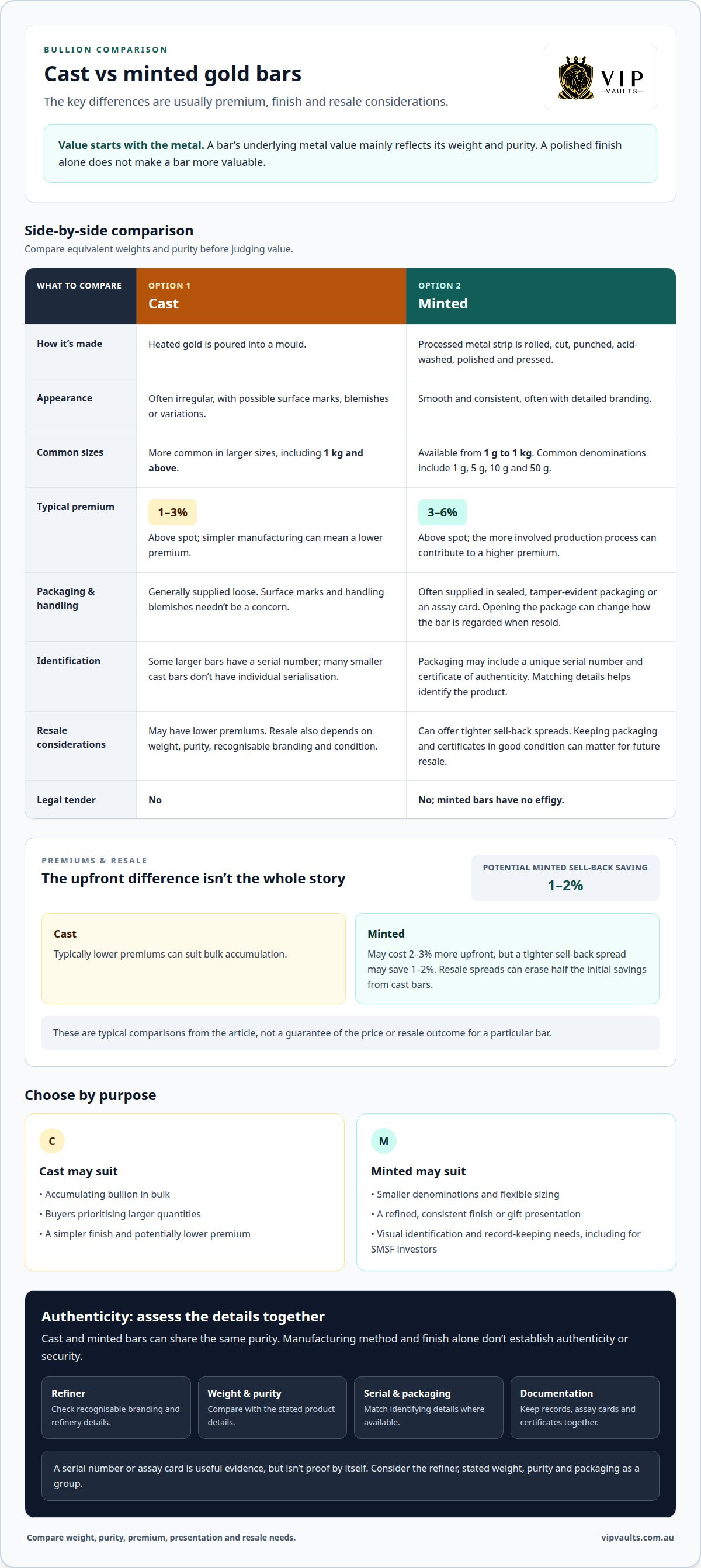
Cast bars are made by pouring heated metal into a mould. Their appearance can show irregular edges, surface marks or variations. This less uniform finish doesn’t mean lower purity: cast and minted bars can share the same purity. Larger cast bars suit buyers accumulating bullion in bulk. Their simpler manufacturing process can mean lower premiums, typically 1-3% above spot.
Minted Bar Finish and Legal Tender Status
Minted bars are cut from processed metal strip, rolled to uniform thickness, then punched, acid-washed, polished and pressed. The result is a smooth, consistent finish, often with detailed branding. Common denominations include 1 g, 5 g, 10 g and 50 g, while available weights range from 1 g to 1 kg. Minted bars typically carry premiums of 3-6% above spot. They are not legal tender and have no effigy.
| Bar type | Appearance | Common sizes | Premium and resale | Legal tender |
|---|---|---|---|---|
| Cast | Irregular, less uniform finish | 1 kg and above | Typically 1-3% above spot | No |
| Minted | Smooth, consistent finish | 1 g to 1 kg | Typically 3-6% above spot; tighter sell-back spreads may save 1-2% | No |
Minted bars may cost 2-3% more upfront, but resale spreads can erase half the initial savings from cast bars. A tighter sell-back spread for minted bars may save 1-2%. Choose cast for bulk accumulation, or minted for smaller denominations and a more uniform finish.
Assay cards, serial numbers and authenticity
Cast and minted bars can have the same purity and meet strict standards for purity and weight accuracy. Their manufacturing method alone doesn’t determine authenticity or security. Packaging, branding and identifying details help establish what a bar is, while a serial number can link it to its packaging or documentation. Compare these details as a group rather than relying on just one feature.
Minted bars are often supplied in sealed, tamper-evident packaging or assay cards. Packaging may carry a unique serial number and certificate of authenticity, with the serial appearing on the bar or its packaging. Matching these details helps identify the product. Keep the packaging and certificate in good condition, as their condition can affect future resale value. Opening a sealed package can also change how the bar is regarded when resold.
Cast bars are generally supplied loose, unlike many sealed minted bars. Some larger cast bars have a serial number, but many smaller cast bars don’t have individual serialisation. This affects identification, not the metal’s purity. To assess a product, compare its dimensions, weight and branding with the refinery’s official specifications. Recognisable products from established refiners are generally accepted across the bullion market.
For SMSF investors, minted bars with serial numbers can support asset identification and record-keeping. A serial number or assay card is useful evidence, but isn’t proof by itself. Consider the refiner, stated weight, purity and packaging together. Minted bars can be easier to identify visually because their polished finish, detailed branding and sealed presentation provide reference points. Keep purchase and product records organised with the bar’s identifying information.
Choose a format that fits your documentation and storage needs. A Bullion Locker provides a storage option for bullion held loose or in an assay card, helping keep the bar and its associated details together.
Cast bar manufacturing and finish
A cast bar starts with heated gold poured into a mould. Once formed, it can retain surface marks, blemishes or irregularities from the pouring process. These are visible features of its manufacture, not evidence that the bar contains less gold. The finish is less uniform than that of a bar shaped through the more involved minted process.
Minted bars begin as processed metal strip. The metal is rolled to a uniform thickness, cut to shape, then punched, acid-washed, polished and pressed. These steps create a smooth, consistent appearance and detailed finish. The manufacturing process takes more work than casting, which can contribute to a higher premium. A polished surface is a production characteristic, not a measure of the gold’s value by itself.
The different manufacturing methods affect how bars look and are handled. Cast bars can have scratches or blemishes, and handling marks needn’t be a concern. Minted bars are commonly supplied in sealed packaging, so handling them physically means removing them from that packaging. Its condition can matter for future resale.
For storage and handling, the key distinction is the bar’s presentation. Cast bars are generally loose, while minted bars are often sealed. Keep minted packaging and any accompanying certificate in good condition; cast bars don’t need a perfect surface for resale. Neither finish alone establishes a bar’s authenticity.
Manufacturing costs help explain the premium difference. Casting uses a simpler process, so cast bars typically carry lower premiums. Minted bars require rolling, shaping, washing and polishing, which can make production more time-consuming and expensive. The choice is between a simpler finish and a more refined, consistent presentation, not between different gold content solely because of the production method.
Choosing bars for gifts, SMSFs, or bulk purchases
Start with the intended use: presentation, record-keeping, flexible sizing, or accumulating gold and silver. In Australia, compare the bar’s format with your holding period and resale plans.
A bar’s cast or minted form alone doesn’t establish its GST treatment or tax outcome in Australia. Product classification and transaction circumstances matter. The same distinction applies when considering SMSF tax.
Coins, Minted Bars and Cast Bars
Australian bullion coins, minted bars and cast bars suit different preferences. Coins may have legal tender status, an effigy and designs linked to a commemorative theme or limited mintage. Bars are generally valued by weight and purity, with little or no numismatic value. Minted bars offer a polished presentation; cast bars prioritise straightforward metal accumulation. For resale, consider recognisable branding and whether collectable features matter to your intended buyer.
Bar Types for Gifts and Bulk Purchases
For a gift, a smaller minted bar can offer a neat presentation and accessible format. Its uniform finish may suit an occasion where appearance matters. For bulk purchases, cast bars are commonly available in larger sizes, and 1 kg or more per purchase can suit buyers stacking substantial quantities. Consider whether you value a presentation-ready finish or prefer to consolidate your purchase into a larger bar. Keep packaging with a minted gift if resale remains a possibility.
Bar Choices for SMSFs and Investment Goals
For an SMSF, choose a format that supports clear asset identification and organised records. A minted bar with a serial number can assist identification, while intact packaging and its certificate help preserve product details. For a long-term holding, weigh documentation needs against the premium and preferred bar size. If flexibility matters, smaller denominations allow staged selling; for larger-volume accumulation, a 1 kg cast bar may better match the purchase goal. The fund’s tax position depends on its circumstances, not the bar’s finish alone.
Choose by purpose first, then compare presentation, record-keeping, size and resale priorities.
VIP Vaults & Bullion Exchange Perth
VIP Vaults & Bullion Exchange Perth can help you take the next step after weighing finish, size and storage priorities. If you’re selecting bullion for a gift, a long-term holding or a larger purchase, its gold and silver bullion offerings provide a way to put that choice into practice. For safekeeping, consider whether a Bullion Locker or Private Vault Rental suits how you intend to hold your bars.
Decide first whether presentation, purchase format or secure storage is your main consideration. Then explore the relevant bullion and storage options together, so your choice reflects both the bar type and how you plan to hold it.
Contact VIP Vaults & Bullion Exchange Perth to discuss your bullion or storage needs.
Make your next bullion decision with clarity
Your choice of cast vs minted bullion bars can be part of a broader approach to holding physical assets. Before acting, set out what you want the holding to do for you: preserve a portion of your wealth, provide a considered gift, or sit alongside other assets. That purpose gives your decision a clear reference point, rather than letting appearance alone lead the way.
It can also help to think beyond the purchase itself. Consider how you want to document, store and eventually access your bullion, and whether those arrangements fit your wider financial plans. For SMSF decisions, factor the fund’s requirements into your process and seek appropriate professional advice on fund and tax matters. A deliberate plan makes it easier to choose a format that aligns with your priorities and maintain confidence in your decision over time.
When you’re ready to discuss your next step, contact VIP Vaults & Bullion Exchange Perth. Move forward at a pace that suits your plans.
Frequently Asked Questions
Real-world scenarios: Which bar is right for you?
Choose the format that best matches your purpose. For a gift where presentation matters, a minted bar may suit the occasion; for accumulating a larger holding, a cast bar may be a practical fit. For an SMSF, prioritise clear records and product identification. A cast vs minted bullion bars decision is easier when you weigh intended use, documentation needs and plans for eventual resale together.
What are cast bars?
Cast bars are bullion bars formed by pouring heated metal into a mould. Their surfaces can show marks or variations, so each bar may have a distinctive appearance. These features result from the casting process and don’t, by themselves, indicate lower metal content. Buyers often consider cast bars when they want to accumulate bullion in larger formats and value function over presentation.
What are minted bars?
Minted bars are shaped from processed metal and finished to create a consistent appearance. Their design may include refinery branding and identifying details, and they’re commonly sold in sealed packaging. This format can suit a gift or a holding where uniform presentation is preferred. Consider the packaging and product details as part of the bar’s identification and future record-keeping.
What is the difference between a bullion cast bar and a bullion minted bar?
The main difference is the manufacturing method and resulting presentation. A cast bar is poured into a mould, while a minted bar is cut and finished from processed metal. This affects surface appearance and how each is commonly packaged. To compare two specific bars fairly, consider equivalent weight and purity, then assess their identifying details and purchase terms.
Which delivers more value?
Neither format is automatically better value for every buyer. Compare the premium at purchase with the product’s likely resale terms, using bars of equivalent weight and purity. A lower initial premium may not settle the decision if other resale conditions differ. Your preferred size, presentation requirements and planned holding period can all shape which option better fits your objectives.
What is the difference between cast and minted bullion bars?
A cast vs minted bullion bars comparison centres on how the metal is formed, the finish and typical presentation. Casting creates a bar from metal poured into a mould; minting shapes and finishes processed metal. Those distinctions can influence which size or format suits your plans. Neither type is inherently more authentic, so assess the refiner and product identification alongside the bar’s stated details.