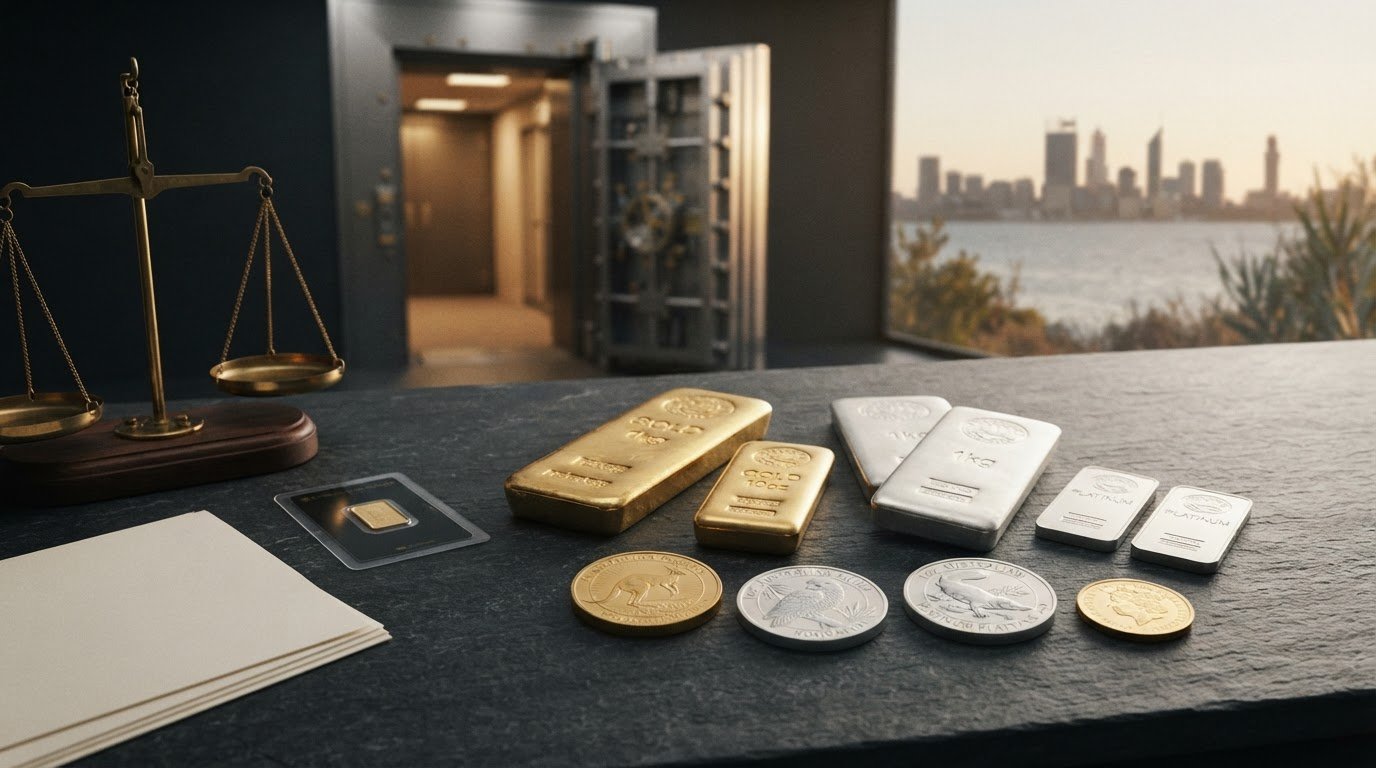
Could choosing bullion depend as much on provenance and secure custody as on the price quoted today? For many Australian buyers, the practical questions come first: what counts as bullion, how do bars differ from coins, and why is a product’s price different from the metal’s spot price? Understanding these details helps you compare physical precious metals more clearly.
This guide explains common bullion formats and the factors that shape pricing. You’ll learn how weight, purity, product premiums and provenance fit into a comparison, and what to consider when planning for long-term ownership. We’ll also cover secure custody options, including private vault rentals and bullion lockers. Gold, silver and platinum bullion from recognised refiners, including LBMA-accredited manufacturers and VIP Vaults & Bullion Exchange Perth, offers a practical starting point for assessing product sourcing and transparent, globally linked pricing.
Key Takeaways
- Understand what qualifies as bullion and why physical precious metals are assets, not guaranteed returns.
- Compare bars and coins by format, recognisability and intended use, then weigh the features of gold, silver and platinum against your objectives.
- Distinguish spot prices from product premiums, and understand which factors can influence the final price.
- Plan for ownership by setting objectives, comparing products, keeping records and choosing how to secure your holdings.
- Consider provenance and custody together, including bullion sourced from recognised refiners and private storage options.
What is bullion, and what does owning physical bullion involve?
Bullion is precious metal valued primarily for its metal content and purity. Its market value is tied chiefly to the quantity of gold, silver or platinum it contains, rather than rarity, design or collector appeal. Bullion is usually traded in forms such as bars and coins.
Physical bullion is a tangible precious-metal product you own, rather than a share or fund unit whose value is linked to metal prices. That distinction affects ownership: you hold the metal itself and need to consider its authenticity, records and custody. Physical bullion is an asset, not a guaranteed return or a risk-free investment. Its value can move, and ownership brings practical responsibilities.
What makes a precious-metal product bullion?
Weight and purity establish a product’s metal content, while markings and other identifying features can indicate its fineness and origin. Bars and coins are common formats, but their premiums can differ. Product design, fabrication and market conditions may affect the price above the metal’s reference value.
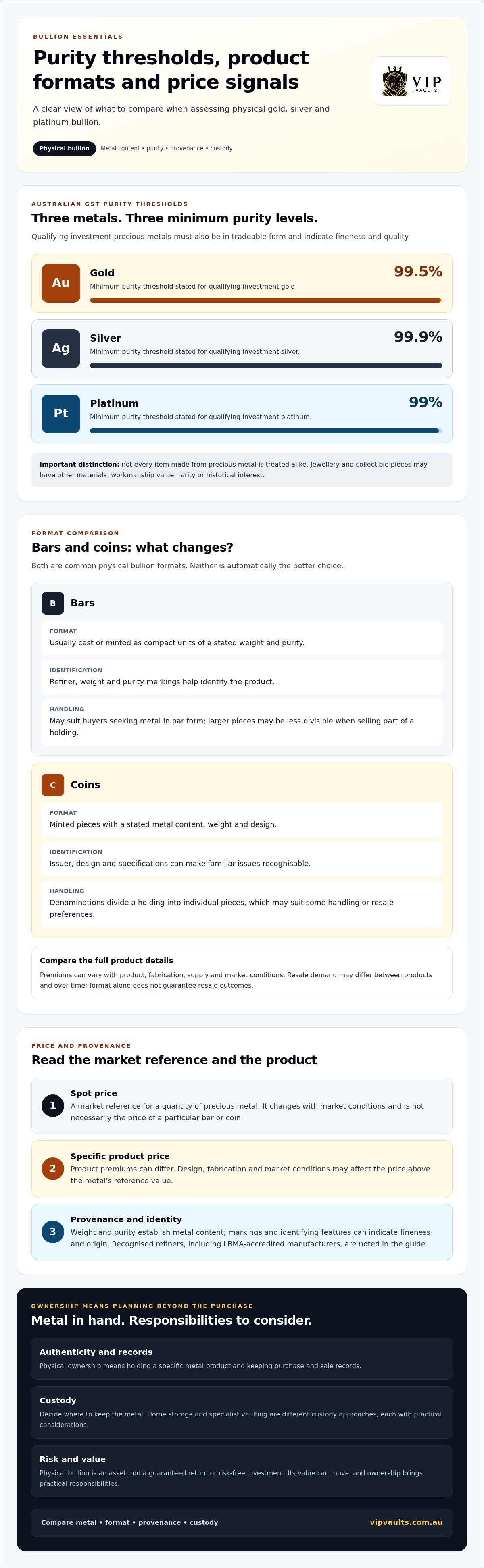
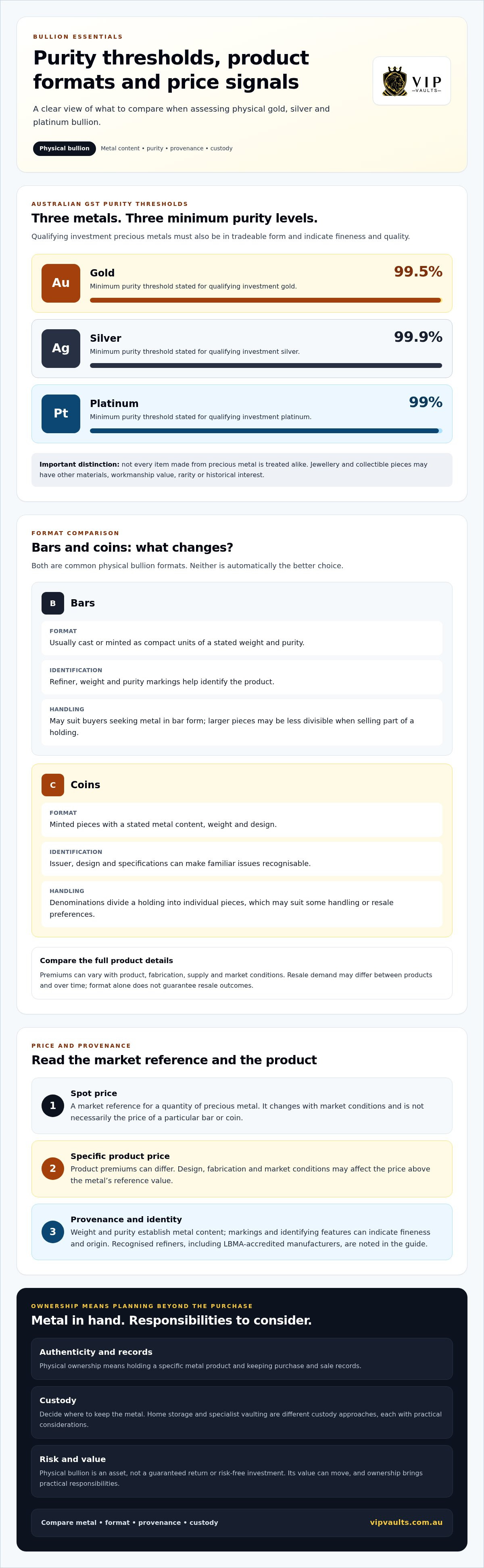
Investment-grade bullion differs from jewellery and collectible pieces. Jewellery is made for personal adornment and may include other materials or workmanship value. Collectible coins can command a premium for rarity or historical interest. In Australia, GST rules set purity thresholds for qualifying investment precious metals: at least 99.5% for gold, 99.9% for silver and 99% for platinum, alongside requirements for tradeable form and an indication of fineness and quality. These criteria help explain why not every item made from precious metal is treated alike.
For a broader account of the term’s meaning and history, see What is bullion.
How physical bullion differs from paper-based exposure
With physical ownership, the asset is a specific metal product, such as a bar or coin. Paper-based exposure refers to financial products linked to metal prices. It doesn’t mean you personally hold a particular bar or coin. The structure and rights attached to those products vary, so this distinction is about the form of ownership, not a promise about performance.
This guide focuses on physical gold, silver and platinum, not jewellery or collectible markets. Ownership also means deciding how to retain purchase and sale records and where to keep the metal. Home storage and specialist vaulting are different custody approaches, each with practical considerations. The following sections explain how to compare formats and plan for secure custody.
Bullion bars, coins and metals: how do the main options differ?
Bars and coins both provide physical exposure to precious metals, but their shape, denominations and market familiarity can affect how well they suit your ownership plan. Neither format is automatically better. Consider how much you intend to hold, whether you may want to sell part of your holding, and how each product fits your storage arrangements.
Bullion bars or coins: what should buyers compare?
| Feature | Bars | Coins |
|---|---|---|
| Format | Usually cast or minted as compact units of a stated weight and purity. | Minted pieces with a stated metal content, weight and design. |
| Recognisability | Refiner, weight and purity markings help identify the product. | Issuer, design and specifications can make familiar issues recognisable. |
| Handling and use | Can suit buyers seeking metal in bar form; larger pieces may be less divisible when selling part of a holding. | Denominations allow a holding to be divided into individual pieces, which may suit some handling or resale preferences. |
These are general distinctions, not guarantees about resale. Premiums can vary with the product, fabrication, supply and market conditions. Resale demand may also differ between products and over time. Compare the full product details and pricing rather than assuming bars always cost less or coins are always easier to sell. For a closer format comparison, read the gold coins versus bars guide. The Royal Australian Mint also outlines its Australian investment coins.
Gold, silver or platinum: how to frame the choice
Each metal has distinct characteristics, market influences and product choices. Gold, silver and platinum are available as bars and coins, but one isn’t universally superior. Start with your objectives and the role you want precious metals to play in your overall asset mix. Then consider the amount of physical material you’re comfortable holding and storing. Avoid basing a decision on a single recent price movement or performance prediction.
Silver has uses beyond precious-metal ownership, including industrial applications. If that context is relevant to your research, explore the industrial uses of silver guide. Then compare product form, provenance and storage together. Browse gold, silver and platinum bars and coins as you consider which products align with your plan.
Bullion pricing and provenance: what should you assess before buying?
A useful comparison answers two separate questions: what is the metal worth in the market, and what supports the price and identity of the specific product? Considering both helps you assess a purchase without treating a market quote or product description as the whole picture.
How spot price relates to a bullion product’s price
The spot price is a market reference for a quantity of precious metal. It changes with market conditions and provides a useful benchmark, but it isn’t necessarily the price you’ll pay for a particular bar or coin.
The spot price values the metal by reference; the retail price reflects the specific physical product and the conditions of its sale. Fabrication, product type, supply and market conditions can all influence the difference, often called the premium. Premiums can vary between products and change over time. To make a fair comparison, match the metal, weight, purity and product format, then compare the quoted price and any stated charges.
For Australian market context, consult this Australian gold price reference. Treat market information as a point-in-time guide, not a prediction of future prices. At VIP Vaults & Bullion Exchange Perth, pricing is linked to global markets and presented transparently.
What provenance and LBMA accreditation can tell you
Provenance is information that helps identify a product’s maker and origin. Check its markings and accompanying documentation, including details such as the refiner, metal, weight and stated purity. These records help you understand what you’re acquiring and maintain an orderly ownership history.
LBMA accreditation relates to a refiner’s credentials. It isn’t a guarantee of investment performance or future resale value. Products from internationally recognised refiners, including LBMA-accredited manufacturers, provide a useful reference point when assessing source. Review the individual product information and documentation rather than relying on a name alone.
Tax treatment is another part of the Australian buying picture. The Australian Taxation Office’s GST rules for precious metals explain how qualifying products are treated. Check the ruling when assessing whether a particular item meets the relevant definition.
Use these checks together: compare the product with the market reference, understand what contributes to its price, and keep its identifying information with your purchase records. You can explore bullion products sourced from recognised refiners as part of a considered approach.
Buying and holding bullion: how to plan for ownership and custody
Plan for the full ownership journey, not just the purchase. A considered approach connects your objectives with the product you choose, the records you retain and how you’ll hold it over time. Use these four steps as a practical framework.
- 1. Define your objectives. Record why you’re considering physical precious metals, which metal interests you and how it fits your wider financial plans. Decide on a preferred format and consider whether you expect to hold it long term or may need to sell part of it.
- 2. Compare products. Review product descriptions, weight, purity, maker and provenance alongside the price information. Compare like with like, and consider whether the format suits your handling and storage preferences.
- 3. Retain records. Keep purchase confirmations, invoices and product documentation with your relevant ownership records. Note the date and price of each transaction. Organise the information so you can identify what you own and support future administration.
- 4. Plan custody. Decide where the metal will be held before acquiring it. Consider access, privacy, insurance terms and recordkeeping as separate parts of the decision.
How to think about bullion custody
Personal custody at home gives you direct control over where your holding is kept. It also makes you responsible for its physical security and for understanding how your insurance arrangements treat precious metals. Don’t assume standard household cover automatically applies; policy terms and limits vary.
Private vaults and bullion lockers offer an alternative custody arrangement for physical holdings. They may suit owners who prefer specialist storage outside the home. Access conditions, insurance arrangements and recordkeeping depend on the specific arrangement, so review these terms as part of your ownership plan. No storage method is risk-free or right for every owner.
For SMSF trustees, custody is also part of the fund’s compliance responsibilities. The fund must be able to demonstrate the asset’s existence, ownership and appropriate storage. Because requirements are specific, read the SMSF gold storage guide and seek advice relevant to your fund’s circumstances.
For personal holdings, VIP Vaults & Bullion Exchange offers private vault rentals and bullion lockers. Explore private vault and bullion locker options as you plan how to hold your precious metals securely and discreetly.
Bullion services and secure storage: what are the next steps?
Once you’ve considered product, pricing and provenance, align your purchase with a custody plan. VIP Vaults & Bullion Exchange brings these parts of physical ownership together, with precious metals sourced from internationally recognised refiners, including LBMA-accredited manufacturers.
Buying bullion through a specialist dealer
The range includes gold, silver and platinum bars and coins. Begin with the details that matter to your plan: metal, format, weight, purity and information about the maker. Recognised sourcing helps you assess provenance, while clear pricing linked to global markets helps you understand how market movements relate to a specific product’s price.
Compare products by their stated features and pricing rather than relying on broad claims about value or performance. Prices can change with global markets and product conditions, so a quoted price reflects a point in time. Physical precious metals don’t guarantee a return, and product provenance alone can’t predict future value or resale outcomes. A careful purchase means understanding what you’re acquiring and how it fits your ownership plan.
Considering private vaults and bullion lockers
Custody is part of owning physical metal. Keeping a holding at home and using specialist private storage are different approaches, each with practical considerations around privacy, access, insurance and records. Private vault rentals and bullion lockers offer options for storing precious metals and jewellery outside the home. The right arrangement depends on your preferences and circumstances, rather than one approach being suitable for every owner.
Thinking about storage alongside a purchase can make ownership more considered. Keep product documentation with your relevant records, and understand the access arrangements and insurance terms that apply to your chosen custody option. A clear plan accounts for both the metal itself and the practical responsibilities of holding it.
Explore bullion and private vault services to review precious-metal products and custody options in one place, and take the next step at a pace that suits your plans.
Make your next ownership decision with clarity
A considered approach starts with understanding what you’re buying, how product format and provenance shape the comparison, and how the market reference differs from the price of an individual item. Planning custody alongside your purchase also helps you make practical decisions about records, access and secure storage.
VIP Vaults & Bullion Exchange offers gold, silver and platinum bars and coins sourced from internationally recognised refiners, including LBMA-accredited manufacturers. Pricing is transparently linked to global precious-metal markets, while private vault rentals and bullion lockers provide custody options for physical holdings. These details help you assess the product and ownership arrangements together, without treating market movements as a promise of future returns.
Take the next step at your own pace. Explore bullion and private vault services to review product and storage options, then choose an approach that reflects your objectives and preferences.
Frequently Asked Questions
What is bullion?
Bullion is precious metal valued mainly for its metal content, weight and purity, rather than its design or collectability. It’s commonly bought as bars or coins made from gold, silver or platinum. Physical bullion means owning a tangible metal product, not a share or fund unit linked to metal prices. Its value can change, so it shouldn’t be treated as a guaranteed return or risk-free investment.
What is the difference between bullion bars and coins?
Bars are metal units marked with details such as weight, purity and maker, while coins are minted pieces with an issuing authority and design. Both can represent a stated quantity of precious metal, but their premiums, recognisability and handling characteristics can differ. Coins may offer more individual denominations; bars may suit buyers who prefer bar formats. Neither is automatically cheaper or easier to resell, as product and market conditions matter.
How is bullion priced in Australia?
Australian prices generally reflect a global spot-price reference expressed in Australian dollars, plus a premium for the specific physical product. The premium can be influenced by its format, fabrication, supply and market conditions, so two products containing the same metal weight may have different prices. GST treatment depends on whether the product meets the requirements for investment precious metal. Compare current product details and pricing rather than relying on an older market quote.
Is bullion a good investment?
Whether bullion suits you depends on your objectives, financial circumstances and overall asset mix. Precious-metal prices can rise or fall, and the price you receive when selling may differ from your purchase price. Product premiums and custody arrangements can also affect the overall outcome. Consider how physical metal fits your plans, how long you intend to hold it and how you’ll store it. It doesn’t guarantee returns or remove investment risk.
How can I check whether bullion is genuine?
Review the product’s markings and documentation, including the stated metal, weight, purity and refiner. Recognised manufacturers and clear provenance provide useful information, but labels alone aren’t a complete authentication process. A specialist dealer may use testing methods such as X-ray fluorescence analysis to assess metal composition. Keep purchase records and product details together, and seek a professional assessment if an item’s identity or authenticity is uncertain.
Can bullion be stored in a private vault?
Yes. Private vault rentals and bullion lockers can provide specialist custody for physical precious metals, including gold, silver and platinum. They offer an alternative to keeping a holding at home, but access arrangements, privacy and insurance terms depend on the specific arrangement. Consider these factors alongside your recordkeeping needs when planning storage. VIP Vaults & Bullion Exchange offers private vault rentals and bullion lockers for precious metals and jewellery.