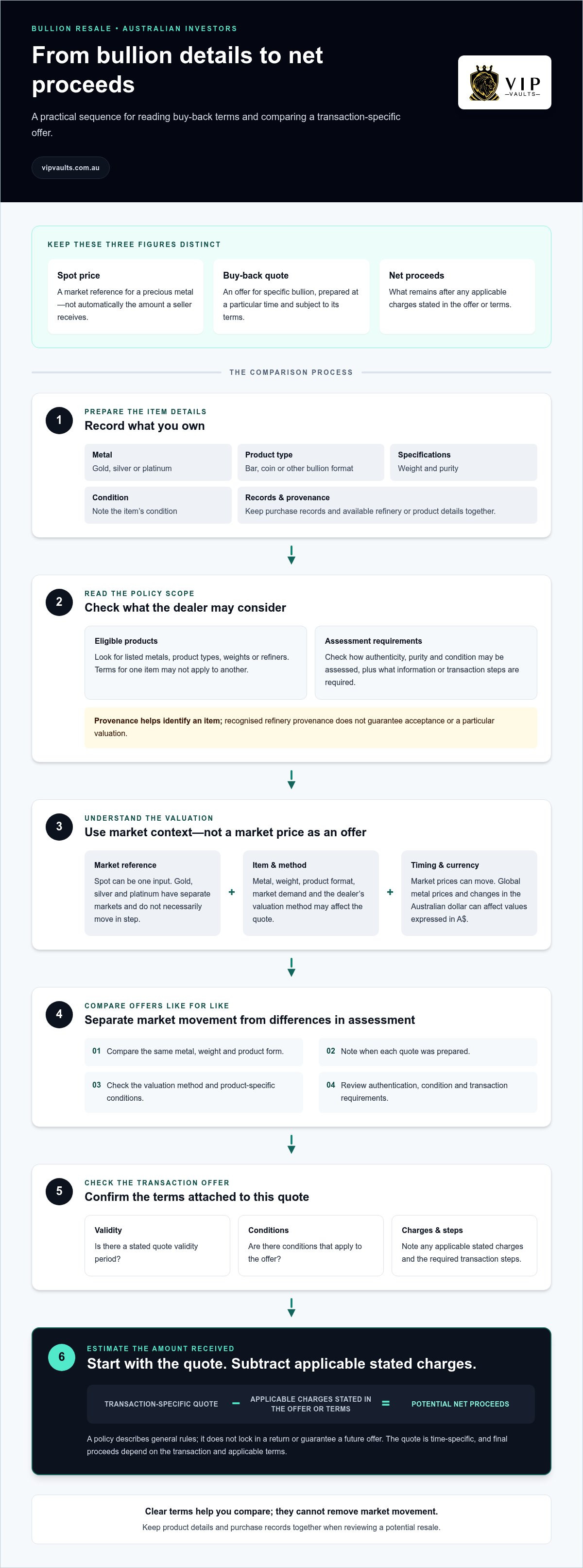

The highest advertised buy-back rate may not leave you with the most money. For Australian investors, understanding bullion buy-back policies means looking beyond the headline figure to see how a dealer calculates a quote and what could affect the amount you receive.
A spot price is a market benchmark, not necessarily the price a dealer will offer for your bullion. The final quote may reflect the dealer’s pricing method, product eligibility, condition or other stated terms. Comparing offers means checking these details as well as the figures.
This guide explains the difference between spot prices and buy-back quotes, and how to compare potential net proceeds. You’ll also learn what to record before seeking a valuation, including the bullion’s metal, product type, weight, purity, condition and available provenance details. If you’re considering physical gold, silver or platinum, reviewing resale considerations alongside live market pricing can help you make a more informed purchase decision.
Key Takeaways
- Separate a dealer’s buy-back rules from its current quote, which may change as market conditions shift.
- Compare eligible products, authentication and condition requirements, quote validity, valuation methods and transaction steps.
- Estimate net proceeds by subtracting any applicable charges stated in the offer or terms.
- Understanding bullion buy-back policies can help you consider resale alongside the purchase of gold, silver or platinum bullion.
- Keep product and purchase records together. Recognised refinery provenance can help identify an item, but it doesn’t guarantee acceptance or a particular resale value.
Understanding bullion buy-back policies: what the terms actually cover
A bullion buy-back policy sets out the terms under which a dealer may purchase bullion from an owner. It describes the framework for a potential sale, not a promise to buy every item or pay a particular amount. Understanding bullion buy-back policies before purchasing can help you identify which product details and sale conditions may matter later.
Bullion includes physical precious metals such as bars and coins. The overview What is Bullion? can help distinguish bullion from other precious-metal products. That difference matters because a dealer’s terms may apply to specific bullion products or specifications rather than every item containing gold or silver.
What does a bullion buy-back policy usually explain?
Policies differ between dealers. Depending on the terms, they may explain:
- Which metals, product types, weights or refiners may be considered.
- How authenticity, purity and condition are assessed.
- How the valuation is calculated, including any market reference used.
- What information or steps are required to complete a transaction.
These details can affect whether an item meets the stated criteria and how its value is assessed. Read the terms for the specific product rather than assuming a rule for one item applies to another. Keep purchase records and product details together so you can describe what you own when comparing the policy with your bullion.
Policy terms are also different from a transaction-specific offer. A policy sets out general rules, while a quote relates to the item or items being assessed at a particular time. Check whether the quote has a validity period or other conditions, and note those alongside the quoted amount. If the offer is time-limited, treat it as time-sensitive.
How does a buy-back price differ from the spot price?
The spot price is a market reference for a precious metal. It is not automatically the amount a seller will receive. Market-linked pricing in Australia is expressed in Australian dollars and can move with global market conditions. A dealer may use spot as one input when valuing bullion, but the product and the dealer’s valuation method can also affect the quote.
For example, a dealer’s terms may assess a bullion bar differently from a coin. The metal, weight, purity, condition and ability to verify the item may also be relevant. The specific effect depends on the terms and transaction. A live market price provides useful context, but it isn’t itself a buy-back offer.
The spot price is a market reference; a buy-back quote is an offer for specific bullion at a particular time; final proceeds are what remains after any applicable stated charges. A policy doesn’t lock in returns or guarantee resale value. Clear terms can explain the process, but they can’t remove market movement or ensure a future offer will match your expectations.
How bullion buy-back prices are formed: spot, product and market factors
A buy-back quote is shaped by more than the metal’s market value. The dealer’s pricing method, the bullion’s characteristics and precious-metals market conditions can all influence the amount offered. Understanding bullion buy-back policies means considering these factors alongside the written terms, rather than treating a live market price as a sale price.
Gold, silver and platinum have separate markets and don’t necessarily move in step. A change in one metal’s value doesn’t mean the others will move by the same amount or in the same direction. Currency movements also matter: global metal prices are commonly referenced in other currencies, so changes in the Australian dollar can affect their value when expressed in A$. This is context for interpreting a quote, not a way to predict future prices.
A live market price can help you understand current conditions, but it isn’t a guaranteed buy-back quote or a promise of final proceeds. Use an Australian gold price reference as market context, then assess any transaction-specific offer on its own terms.
Which factors can change a bullion buy-back quote?
Timing matters because market prices can move between checking a reference price and receiving or accepting an offer. A quote may reflect conditions at a particular time and be subject to stated validity terms. Metal and weight establish the quantity being valued, while product format, market demand and the dealer’s pricing method may also affect the amount. Check the policy or quote for the valuation method and transaction requirements that apply.
To understand a figure, compare like with like. Record the metal, weight and form, note when each quote was prepared, and read the conditions attached to it. This helps distinguish movement in the underlying market from a difference in how an item was assessed. Transparent live pricing can provide market context, but it shouldn’t be mistaken for a buy-back offer.
Do coins and bars receive the same treatment?
Not necessarily. A dealer’s terms may treat product formats differently, and the criteria can vary. Recognised refinery provenance can help identify a product, but it doesn’t guarantee acceptance or a particular valuation. Keep packaging and purchase records where available, then compare the product details with the stated terms. For background on format considerations, see this guide to Australian gold coins and bars.
When reviewing a quote, consider the metal, product details and timing together. Assess the current offer independently rather than relying on a general market figure.
If you’re assessing physical gold or silver, compare market context with product information and the relevant terms before making a decision. Explore gold and silver bullion as part of that considered approach.
How to compare bullion buy-back policies beyond the headline price
A useful comparison looks at the whole transaction, not just the displayed buy-back rate. A quote can appear attractive but leave questions about which products qualify, how an item will be assessed, or what happens between acceptance and payment. Separate written terms from assumptions. If a condition isn’t stated, don’t treat it as a universal rule.
Use a table to compare the same points across the terms you’re reviewing. Record what is confirmed in writing, what applies to your bullion and what remains unclear. This gives you a practical reference when assessing a quote or deciding whether a transaction suits your needs.
| Criteria | Policy question to resolve | Possible effect on the seller |
|---|---|---|
| Eligible products | Are the relevant metal, bars or coins, weights and refiners covered? | An item outside the stated criteria may not qualify under those terms. |
| Authenticity and condition | How are authenticity, purity, packaging and condition assessed? | Assessment requirements can affect eligibility or valuation. |
| Valuation method | What reference and method are used to calculate the offer? | Helps explain how the quoted amount is determined. |
| Quote validity | Is the offer time-limited, and what happens if it expires? | A later quote may differ if market conditions change. |
| Charges and delivery | Are any charges stated, and who arranges or pays for delivery? | These terms may affect net proceeds and transaction convenience. |
| Identity and settlement | What identification is required, and how and when is payment made? | Clarifies the steps and timing involved in completing a sale. |
Compare the full transaction terms, not one displayed price. A side-by-side review can show whether offers are genuinely comparable. For example, different quote validity periods or delivery arrangements can affect timing and practical steps, even when the displayed figures look similar. Keep each detail beside the offer it applies to, and don’t fill gaps with assumptions.
What eligibility and product-condition rules should you compare?
Look for distinctions between bars and coins, metals, packaging and condition. Terms may describe how authenticity is verified or whether provenance information is relevant, but requirements vary. Note any stated exceptions, product limits or assessment conditions beside the items they affect. Recognised provenance doesn’t guarantee acceptance, and a rule for one product may not apply to another.
Which fees, quote limits and settlement terms matter?
Look for stated charges, quote expiry, shipping responsibility and settlement arrangements. Don’t assume these are standard across dealers. If delivery responsibility is unclear, you may not be able to calculate the full cost or plan the transaction confidently. Keep unclear points separate from confirmed terms, then compare the written information consistently.
Reviewing these details before buying can make future resale considerations easier to assess. View gold and silver bullion with product details and potential resale terms in mind.
How to estimate net proceeds and prepare bullion for resale
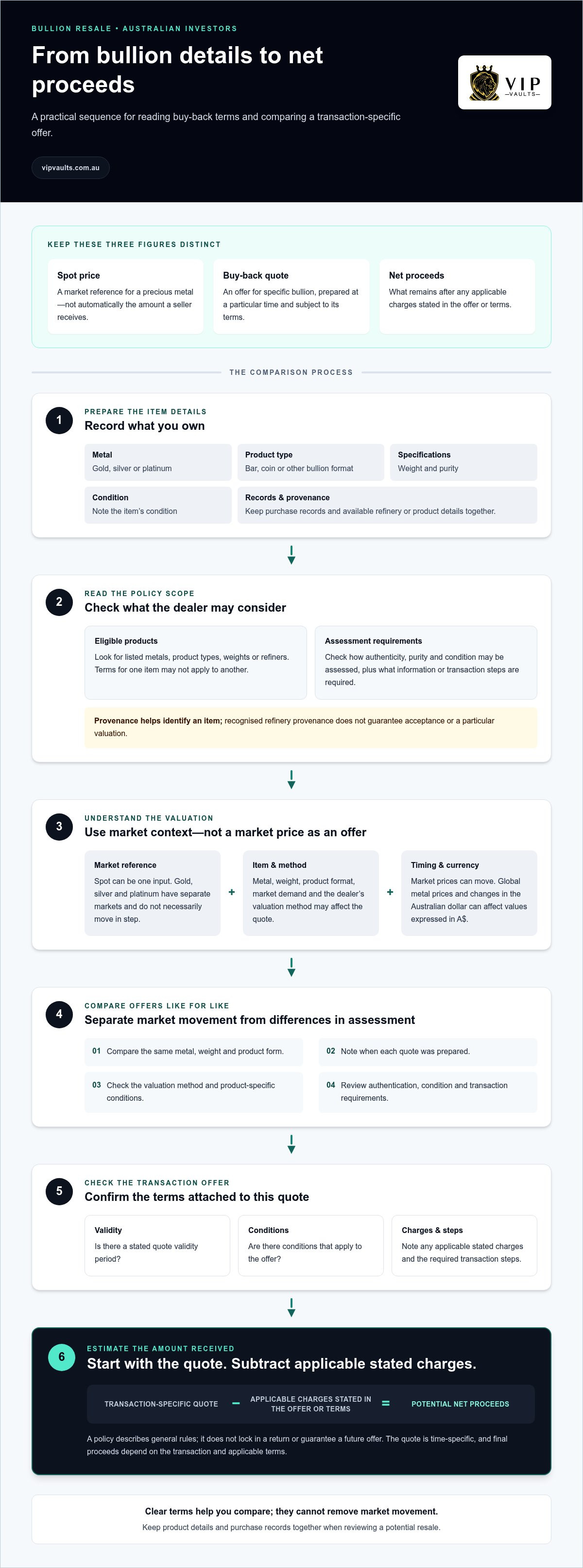
A current quote is only one part of the picture. To estimate what you may receive, identify what you hold, review the relevant terms and account for charges explicitly stated in the offer. This makes understanding bullion buy-back policies practical and helps you compare a potential sale with your records, without treating the estimate as a forecast.
- Identify each product. Record the metal, format and weight, and gather any available purchase or provenance documents.
- Review the applicable terms. Check eligibility, authentication and condition requirements, along with any stated transaction steps.
- Obtain a current quote. Make sure it relates to the specific items you intend to sell. Record when it was provided and any validity conditions.
- Compare estimated net proceeds. Subtract applicable stated charges from the quoted amount, then consider the result alongside your purchase records.
Estimated net proceeds = quoted amount − applicable stated charges. Include only charges that the terms or offer specify. If a cost or condition is unclear, don’t assume it is zero or apply a charge that hasn’t been stated. Keep the calculation in Australian dollars and record the quote date so you can distinguish the offer from a later market reference.
What information should you assemble before seeking a valuation?
Prepare a simple inventory for each item. Note its metal, product format and weight, then gather any purchase receipt, certificate or provenance record you have. If the relevant terms refer to packaging or condition, note those details too. An organised record helps you describe the bullion consistently and identify which assessment criteria apply.
Keep documents together, but don’t assume that missing paperwork automatically prevents a sale. Requirements vary, and the stated terms determine what information is relevant. Avoid cleaning or altering an item, or separating its packaging, solely to change its appearance. First review whether condition or packaging is mentioned in the terms.
How can you compare an offer with your original purchase?
Place the original purchase amount beside the current quote and list applicable stated charges separately. This shows the difference between the amount paid and estimated proceeds without mixing in transaction costs. Market-price movements and product-specific valuation are separate influences, so simple subtraction won’t explain every change in value or establish what a future sale might return.
Retain the quote, purchase records and any transaction documents together. They give you a clear record of the figures and terms used in your comparison. For questions about the tax treatment of a disposal, consult current Australian Taxation Office (ATO) information or a qualified adviser. This section isn’t tax advice.
Reviewing bullion options alongside product details and documentation can support a more informed purchase. Explore gold and silver bullion as you consider how each item fits your ownership plans.
Use clear buy-back terms to plan your bullion ownership strategy
A considered bullion ownership plan accounts for more than the purchase. Before acquiring physical metal, understand the product, read the relevant terms, consider how you might compare net proceeds later and keep useful records. This makes understanding bullion buy-back policies part of informed ownership without assuming a future quote or resale outcome.
- Understand the product: record its metal, format, weight and available provenance details.
- Read the terms: note eligibility, assessment requirements and any transaction conditions.
- Compare net proceeds: assess a current, item-specific quote alongside applicable stated charges.
- Retain records: keep purchase documents, product information and transaction records organised.
These steps won’t fix a future price or guarantee that a particular item will be accepted. They give you a clearer basis for reviewing the information available when you buy or sell. VIP Vaults & Bullion Exchange Perth provides transparent live pricing linked to global markets, offering context when considering gold and silver bullion. Live pricing is not a buy-back quote and doesn’t promise a particular resale value.
What role does refinery recognition play in resale planning?
Recognisable provenance can help you identify a bullion product and understand where it was sourced. VIP Vaults & Bullion Exchange Perth sources bullion from recognised refiners, including LBMA-accredited manufacturers. Keep any supporting product information with your purchase records so you can refer to it later. Refinery recognition can aid identification, but it doesn’t guarantee that a future buyer will accept an item or offer a particular price.
Provenance is one useful detail among several. The relevant terms, product characteristics and market conditions still shape an eventual valuation. Treat provenance as part of your records and purchase context, not as a promise of future liquidity or value.
How should storage fit into a bullion ownership plan?
Storage and resale terms address different decisions. A private vault rental or bullion locker can be considered separately as an option for storing physical assets. Storage doesn’t determine a buy-back price or override conditions that may apply to a future transaction. Keep your inventory and purchase records organised alongside your storage arrangements so you can find the information you need when reviewing your holdings.
For a separate overview of secure storage, explore private vaults in Australia. Consider how storage fits your ownership needs independently from pricing and resale eligibility.
Clear records, careful reading and realistic expectations can make bullion ownership easier to manage. Explore VIP Vaults bullion and storage with your product and storage needs in mind.
Make your next bullion decision with clarity
Before your next purchase, consider how you’ll identify, document and store the bullion you own. A simple record kept from the outset can make future comparisons more straightforward. Understanding bullion buy-back policies isn’t about predicting what you’ll receive later. It’s about knowing which terms and details to review when the time comes.
Use market-linked live pricing as a reference point, not a promise of a future buy-back amount. Recognised refinery sourcing, including LBMA-accredited manufacturers, can help you understand a product’s provenance, but it can’t guarantee acceptance or resale value. Keep those distinctions in view as you assess your options.
VIP Vaults & Bullion Exchange brings together bullion and storage options for Australian owners. Explore VIP Vaults bullion and storage to take a considered next step, with greater clarity around the assets you choose to hold.
Frequently Asked Questions
Is a bullion buy-back price the same as the spot price?
No. Spot is a market reference, while a buy-back price is an offer for particular bullion under a dealer’s terms. For example, two quotes for the same weight may differ if they use different valuation methods or were issued at different times. Check each quote’s date, conditions and stated charges before comparing it with a market reference or using it to plan a sale.
Can I sell bullion if I do not have the original packaging?
The relevant policy determines whether packaging matters. A dealer may assess an item’s type, condition or authenticity, so don’t assume that missing packaging automatically rules out a sale or has no effect. Before seeking a valuation, record the metal, format and weight, and gather any purchase receipts, certificates or provenance records you still have. Describe the item accurately rather than trying to alter its appearance.
How much will a dealer pay for my bullion?
There’s no single amount that applies to every item or transaction. A current valuation may depend on the metal, weight, format, market conditions and the dealer’s method. Stated charges can also affect the amount you retain. To apply understanding bullion buy-back policies in practice, request a quote for the specific items you hold and record its date and conditions. A general spot-price figure isn’t a transaction offer.
What happens if the market price changes after I receive a quote?
The quote’s written terms determine how a later market change affects the offer. Check whether it has an expiry or depends on completing a stated step within a specified period. If it has expired or no longer applies, obtain a fresh valuation before planning around the earlier figure. Keep both quotes if you receive an update so you can compare their conditions and market timing.
Are buy-back policies the same for gold, silver and platinum?
No. Terms can differ by metal and product format. A policy covering a gold bar shouldn’t be assumed to apply to a silver coin or platinum product. Read the criteria against the exact items you own, including any stated limits or assessment requirements. If you’re seeking valuations for several metals, keep each product’s details separate so the offer and applicable terms are clear.
Do I need to pay tax when I sell bullion in Australia?
Tax treatment depends on your circumstances and the transaction details, so a simple comparison of purchase and sale figures can’t determine your position. Keep records of purchase costs, sale proceeds and relevant transaction documents. For guidance specific to you, refer to current Australian Taxation Office information or consult a qualified tax professional. This answer is general information, not tax advice.
Does buying bullion from an LBMA-accredited refiner guarantee a future buy-back?
No. Refinery recognition can help you identify a product’s origin, but it doesn’t ensure a dealer will accept it or offer a particular amount. Keep the item’s identifying details and any provenance documents with your purchase records, then compare them with the terms that apply at the time of sale. Treat recognised origin as useful product information, not a guarantee of eligibility, price or future resale.