
A strong legacy plan isn’t built on precious metals alone. Building a legacy with precious metals means considering physical gold or silver alongside other assets, not treating bullion as a guaranteed way to preserve wealth. The aim is to include a tangible holding within a broader plan for the future.
It’s understandable to value assets that can be held, recorded and passed on. Physical gold and silver can form part of an estate and may be transferred to beneficiaries, but they also raise practical questions about value, storage and how family members will know what they’ve inherited.
This article explains why families may include precious metals in long-term wealth planning and how gold and silver differ, including silver’s industrial demand and typically lower value per ounce. You’ll also learn how to consider bullion alongside property, equities and superannuation, and why secure storage, clear records and estate planning matter when assets are intended for future generations.
Key Takeaways
- Compare gold’s compact value with silver’s industrial demand and lower value per ounce when considering which metal may suit your family’s needs.
- Treat bullion as one part of a broader wealth plan, alongside assets such as property, equities and superannuation.
- Plan secure storage with access, insurance and the space your holdings require in mind.
- Keep clear records of each holding, where it is stored and how you intend it to pass to beneficiaries.
- Discuss the role of inherited metals with family and include them in broader estate planning.
Gold or silver for future generations?
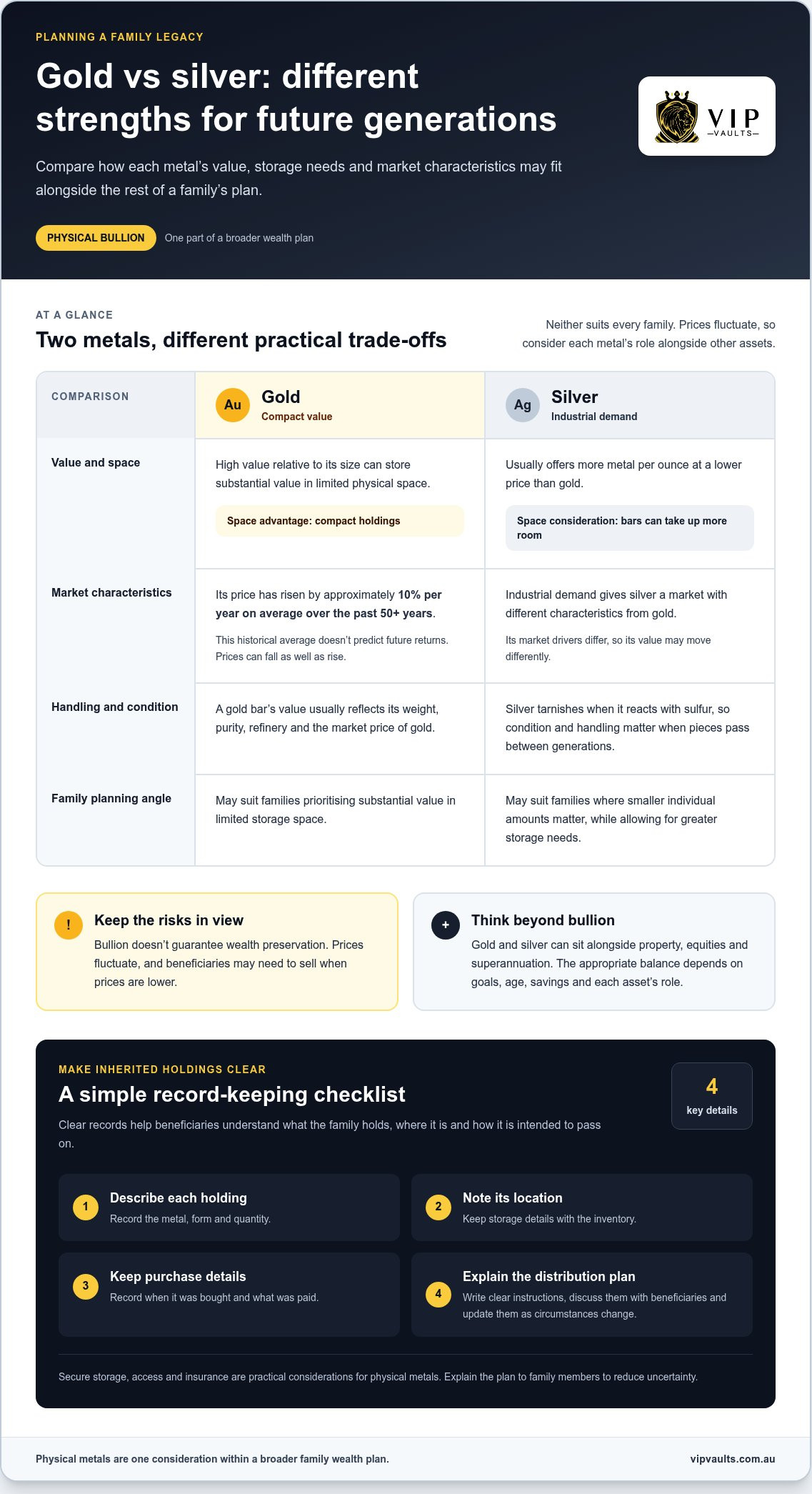
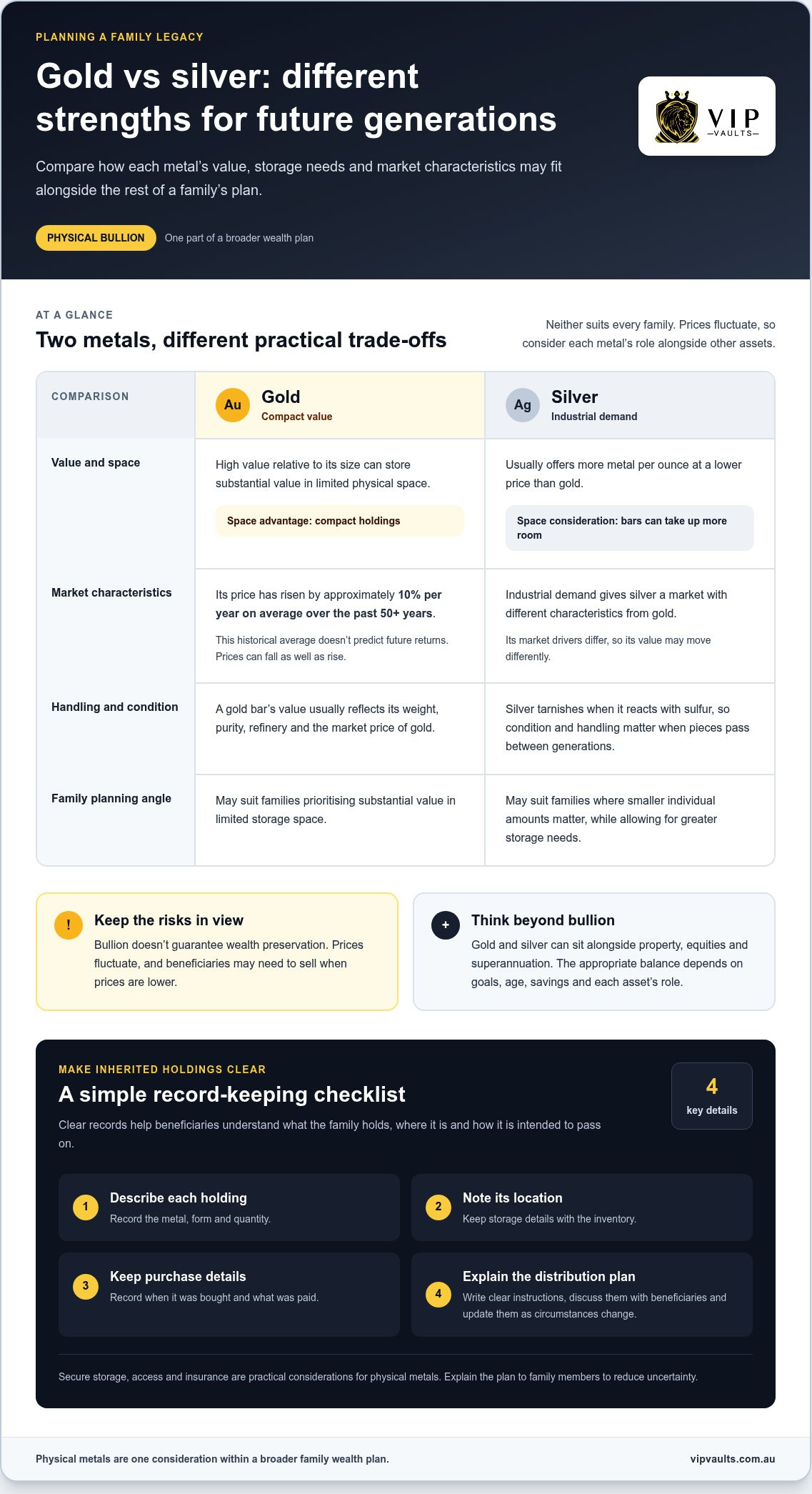
Gold and silver are the precious metals most commonly included in portfolios, while platinum and palladium are also major options. Neither suits every family: prices fluctuate, so compare each metal’s characteristics with your goals and the role it would play alongside other assets.
Gold’s role in long-term wealth preservation
Gold is a physical asset that families may include as one part of long-term wealth planning. Its price has risen by approximately 10% per year on average over the past 50+ years, but that historical average doesn’t predict future returns. Prices can fall as well as rise, so families should consider whether they could hold through market changes or might need to sell at a particular time. This distinction matters when beneficiaries may have different financial needs.
Comparing gold and silver for future generations
Gold’s high value relative to its size can store substantial value in limited physical space. Silver usually provides more metal per ounce at a lower price than gold, and industrial demand gives its market different characteristics. A family might prefer compact gold holdings when storage space is limited, or silver when smaller individual amounts matter. Silver also tarnishes when it reacts with sulfur, so condition and handling matter when passing physical pieces between generations.
Building multi-generational wealth with precious metals
Multi-generational wealth can include physical metals held by a family and transferred to beneficiaries. For families building a legacy with precious metals, clear records make ownership easier to understand: describe each item, note its location and explain how it is intended to pass on. Families may build holdings over many years, then review the collection as goals change. A gold bar’s value usually reflects its weight, purity, refinery and the market price of gold.
Precious metals and inheritance planning risks
Key risks include fluctuating market values, storage needs and confusion over ownership or distribution. Gold, silver, platinum and palladium don’t guarantee wealth preservation, and beneficiaries may need to sell when prices are lower. Silver’s industrial demand also means its market drivers differ from gold’s. A deliberate approach to building a legacy with precious metals includes recording each item, where it is stored and who should receive it. Explain the plan to family members to reduce uncertainty.
- Record each holding’s metal, form, quantity and location.
- Keep purchase details with the inventory.
- Write clear instructions for intended distribution.
- Discuss the plan with beneficiaries and update it as circumstances change.
Why build a legacy with precious metals?
Physical bullion gives families a tangible asset, unlike ETFs, mining shares and precious metals funds, which provide investment exposure through financial products. Australians can buy bullion from a reputable dealer and check each item’s weight, purity, refinery, condition and format before purchase.
Bullion as a tangible, transferable asset
Bullion is physical gold or silver held directly, which gives families an asset they can identify and transfer. Gold and silver bullion usually has a purity of at least 99.5%. Keep purchase records with each item’s weight, purity and refinery details. This structure helps beneficiaries understand what they have inherited, rather than relying on a general description such as “family gold”.
Comparing bullion and other investment options
Bullion means direct ownership of physical metal, while ETFs and precious metals funds provide exposure through investment products. Mining shares represent ownership in companies, so their value can also respond to business performance and operating conditions. These options serve different purposes. Unlike physical bullion, a fund or shareholding isn’t a specific bar or coin a family can hold and transfer as an individual object. Review the structure and risks of each holding as part of the wider plan.
Storing and insuring physical metals
Physical ownership brings practical responsibilities: bullion needs secure storage, and insurance can help address potential loss or damage. A home safe, safe deposit box or designated vault are storage options. Avoid keeping large amounts at home, where the risk of loss can increase. Also review home insurance, as a policy may exclude precious metals or cover only part of their value. Silver bars need particular space planning because they can take up more room than gold bars and coins.
Buying physical bullion safely in Australia
Buy from a reputable bullion dealer and assess the item before adding it to your holdings. Compare its weight, purity, refinery, condition and format with your records. Consider whether a bar or coin better suits your family’s storage and transfer plans. A gradual approach can spread purchases over time rather than putting all the emphasis on choosing one ideal buying moment. Retain purchase details to support future identification and estate planning.
For each purchase, record when you bought it, what you paid and where it is stored. Keep the inventory and distribution instructions clear enough for family members or executors to follow. If you hold bullion outside the home, a bullion locker storage arrangement can form part of your storage plan.
Balancing bullion with property, equities and superannuation
Physical bullion can sit alongside property, equities and superannuation as one part of a broader financial plan. The appropriate balance depends on goals, age, savings and the role each asset serves.
Australian laws and reporting requirements depend on the transaction and ownership circumstances. Keep records of purchases, sales, dates and amounts, and include tax and legal considerations in your estate planning.
Costs can include the bullion’s purchase price, storage and insurance, as well as costs associated with selling. The metal’s market price and storage arrangement affect the overall cost.
Australians can store metals at home or in a designated facility, and should consider insurance and clear inheritance instructions. Record the storage location and explain how the assets are to be passed to heirs.
Balancing bullion with other assets
Balancing bullion means choosing its role beside other assets, rather than treating it as a replacement for them. One market recommendation suggests allocating 5-15% of total assets to physical bullion; another describes expert guidance of roughly 5% to 25% of a portfolio. These ranges differ, so they are not a universal formula. Property, equities and superannuation have distinct roles, and an allocation should reflect personal goals, age and savings.
Including bullion in wills and estate planning
Including bullion in estate planning means documenting ownership and giving clear instructions for distribution. Physical gold and silver can form part of an estate and may be transferred to beneficiaries. A will and succession documents can identify vault contents, box numbers, facility contact details and inventory sheets. A solicitor or estate-planning professional can advise on how bullion fits into the will and estate plan. Discussing the arrangements with heirs can also explain the metals’ value and intended management.
Maintain a record for every purchase. Note what you bought, when you bought it, what you paid and where it is stored. An inventory should describe each item and its location, so an executor can distinguish a silver bar from other possessions. Update the records when holdings move or ownership changes. Keep the inventory and distribution instructions accessible to the people responsible for administering the estate.
Storage affects both security and inheritance logistics. A home safe keeps an asset physically close, while a designated vault separates storage from the household. Consider whether insurance covers the metals and whether the policy’s limits match their value. If heirs cannot locate or identify the bullion, clear documentation can help prevent confusion and disputes. Discussing the plan with family gives beneficiaries context before they need to manage or distribute the assets.
Professional advice can help families assess tax implications and legal requirements alongside investment decisions. A qualified solicitor or estate-planning professional can explain how ownership, beneficiaries and distribution instructions interact. Review the plan as circumstances or goals change, and ensure records reflect current holdings rather than an earlier inventory.
Home storage compared with professional vault storage
Home storage keeps physical gold close, while a private vault separates holdings from the household. The right arrangement depends on security, insurance, access and whether family members can locate the assets later.
Using professional vault storage
Private vault storage places bullion in a dedicated facility rather than a home safe. It can suit families who want physical holdings stored away from their residence, particularly as purchases grow or silver bars require more room. Home storage offers personal proximity, but the owner is responsible for the safe, its location and household access. Consider which arrangement best supports your family’s security and inheritance plans.
Think through practical access before choosing. A home safe may be convenient for the owner, but heirs need to know where it is and how its contents are identified. A separate facility adds a location to document in the estate inventory. Record the facility details and relevant storage identifiers with the bullion records, so an executor can connect the holding to its location.
Physical weight also affects storage decisions. Silver bars can take more space than gold bars and coins, so a growing silver holding may need a different arrangement from a small gold collection. Before buying additional bullion, consider how much space it will occupy and whether the chosen location can accommodate it. This planning helps prevent holdings from being split across places without a clear record.
Storage security and insurance
Storage security means reducing the chance that bullion is lost, stolen or damaged, while insurance addresses financial exposure from covered events. A home insurance policy may not cover precious metals, or may cover only part of their value. Review policy wording against the type and value of your holdings, and keep purchase records and an inventory with your estate documents.
At home, limit knowledge of the safe’s location and keep access arrangements clear for authorised family members. Avoid placing bullion where visitors can easily see it or household routines expose it. For a designated facility, keep its location and relevant account or box details in a secure record that executors can access. A storage choice supports an inheritance plan only if trusted people can identify the assets.
Review storage whenever the collection changes. A new gold bar, silver coin or jewellery item can alter the space required and the total value insurance should address. Update the inventory after buying or moving an item, and note whether it is bullion, jewellery or another asset. Clear records also help beneficiaries understand what exists without searching multiple rooms or containers.
For families comparing home and vault arrangements, weigh proximity against separation from household risks. Neither choice removes the need for an insurance review, accurate records and a documented location. Those details protect the practical value of physical holdings and help the next generation find them.
Reasons families may include precious metals in long-term wealth planning
For some families, building a legacy with precious metals is a way to include a tangible asset in a wider plan for transferring wealth. Physical bullion can be held directly and may pass between generations. Its purpose is not to guarantee growth, but to give family members a clearly identifiable asset with a recorded place in the estate plan.
A holding can also create an opportunity to explain financial choices across generations. Parents might discuss why they acquired a particular gold bar or silver coins, what role those items serve and how they expect beneficiaries to manage them. This conversation gives heirs context rather than leaving them to infer the meaning of an unfamiliar asset after an inheritance.
Different metals can suit different practical needs. Gold’s high value relative to its size can make it more compact to store, while silver’s lower value per ounce can make smaller individual amounts possible. Families considering several beneficiaries may weigh divisibility against the space required to store each holding. The right format depends on how the family intends to manage and distribute its assets.
Precious metals also have distinct considerations compared with property, equities and superannuation. Bullion doesn’t generate income in the way some other assets can, and its market value fluctuates. Families should consider liquidity needs, time horizons and the purpose of each asset. Building a legacy with precious metals works best as one considered part of a broader wealth plan, not as a substitute for diversification.
Some families accumulate physical holdings progressively over many years. This approach creates natural points to review purchasing decisions and discuss whether bullion still suits changing priorities. Regular reviews are practical: family circumstances, intended beneficiaries and storage arrangements may change, so the plan should keep pace.
Clear records help turn an intention into an arrangement future generations can follow. Maintain an inventory identifying each item, its owner and where it is stored. Add distribution instructions to estate planning documents, and explain the arrangements to intended beneficiaries. A family member who knows what to look for and where to find the records is better placed to manage an inherited holding responsibly.
Before adding or retaining bullion, consider the contribution each item makes to the family’s plan. Gold may prioritise compact storage, while silver may offer more divisible holdings. Compare those practical features with the roles of other assets, then review the plan as family goals evolve. The lasting value of an inheritance depends partly on how clearly the next generation can understand and manage it.
Families planning how bullion will be held and passed on can explore secure bullion storage options as one part of their arrangements.
VIP Vaults & Bullion Exchange Perth: Private Vault Rental
VIP Vaults & Bullion Exchange Perth offers Private Vault Rental for families seeking a dedicated place to store physical bullion as part of a long-term legacy plan. Bullion Lockers are another option for holding precious metals. These storage options can suit owners who prefer not to keep their gold or silver at home, while maintaining clear records of what is stored and where.
Families can also purchase Gold Bullion and Silver Bullion through VIP Vaults & Bullion Exchange Perth. Consider how the metal, storage arrangement and inheritance records work together, so future beneficiaries can identify the holdings and understand their intended role.
For a conversation about Private Vault Rental or bullion, contact VIP Vaults & Bullion Exchange Perth.
Make your family’s intentions clear
A lasting plan is easier for the next generation to follow when it connects ownership with purpose. As you continue building a legacy with precious metals, decide what you want beneficiaries to understand about the assets, how they fit your family’s intentions and who should know where the relevant records are kept. These conversations can turn an inherited holding into a considered responsibility, rather than an unexpected item to manage.
For the practical side of holding physical bullion, VIP Vaults & Bullion Exchange Perth offers Private Vault Rental and Bullion Locker options, as well as Gold Bullion. These offerings can support families considering how to hold bullion within a longer-term plan.
Take the next step by discussing your storage or bullion needs with VIP Vaults & Bullion Exchange Perth. Contact VIP Vaults & Bullion Exchange Perth to begin a considered conversation about your family’s plans.
Frequently Asked Questions
Can gold and silver be passed on as an inheritance?
Yes, physical gold and silver can form part of an estate and be transferred to beneficiaries. Make the transfer easier to administer by recording who owns each item and describing it clearly, such as “silver coins in the labelled case”. Keep this inventory with estate records and tell the executor where it is held. A solicitor can help address bullion in a will and related estate documents.
How should precious metals be stored for the long term?
Choose storage that fits the collection’s size, security needs and intended access. A home safe keeps items nearby, while a dedicated vault separates them from household possessions. For example, record the location of a gold coin collection separately from the documents identifying its contents. Review insurance wording and update the inventory whenever an item moves, is sold or is added. Ensure your executor can locate the instructions.
Is gold or silver better for passing on to family?
Neither metal is automatically better for every family. Gold stores higher value in less physical space, while silver’s lower value per ounce can make it easier to divide into smaller amounts. Consider how beneficiaries will receive and manage the assets. A family with several heirs might value divisible holdings; someone prioritising compact storage might prefer gold. Include the form and location of each item in inheritance records.
Is gold suitable for building generational wealth?
Gold can form part of a long-term family wealth plan, but it isn’t a guaranteed way to preserve or grow wealth. Its market price fluctuates, and physical bullion doesn’t replace income-producing or diversified assets. Consider the purpose of holding gold, how it fits with the family’s other assets and how beneficiaries would manage it. Clear ownership and distribution arrangements help keep its role understandable across generations.
Should you tell your family about your bullion?
Yes, tell the people who need to manage or inherit it, while keeping details discreet. Explain what the bullion is, where its records are held and who should be told if you can no longer manage your affairs. For example, give your executor a secure inventory location rather than relying on memory. A family conversation can also clarify who is intended to receive each holding and reduce uncertainty later.
How can Australians build generational wealth with gold and silver?
Australians can approach this gradually by defining bullion’s role within a wider plan, then keeping consistent purchase and ownership records. Record the metal, item description, purchase date and storage location. Review holdings as family goals change, and document how assets are intended to pass to beneficiaries. Discussing the plan with family helps them understand both the practical responsibilities and the reason for including physical metals in the estate.