
A metal investment can track the gold price without putting bullion in your hands. The benefits of holding physical metal over paper include owning tangible gold or silver directly, rather than relying on an issuer for exposure to its price. Physical bullion comes as bars or coins; paper metals, such as exchange-traded funds and unallocated accounts, provide price exposure without the same direct possession.
It’s sensible to weigh convenience against ownership. Paper products can be quicker to trade, while physical bullion gives you control over how the metal is held and avoids some risks tied to a financial counterparty. Direct ownership also brings practical considerations, including secure storage and selling.
This guide compares physical bullion and paper metals in terms of ownership, counterparty risk and liquidity when selling. It explains where each option may fit different investment goals, and why the right choice depends on whether you prioritise holding the metal itself or accessing price movements through a financial product.
Key Takeaways
- Identify whether direct possession of bullion or convenient exposure to metal prices better suits your investment priorities.
- Weigh potential issuer risk alongside the practical responsibilities of storing and insuring physical bullion.
- Consider how quickly you may need access to funds, as selling physical metal can involve different steps from trading paper assets.
- Use the decision guide to match your goals with an appropriate option, including secure storage for bullion you own.
What are the advantages of owning physical gold?
Physical gold and silver put actual bullion in your possession, while paper gold tracks metal prices without the same direct ownership. Storage, insurance, transport and liquidity are practical trade-offs for that control.
Privacy and Control Over Storage
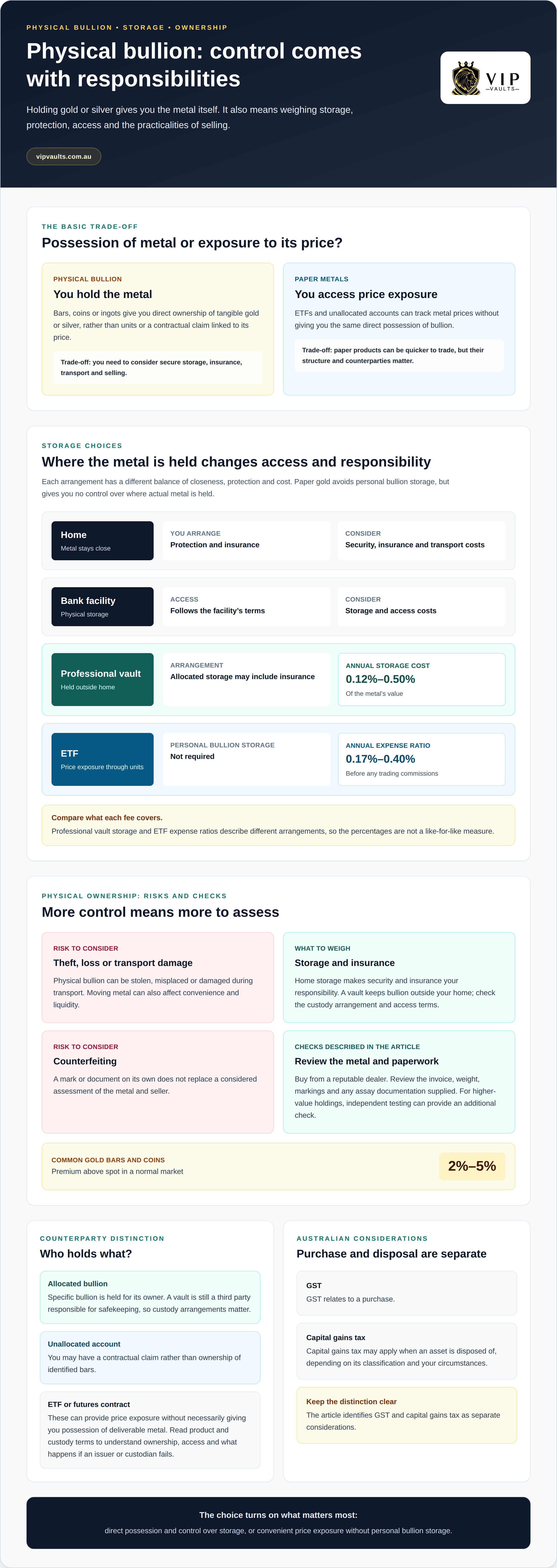
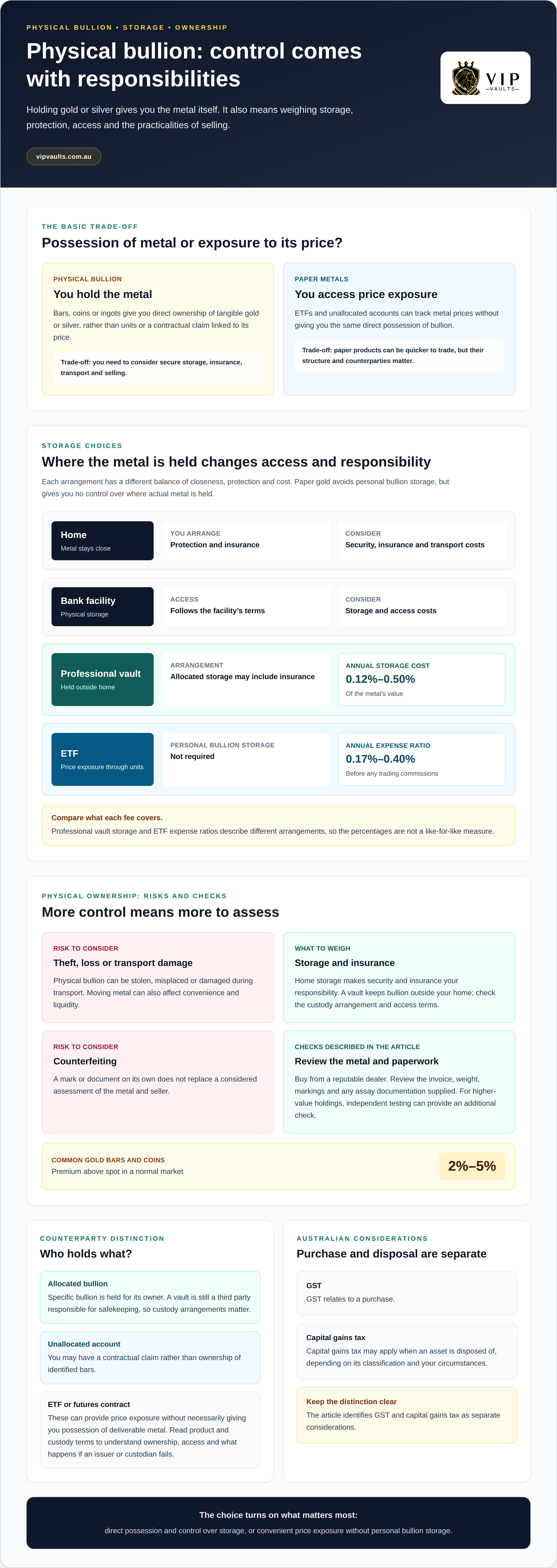
You can store physical bullion at home, in a bank safe-deposit facility or in a private vault. Each option affects access, privacy and protection. A vault keeps bullion outside your home; home storage keeps it close but makes security and insurance your responsibility. Paper gold avoids physical storage, but also gives you no control over where actual metal is held.
Professional allocated vault storage typically costs 0.12% to 0.50% of the metal’s value annually, often including insurance. Major gold ETFs often charge annual expense ratios of 0.17% to 0.40%, before any trading commissions. These figures describe different arrangements, so compare what each fee covers.
Theft, Loss and Counterfeiting Risks
Physical ownership brings risks that a paper holding doesn’t: bullion can be stolen, misplaced or damaged during transport. Storage and insurance add costs, while moving metal can affect convenience and liquidity. Counterfeiting is another concern, so examine the bullion and its documentation before purchase. Common gold bars and coins often carry premiums of 2% to 5% above spot in a normal market.
To assess authenticity in Australia, buy from a reputable dealer and review the invoice, weight, markings and any assay documentation supplied. For higher-value holdings, independent testing can provide an additional check. No single mark or document replaces a considered assessment of the metal and seller.
In Australia, GST and capital gains tax are separate considerations. GST relates to a purchase, while capital gains tax may apply when an asset is disposed of, depending on its classification and your circumstances.
| Option | Storage and insurance | Control and access | Cost consideration |
|---|---|---|---|
| Home | Owner arranges protection | Metal stays close | Security, insurance and transport |
| Bank facility | Physical storage arrangement | Access follows facility terms | Storage and access costs |
| Professional vault | Allocated storage may include insurance | Metal is held outside home | 0.12% to 0.50% annually |
| ETF | No personal bullion storage | Price exposure through units | 0.17% to 0.40% annual expense ratios |
Choose home, bank or vault storage if possession matters most. Consider paper exposure if avoiding physical storage is your priority.
Counterparty risk
Counterparty risk arises when an investment depends on another party meeting its obligations. Physical bullion reduces that dependence, although storage arrangements and financial products can still involve third parties.
Physical Bullion and Paper Metals
Gold or silver held directly is tangible and exists independently of an issuer’s promise. By contrast, an ETF, futures contract or unallocated account may track precious metals without giving you possession of bullion. If an issuer or financial institution becomes insolvent, your claim may be affected. This distinction can matter during a crisis, when confidence in financial counterparties weakens.
Physical ownership does not remove every risk. Theft, loss and difficulty selling can affect your actual holding, while paper assets may be easier to trade. Physical bullion can add a different kind of stability to a portfolio, but it does not guarantee protection from market losses.
Allocated Storage and Counterparty Risk
Allocated storage means specific bullion is held for its owner, rather than the owner having a general claim to metal. This differs from an unallocated account, where you may have a contractual claim rather than ownership of identified bars. A vault remains a third party responsible for safekeeping, so custody arrangements matter. A Bullion Locker is one option for storing physical metal outside your home.
Consider who owes what. With an ETF, you hold units in a structure linked to metal prices; with allocated bullion, your ownership relates to identified metal. Read the product and custody terms to understand ownership, access and what happens if an issuer or custodian fails.
Futures add another layer: they are contracts traded for a specified date, not necessarily ownership of deliverable metal. Leverage can magnify gains and losses because a position’s exposure may exceed the initial funds committed. For example, a small adverse price movement can trigger losses or a margin call. If you want direct ownership, distinguish futures contracts from bullion held in your own name.
To align custody with ownership, choose a Bullion Locker for physical bullion storage rather than relying solely on paper exposure.
Choosing physical bullion or paper metals by investment goal
Choose based on what you want an investment to do: provide direct ownership, convenient trading or both. Physical bullion and paper metals offer different forms of exposure to gold and silver.
Physical Bullion and Direct Ownership
Buying bars, coins or ingots gives you ownership of tangible precious metal. You hold the bullion itself, rather than units or a contractual claim linked to its price. Allocated storage can keep specific metal assigned to you while it is held away from home. This approach may suit investors who value possession and want assets held independently of the financial system.
The benefits of holding physical metal over paper matter most when direct ownership is a priority. An ETF or unallocated account offers price exposure without possession. These products can be easier to trade, but their structure and counterparties shape the rights attached to your investment. An investor seeking exchange-based trading may favour an ETF; someone prioritising ownership may prefer bullion.
Portability and Privacy of Physical Bullion
Coins and smaller bars can be easier to transport than larger bars, but physical metal still needs secure handling. Moving bullion between locations adds practical steps that do not apply when trading ETF units. Direct ownership can offer greater privacy than holding exposure through a financial account, although buying, storing and selling physical metal still involve transactions.
Paper metals are generally more convenient to buy or sell through an exchange, while selling bullion requires finding a buyer and transferring the metal. That difference matters if liquidity is a priority. Physical metal may suit a long-term holding goal; paper products may better match active trading or rapid portfolio adjustments. For investors who value possession over ease of trading, this is another benefit of holding physical metal over paper.
Use this decision guide: choose physical bullion if possession matters most; choose allocated storage if you want identified metal held away from home; consider an ETF or unallocated account if convenient trading and price exposure matter more.
A mixed portfolio can combine these roles. For example, an investor could hold physical silver for direct ownership while using an ETF to adjust price exposure without moving bullion. Weigh the purpose of each position, access requirements and its role in your investment plan.
Liquidity when selling physical bullion
Physical gold and silver can be sold, but converting bullion to cash takes more steps than trading an exchange-listed asset. The gold price provides a reference, while the final offer and settlement depend on the buyer and transaction.
Liquidity and Transaction Convenience
Selling physical bullion usually means arranging a buyer, presenting the metal for assessment and agreeing on the transaction. Trades can take days to settle, while ETF trades typically settle in T+2 days. Futures and unallocated accounts can offer exchange-based trading, but they represent different interests from selling metal in your possession.
Before selling, gather purchase records and any relevant product documentation, then clarify how the buyer will assess and pay for the bullion. Common gold bars and coins often carry premiums of 2% to 5% above spot in a normal market. That premium is not a guaranteed resale gain: the amount offered can reflect the product, market conditions and transaction costs.
Global Acceptance and Liquidity
Gold and silver trade in global markets, supporting demand across different locations. But broad recognition does not make every item equally easy to sell. A familiar bar or coin may be easier for a buyer to assess than an unusual product, while weight, condition and documentation can affect the process.
If you hold wealth as physical assets, plan for the transfer as well as the sale price. A sale may involve arranging delivery or a secure handover; selling to a buyer elsewhere adds transport and coordination. By comparison, you can sell an ETF position through an exchange without moving metal, though it does not provide the same direct ownership.
In Australia, tax obligations can apply when precious metals are sold, while transport and reporting requirements depend on the transaction and your circumstances. Keep purchase and sale records, and consider tax treatment alongside the sale proceeds.
If you plan to retain bullion rather than sell it, arrange secure bullion storage as part of your liquidity planning.
VIP Vaults & Bullion Exchange Perth
VIP Vaults & Bullion Exchange Perth helps Australians connect physical metal ownership with practical storage options. If you prefer bullion to paper exposure, Gold Bullion and Silver Bullion let you acquire physical metal, while a Bullion Locker or Private Vault Rental provides storage for holdings.
The right fit depends on your investment goal. Consider whether you want to acquire gold or silver, hold bullion outside your home, or combine ownership with dedicated storage. These options relate to physical metal, not exchange-traded price exposure, so they may suit investors who value possession and control over how their bullion is held.
For a considered next step, contact VIP Vaults & Bullion Exchange Perth to discuss your bullion and storage needs.
Make your next move with clarity
Let your investment goal guide your decision. The benefits of holding physical metal over paper matter most when direct ownership, control over storage and reduced reliance on an issuer are priorities. If convenient trading and price exposure matter more, paper metals may be a better fit. You can also give each approach a distinct role in your portfolio.
For a physical-metal strategy, consider what you want to own and how you want it held. VIP Vaults & Bullion Exchange Perth offers Gold Bullion, Bullion Locker and Private Vault Rental, connecting bullion ownership with storage options. These can help when you are moving from research to a practical plan for holding metal.
Take the next step at a pace that suits your priorities. Contact VIP Vaults & Bullion Exchange Perth to discuss your bullion and storage needs, and move forward with a clearer plan.
Frequently Asked Questions
What Is Physical Bullion?
Physical bullion is precious metal in tangible form, commonly gold or silver bars, coins or ingots. Its value is linked to the metal content and prevailing market price, rather than solely to units in a financial product. For example, owning a silver coin means possessing the coin itself. Its weight, purity and product type affect how a buyer assesses it.
What are the benefits of owning physical gold or silver compared with paper assets?
Owning physical gold or silver gives you the metal itself, which may suit a goal focused on possession rather than financial-market exposure. You can decide whether to retain it, store it or sell it, subject to the practical arrangements involved. Paper assets can be easier to manage through an investment account, but you own the product or account, not necessarily particular bullion.
How do physical precious metals compare with ETFs, futures, and unallocated metal accounts?
Physical precious metals are bars, coins or ingots held directly or through an allocated arrangement. ETF investors hold units, futures are contracts, and unallocated accounts represent a claim to metal rather than identified pieces. These structures differ in ownership rights, trading processes and counterparty exposure. Review the product terms, including how a position is held and whether physical delivery is available.
How liquid are physical bullion and paper metal investments in Australia?
Liquidity depends on how quickly you can find a buyer, agree on value and complete settlement. Selling physical bullion involves handling or transferring the item, and a buyer may assess its type, condition and documentation. Paper investments can usually be sold through their trading platform without moving metal. Consider your likely access needs before choosing rather than assuming either option can always be sold immediately.
What are the best ways to store physical bullion in Australia, at home or in a vault?
Home storage keeps bullion under your direct control, while a vault stores it off-site. Decide based on access, privacy, security arrangements and how you would manage records or a sale. A Bullion Locker or Private Vault Rental provides a vault-storage option for physical holdings. Keep an inventory of your bullion and purchase records separately so you can identify what you own if circumstances change.