The best first silver purchase isn’t necessarily the biggest one. Silver stacking means acquiring physical silver over time, and this beginner’s guide to stacking silver can help you choose a starting point that suits your budget, preferences and plans for storage. Coins, rounds and bars each offer a different balance of recognisability, size and flexibility, so no single format suits every new stacker.
It’s sensible to compare your options before committing money to a metal you’re still learning about. This guide explains what stacking involves, outlines common silver formats and compares buying from individuals with purchasing through bullion dealers. It also covers the factors to weigh up before a first purchase, including silver content, format and resale demand. The aim is a considered start, not a race to build a large stack: understand what you’re buying, choose a piece that fits your purpose and plan how to keep it secure.
Key Takeaways
- Choose between sovereign coins, rounds, bars and older silver coins by weighing format, silver content and your preferences.
- Consider how you’ll store physical silver, with home, bank and depository options offering different practical trade-offs.
- Compare individual sellers and bullion dealers by looking at the item’s weight, purity, premium and resale demand.
- Set your purpose before buying, then select a first piece that suits your budget and plans for holding it.
1. Choosing sovereign coins, generic rounds, bars, and junk silver
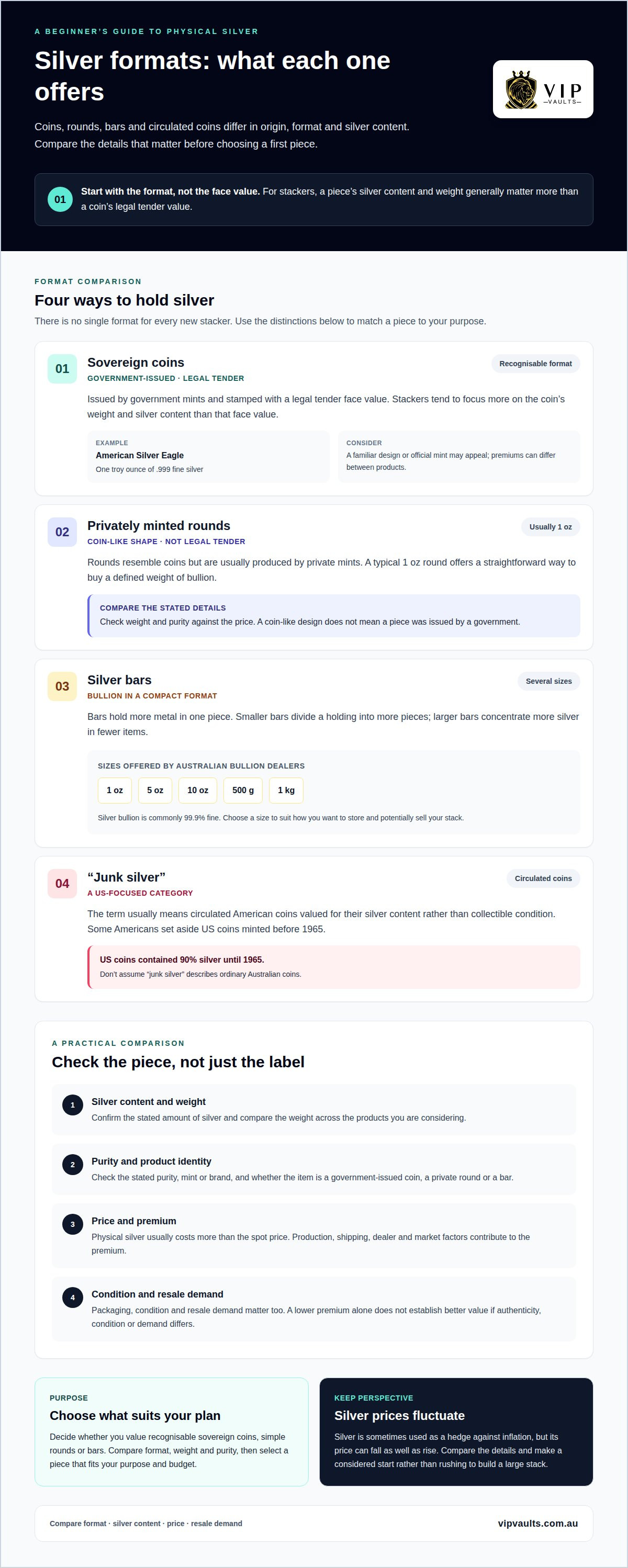
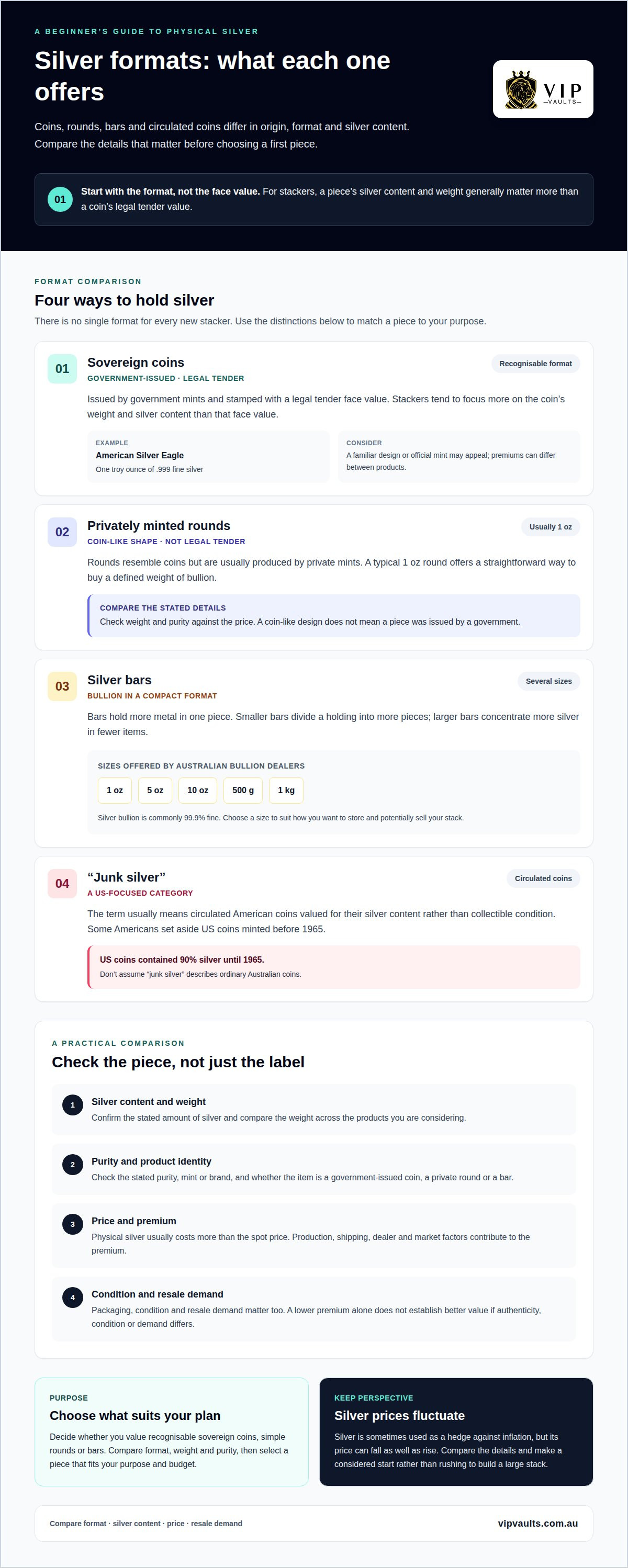
Australian bullion dealers commonly offer government-issued silver coins, privately minted rounds and silver bars. Bar sizes include 1 oz, 5 oz, 10 oz, 500 g and 1 kg, while rounds are usually 1 oz. These formats let you choose between recognisable coins, simple bullion pieces and larger quantities.
Sovereign coins are issued by government mints and carry a legal tender face value. Their silver content and weight matter more to stackers than that face value. An American Silver Eagle, for example, contains one troy ounce of .999 fine silver. Recognised coins may appeal if you value an official mint and a familiar design, though premiums can differ between products.
Rounds resemble coins but are usually produced by private mints. They aren’t legal tender, and a typical 1 oz round offers a straightforward way to buy a defined weight of bullion. Compare its stated weight and purity with the price, rather than treating a coin-like design as proof of government issue.
Silver bars offer a compact format for holding more metal in one piece. Common sizes range from 1 oz to 1 kg, and silver bullion is commonly 99.9% fine. A smaller bar divides a holding into more pieces; a larger bar concentrates more silver in fewer items. Choose according to how you want to store and potentially sell your stack.
“Junk silver” usually refers to circulated American coins valued for their silver content, rather than collectible condition. Some Americans set aside US coins minted before 1965; these coins contained 90% silver until 1965. They’re a US-focused category, so don’t assume the term describes ordinary Australian coins.
For a first purchase, decide whether recognisable sovereign coins, simple rounds or bars best match your purpose. Silver is sometimes used as a hedge against inflation, but its price fluctuates. Compare weight, purity and format, then select a piece that fits your approach to owning physical bullion.
2. What Is Silver Stacking?
Silver stacking means accumulating physical silver over time rather than buying it for immediate use. A stack might include bullion coins, rounds or bars, such as a Canadian Silver Maple Leaf. The aim and pace are personal: decide why you want to hold silver before choosing how to build your collection.
Silver has drawbacks compared with gold and other investments. Its price fluctuates, physical holdings need secure storage, and its growth potential is limited. Silver shouldn’t be the only asset in an investment portfolio, and using it as a hedge against inflation can’t remove the risk of a fall in value.
Storage choices include keeping silver at home, using a bank safe deposit box or arranging off-site depository storage. Each involves a different balance of access, privacy and physical control. Home storage keeps the items close, but you’re responsible for protecting them. With a bank box or depository, your silver is stored away from home and access depends on the arrangement’s terms.
Insurance deserves separate attention. Home policies can treat precious metals differently from ordinary belongings, so cover depends on the policy wording and declared contents. Don’t assume a policy covers the full value of silver stored at home or elsewhere. Keep purchase records with each item’s date, cost, weight and silver content to maintain an accurate inventory.
For handling, limit frequent contact and keep each piece in a cool, dry place away from direct sunlight. Air and moisture can tarnish silver, while contact can scratch it. A Canadian Silver Maple Leaf, for example, has .9999 fine silver purity, but handling and storage still matter. Inspect your holdings regularly for signs of discolouration or damage, and keep notes on any changes.
As your stack grows, consider whether your current storage still suits its size and your access needs. Explore secure storage as one part of planning how to protect physical silver.
3. Buying silver from individuals or bullion dealers
A bullion dealer provides a clear purchase record and product description, while a private individual may offer a particular coin or bar. For either source, compare the item’s weight, purity, condition and price with the current silver spot price. Physical silver usually costs more than spot because production, shipping, dealer and market factors contribute to its premium.
For example, compare the stated silver content and premium of an American Silver Eagle with a Silver Maple Leaf. Check the mint or brand, packaging and resale demand, not just the headline price. A lower premium alone doesn’t establish better value if authenticity, condition or demand differs.
Private sales need particular care because documentation may be limited and an item’s history less clear. Ask for a receipt recording the purchase date, price, weight and stated purity. Don’t rely on appearance alone: compare markings and dimensions with the product’s published specifications, and use a suitable bullion-testing service if you need further verification.
For Australian purchases, consider the GST treatment of the specific bullion product. Capital gains tax may also be relevant when you sell, so retain purchase invoices and sale records to document your transactions. Tax treatment depends on the product and transaction, so don’t assume every silver coin or bar is treated identically.
New Zealand is a separate market: buying, owning and selling physical silver bullion is legal there. That doesn’t make New Zealand’s tax or transaction rules the same as Australia’s, so keep the two jurisdictions distinct when comparing purchases or resale options.
Before buying, write down the product, stated silver content, total price and premium over spot. This simple record makes later comparisons between dealers, private offers and repeat purchases more useful. It also gives you a consistent way to track what you own and what you paid.
4. Choosing a beginner's first purchase
Start by deciding what you want your first piece to do. If you want a clear silver weight and a straightforward comparison, a one-ounce bullion round or bar is a practical starting point. If a recognisable government-issued product matters more, consider a one-ounce coin from a recognised mint. Match the format to your purpose, not just its appearance. In a beginner's guide to stacking silver, this choice is more useful than chasing a fashionable design.
Next, compare the total price with the silver content and premium over spot. Physical bullion costs more than the spot price, and premiums vary by product and market conditions. A lower premium may matter if you’re focused on accumulating metal, but it shouldn’t outweigh clear information about weight and purity. Record the product, purchase date, cost and silver content for future comparisons.
Size changes the trade-off. A one-ounce piece keeps each purchase relatively small and lets you hold separate units. A 10 oz bar may have a lower premium while remaining manageable for some buyers, but it concentrates more silver in one item. Consider how much flexibility you want if you later sell part of your holdings.
Coins can be harder for beginners to assess when their value includes collectability as well as metal. For a first purchase, a standard bullion coin from a reputable seller is easier to compare than one priced around condition or rarity. The American Silver Eagle is one example of a government-issued bullion coin, while generic rounds offer a private-mint alternative.
Keep the decision modest and repeatable: choose a format, compare weight, purity and premium, then buy within the amount you’ve set aside. A beginner's guide to stacking silver can help organise these decisions, but it can’t predict market prices. Precious metals carry price risk, so treat silver bullion as one considered part of a broader plan.
Explore silver bullion options for a potential first purchase.
VIP Vaults & Bullion Exchange Perth: Silver Bullion
VIP Vaults & Bullion Exchange Perth offers Silver Bullion for readers ready to move from comparing formats to considering a physical silver purchase. Once you’ve settled on your purpose, preferred format and storage plan, explore this offering as a natural next step in building your stack.
As your holdings grow, storage becomes part of the decision. Private Vault Rental and Bullion Locker options let you store bullion outside your home. The right choice depends on your access preferences and how you plan to hold your silver.
Take a considered approach: choose your bullion, keep clear purchase records and plan for its safekeeping. For a straightforward next step, contact VIP Vaults & Bullion Exchange Perth.
Make your next silver decision with purpose
Let your first purchase set a disciplined pattern, not pressure to keep buying. Decide what role silver should play in your plans, then stay consistent as your knowledge grows. This beginner’s guide to stacking silver offers a starting framework, but your priorities should shape each decision. A clear purpose can help you avoid purchases driven only by changing prices or attractive designs.
If your plans include other precious metals, VIP Vaults & Bullion Exchange Perth also offers Gold Bullion. For safekeeping, Private Vault Rental and Bullion Locker options suit different storage preferences. Consider them alongside your plans for silver so each decision fits how you intend to hold your assets.
When you’re ready to discuss your next step, contact VIP Vaults & Bullion Exchange Perth. Build your stack deliberately, one considered decision at a time.
Frequently Asked Questions
What Is Silver Stacking?
Silver stacking is the deliberate accumulation of physical silver as a personal holding. You can build a stack through occasional purchases or a regular buying routine, depending on your finances and objectives. Keep an inventory alongside the metal, recording each item’s description and purchase details. This gives you a clearer view of what you own and helps distinguish bullion holdings from collectible coins.
How do I know if I am paying a fair price for silver?
Compare like with like at the same time: the same product, weight, stated purity and condition. The spot price is a reference, not usually the final price of physical bullion. The difference is the premium. For example, compare two offers for the same one-ounce bullion coin rather than judging a coin against a larger bar. Include any stated delivery or transaction costs in your comparison.
How much silver should beginners start with?
There’s no single starting amount that suits every beginner. Set a limit that fits your finances after essential expenses and other commitments, then choose a purchase within it. You could start with one small bullion item to learn how buying, record-keeping and storage work before making further purchases. Avoid setting a target based on someone else’s stack or a market milestone.
What does stacking silver mean for beginners?
For a beginner, stacking means building a physical silver holding through considered purchases while learning how each item is priced and recorded. It doesn’t require buying frequently or collecting every format. A useful first habit is to maintain a simple inventory with the product description, weight, purchase date and cost. This record can help you make informed decisions as your approach develops.
What forms of silver are best for stacking: bullion coins, bars or rounds?
The suitable format depends on what matters most to you. Government-issued bullion coins have recognisable designs, while rounds provide a straightforward private-mint alternative. Bars can suit buyers who prefer to hold more silver in fewer pieces. If you value flexibility, smaller units may be easier to sell individually; if you prioritise simplicity, using one consistent format can make your records easier to manage.
How much does silver bullion cost in Australia, including premiums and GST?
There’s no fixed Australian price: the total changes with the silver spot price, the product’s premium and its format. Physical bullion is commonly priced above spot. GST treatment can depend on the product, so don’t assume every coin, round or bar is treated identically. Before completing a purchase, check the displayed total for that specific item and understand how its price is presented.