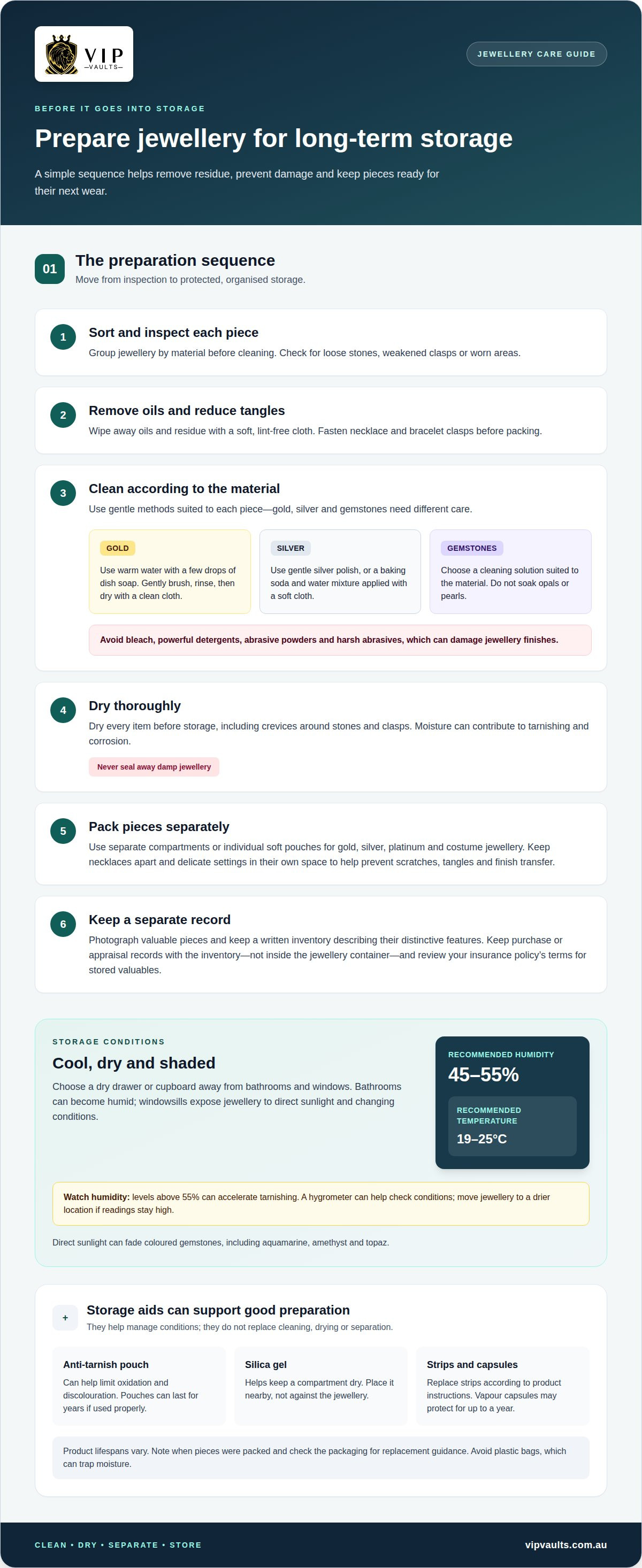
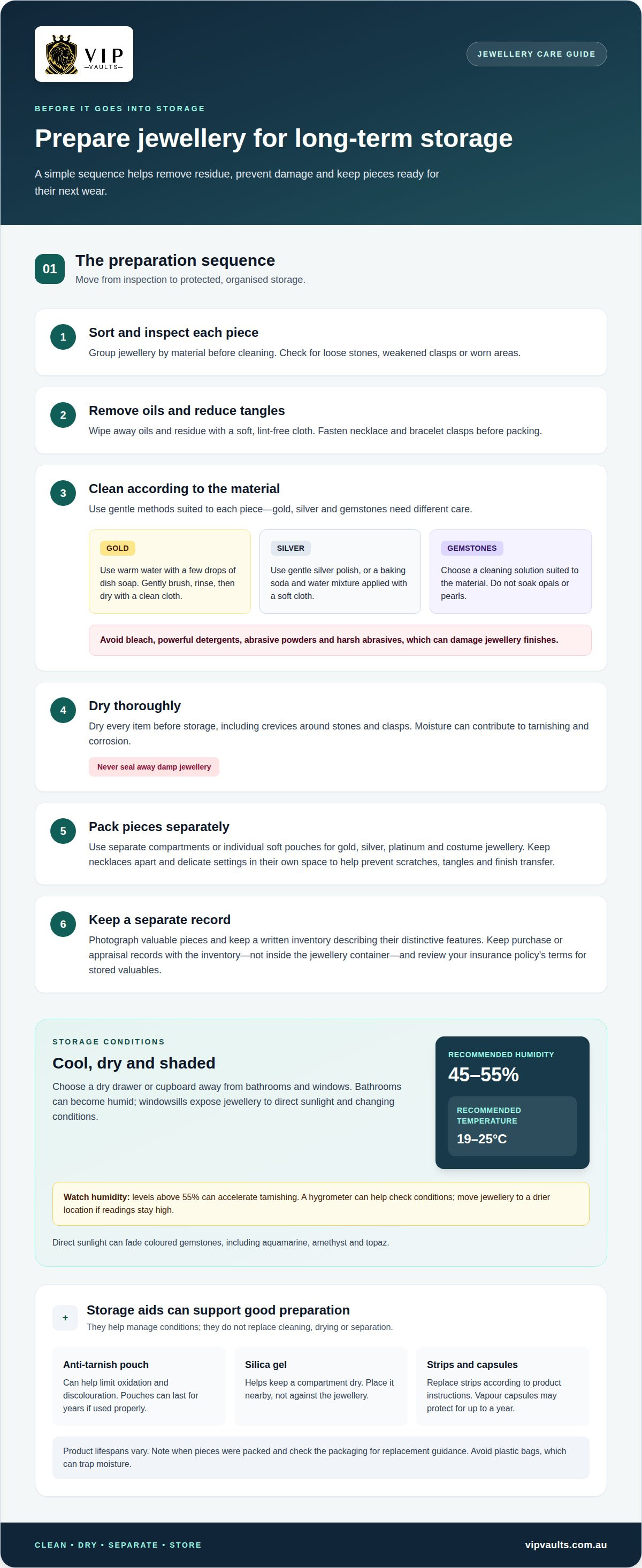
A jewellery box alone won’t prevent tarnish or damage if the room is damp, warm or exposed to sunlight. To prepare jewellery for long term storage, clean and dry each piece, keep it separate from other items, and choose a cool, dry, shaded place. Anti-tarnish strips and silica gel can help manage conditions inside the storage space, but they work best alongside careful cleaning and packing.
It makes sense to look for a simple way to protect pieces you won’t wear for a while. The practical approach is to remove oils and residue, prevent pieces from rubbing or tangling, and limit exposure to moisture, air and direct light.
This guide explains why jewellery tarnishes, how to clean different materials before storing them, and where to keep your collection. You’ll also learn how anti-tarnish strips and silica gel can help, and what to consider if storing jewellery at home doesn’t provide the protection you need.
Key Takeaways
- Use anti-tarnish products and silica gel as helpful storage aids, and consider how often each needs replacing.
- Reduce silver tarnish by limiting exposure to moisture and the air conditions that encourage it.
- Clean jewellery according to its material, then dry it thoroughly before packing it away.
- Choose a cool, dry, shaded spot at home, away from bathrooms and windowsills.
1. Do anti-tarnish strips and silica gel actually work?
Yes, anti-tarnish strips and silica gel can help, but they address different conditions. Anti-tarnish products help reduce the effects of moisture and pollutants that contribute to tarnishing, while silica gel helps keep a storage compartment dry. Place silica gel inside the compartment, not against the jewellery. These aids support proper storage, but don’t replace cleaning, drying or keeping pieces separate.
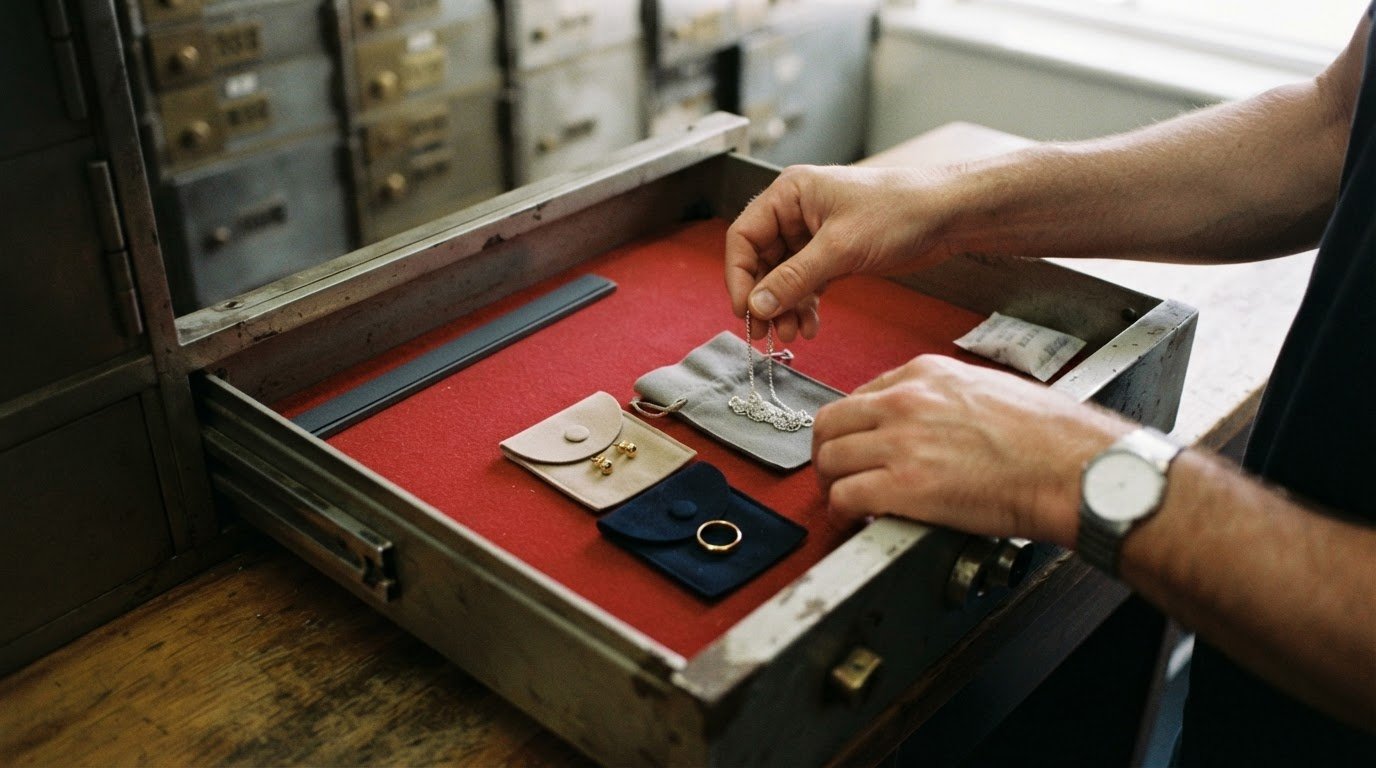
For silver and other tarnish-prone metals, anti-tarnish bags or pouches can help limit oxidation and discolouration. Keep each piece in its own pouch to reduce contact with other jewellery, which can scratch or tangle. Anti-tarnish tabs and strips can also sit in a jewellery box or storage compartment. Replace strips according to the product instructions, as their useful life varies by brand.
Anti-tarnish pouches can last for years if used properly, while vapour capsules may provide protection for up to a year. Because products have different lifespans, note when you packed each piece and check the packaging for replacement guidance. Don’t assume a pouch or capsule will keep working indefinitely.
Airtight storage can reduce jewellery’s exposure to air, while light-protected containers help limit direct sunlight. However, don’t pack damp pieces into sealed containers. Plastic bags are not recommended because they can trap moisture and contribute to corrosion. Clean and dry each item first, then place it in a suitable pouch or compartment. Keep silica gel in the surrounding compartment rather than touching the metal.
If you’re learning how to prepare jewellery for long term storage, use anti-tarnish products as part of a layered approach to preventing tarnish and corrosion. For example, store a dry silver chain in an anti-tarnish pouch inside a closed jewellery box, with silica gel nearby. This practical method limits exposure to air pollutants and moisture.
2. Why does jewellery tarnish in storage?
Silver tarnishes when it reacts with sulfur compounds in the air, forming silver sulfide on its surface. Moisture accelerates this reaction, so silver earrings stored in a damp room may discolour faster than pieces kept dry. Humidity above 55% can accelerate tarnishing. Keeping silver clean and limiting its exposure to damp air helps reduce the conditions that cause the change.
For jewellery storage, the recommended humidity range is 45-55%. A hygrometer can help you understand whether a room or storage area falls within that range. If readings stay high, move the jewellery to a drier location. In a larger safe or vault, a dehumidifier can help control humidity. Keep moisture away from the pieces themselves.
Bathrooms are poor storage locations because humidity can rise during showers and change quickly. Windowsills are also unsuitable because they expose jewellery to direct sunlight and changing conditions. Instead, choose a dry drawer or cupboard away from bathrooms, windows and other damp areas. Store pieces in separate compartments so earrings and chains stay organised and protected from contact.
The suitability of a home safe, bank safe deposit box or self-storage unit in Australia depends on the conditions inside and the protection available. For jewellery, consider moisture, temperature changes, light exposure and whether you can inspect the pieces periodically. Anchor a home safe to a solid floor or wall, and remember that a secure location still needs suitable environmental conditions.
Temperature matters alongside humidity. A recommended storage temperature is 19-25 degrees Celsius, with a cool, shaded place helping limit exposure to heat and sunlight. An airtight, light-protected container can reduce contact with air and direct light, but only store jewellery when it’s thoroughly dry. If you prefer a dedicated option outside the home, explore jewellery storage as an alternative to a household drawer or cupboard.
3. Cleaning jewellery before storage
Sort your collection by material before cleaning, since gold, silver and gemstones need different care. To prepare jewellery for long term storage, first check each piece for loose stones, weakened clasps or worn areas. Fasten necklace and bracelet clasps to reduce tangling, then wipe away oils and residue with a soft, lint-free cloth.
For gold jewellery, use warm water with a few drops of dish soap. Gently brush the piece, rinse it, then dry it with a clean cloth. Work carefully around settings and intricate designs, where moisture can linger. Avoid bleach, powerful detergents and abrasive powders, which can damage jewellery finishes.
Clean silver with gentle silver polish, or apply a baking soda and water mixture with a soft cloth. Avoid harsh abrasives. For gemstone jewellery, use a cleaning solution suited to the material. Don’t soak opals or pearls. Dry each piece thoroughly, including crevices around stones and clasps, before storing it.
Store gold, silver, platinum and costume jewellery in separate compartments or individual soft pouches. This keeps pieces from rubbing together and helps prevent scratches, tangles and finish transfer. Keep necklaces apart, and give delicate settings their own space rather than stacking pieces in one box. Cleaning and drying each item is central to preparing jewellery for long term storage safely.
Before long-term storage in Australia, document valuable jewellery with clear photographs and a written inventory describing each piece and its distinctive features. Keep records separate from the jewellery, review your insurance policy’s terms for stored valuables, and secure pieces in a locked container or suitable storage location. For a thorough storage plan, keep purchase or appraisal records with the inventory, not inside the jewellery container.
4. Choosing a storage location at home
Choose a place that stays cool, shaded and dry, with little exposure to direct sunlight. A sunny windowsill can fade coloured gemstones, including aquamarine, amethyst and topaz. Heat and changing conditions can also make a location less suitable for long-term storage. A drawer away from light is a more controlled choice than an exposed shelf.
Humidity matters both for the storage location and for the jewellery itself. Pearls are porous gemstones and can be damaged by humidity, so avoid storing them where dampness is likely. Keep them in a dry, light-protected place, separate from pieces with hard edges. This helps prevent contact that could mark their surfaces.
Use a padded jewellery box with individual compartments to keep pieces separate. Place rings so their settings don’t press against other jewellery, and lay necklaces where chains won’t tangle. Soft pouches add a barrier against scratches, while compartments prevent pieces knocking together when the box moves. Keep the box closed to reduce exposure to dust and light.
A dry drawer can be a practical home location for jewellery you can store securely and inspect. Keep the area dry, shaded and protected from direct light. For valuable pieces, a home safe can add security when anchored to a solid floor or wall. Choose its position carefully, considering both the surrounding conditions and ease of access.
Before choosing a spot, consider what could change around it: sunlight entering the room, nearby sources of moisture or fluctuating temperatures. A location with consistent conditions is preferable to one that becomes warm or damp at different times. Keep a record of where each category is stored, so you can find pieces without disturbing the rest of your collection.
If you’d prefer an alternative to storing valuable jewellery at home, explore secure jewellery storage.
VIP Vaults & Bullion Exchange Perth: Jewellery Storage
VIP Vaults & Bullion Exchange Perth offers Jewellery Storage for people who prefer not to keep valuable pieces at home. It can be a practical option if your home storage area is exposed to changing humidity, sunlight or temperature, or you want your collection kept apart from everyday household items.
Consider dedicated storage after cleaning and drying your jewellery, recording the pieces, and deciding that a home drawer or safe doesn’t suit your needs. VIP Vaults & Bullion Exchange Perth also offers Private Vault Rental, Bullion Locker and Gold Bullion for other storage and bullion needs.
To discuss Jewellery Storage, contact VIP Vaults & Bullion Exchange Perth.
Make a storage plan that suits your next chapter
Long-term storage works best when the arrangement remains practical as your needs change. Before putting jewellery away, decide who should know where it is kept and how you’ll locate a particular piece without disturbing the rest. A simple, private inventory can make the process more orderly.
Also consider whether keeping valuable pieces at home still feels appropriate as your collection changes. The right next step may be refining your home storage plan or choosing a dedicated storage arrangement. Knowing how to prepare jewellery for long-term storage gives you a clear starting point; your choice of location completes the plan.
If you’d like to discuss a dedicated option for your jewellery, contact VIP Vaults & Bullion Exchange Perth. Take the next step when you’re ready, with a storage approach that feels considered and suited to your circumstances.
Frequently Asked Questions
Do anti-tarnish strips and silica gel actually work?
Yes. Anti-tarnish strips and silica gel can be useful aids in protecting jewellery during storage. Use them as complementary aids, not substitutes for clean, dry jewellery. Keep silica gel beside the pieces rather than touching them directly. Check the strip’s packaging for replacement guidance; strips generally need replacing around every six months, depending on the brand.
Does sunlight damage jewellery?
Direct sunlight may affect the appearance of some coloured gemstones. A display near a bright window may therefore be unsuitable for jewellery kept out for long periods. Choose a shaded storage spot and keep light-sensitive pieces inside a closed, light-protected box. This also reduces their exposure to light while stored.
How do you stop necklaces tangling in storage?
Fasten each necklace clasp and store chains separately, rather than placing them together in a jewellery dish. Lay necklaces flat in a cushioned tray, or put each one in its own pouch. For a fine chain, avoid folding it tightly around other pieces. Keeping pendants and chains apart reduces rubbing and makes it easier to remove one necklace without disturbing the rest.
How should you store enamel and stone-set pieces?
Store enamel and stone-set jewellery individually in a lined compartment or soft pouch so pieces cannot knock against one another. For cleaning, use a soft, lint-free cloth and avoid abrasive powders or powerful detergents. Don’t soak pieces set with opals or pearls. Before packing them away, look for loose stones or worn settings, since movement can worsen existing damage.
What is the best way to store jewellery at home?
Choose a secure, dry place away from bathrooms, windowsills and direct sunlight. Use a padded box with individual compartments, then group pieces by type so chains, rings and earrings stay easy to locate. A closed drawer can work if it remains dry and shaded. For valuable pieces, a home safe anchored to a solid floor or wall is another option.
Why does jewellery tarnish in storage?
Silver tarnishes when it reacts with sulfur compounds in the air, forming silver sulfide on its surface. Moisture speeds up the process, so a damp storage environment can worsen discolouration. Clean silver before storing it and keep it away from damp areas. If a piece looks dull, check whether the change is tarnish or surface residue before choosing a cleaning method.